![[No.2]Living National Treasure Akihiro Maeta's Encounter with White Porcelain and His Resolve as a Ceramic Artist](https://images.microcms-assets.io/assets/1775a3633c8b428d9f011c6a758a8a5c/9be6cb5e2c2f4103a66db0963eac4d1b/003_3.png?w=430&fm=webp&dpr=2)
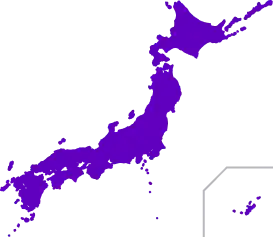
Tottori
Akihiro Maeta
Akihiro Maeta is a holder of Important Intangible Cultural Property “White Porcelain,” and serves as a participant of the Japan Kōgei Association and a visiting professor at Osaka University of Arts. He creates white porcelain works, pursuing expressive forms through wheel-throwing techniques.
White Porcelain
Created through a process of shaping on a potter’s wheel and firing, characterized by a pure white body and glossy glaze. It uses refined porcelain stone with impurities removed. It is used for both functional vessels and art pieces, valued for daily use and aesthetic appreciation.
![[No.2]Living National Treasure Akihiro Maeta's Encounter with White Porcelain and His Resolve as a Ceramic Artist](https://images.microcms-assets.io/assets/1775a3633c8b428d9f011c6a758a8a5c/a45e84eacef04bbca524a4ca874600e9/OGP2.JPG?w=430&fm=webp&dpr=2)
Inspired as a child by watching his father create prints, Akihiro Maeta began to show his remarkable artistic talent from a young age. Upon entering university, he began to seriously study the techniques of ceramics.
In Part 2, we trace his journey from his first experiences with ceramics in college to his encounter with white porcelain, which would become his life's work. As a complete beginner, Maeta found the hands-on ceramics training to be a constant struggle. Nevertheless, by the time he graduated, he was completely captivated by the art form. How did he find the resolve to dedicate himself to mastering white porcelain?
<Last time, we shared the story of Mr. Maeta’s childhood and his first encounter with craftsmanship. Read more here.>
![[No.1] Living National Treasure Akihiro Maeta's Childhood and First Encounter with Crafts](https://images.microcms-assets.io/assets/1775a3633c8b428d9f011c6a758a8a5c/7a83a27319a04b17ab82780d24072630/003_4.png?w=430&fm=webp&dpr=2)
First Time at the Potter's Wheel
Majoring in ceramics at university meant confronting the essential skill of throwing on the potter's wheel, or rokuro. This technique is the cornerstone of creating pottery and porcelain. Having previously focused on drawing, crafts, and painting, this was Maeta's first experience with a potter's wheel.
“At first, I really struggled to throw on the wheel. I was so bad I almost gave up. But I had to complete my assignments to move on to the next year, so I desperately kept at it. Eventually, I started to discover how enjoyable it could be.”
Once he got the hang of it, all he had to do was practice. Maeta became so captivated by wheel throwing that he started looking forward to every new assignment. Although his university lectures only covered the fundamentals, by the summer of his third year, he had become skilled enough to throw vases over 30 cm tall.
“I came from the countryside, didn't have much money, and wasn't great at making friends. So I just spent my time alone in the studio, focused on the wheel. I guess I got better without even realizing it.”
As he quietly dedicated himself to the wheel, a fateful encounter was just around the corner.

An Encounter with White Porcelain and Its Impact
A turning point arrived during the fall semester of Maeta's third year in college.
“One of my instructors was in the classroom, throwing a piece with pure white clay. He was a small man, but the sight of him using his entire body to pull up that single lump of clay was incredibly moving,” Maeta recalls.
“When I saw the finished piece come out of the kiln, it was truly, purely white. I vividly remember being struck by a beauty I had never seen in any ceramic work before.
“The instructor mentioned that throwing with porcelain presents different challenges than with earthenware. By then, I had gotten decent at the wheel, so I ordered some porcelain clay out of curiosity. It was unbelievably difficult. Unlike earthenware clay, it doesn't stretch upward, and if you apply too much force, it just collapses.”
The timing was a huge shock for Maeta, as it happened just when he felt he had finally mastered the wheel throwing he had once struggled with. To rebuild his shattered confidence, he once again began his days of endless practice on the wheel.
“By my fourth year, it was time to prepare for my graduation project. I had decided to create the largest white porcelain vase I possibly could, which meant I needed to acquire highly advanced throwing skills. And as I honed my technique, I also began to contemplate the question: What form makes a vase beautiful?”
He poured all the skill he had into a white porcelain piece, which he completed and submitted as his graduation project. This marked the very first work of the future Living National Treasure, Akihiro Maeta.

A Solo Exhibition Before Graduation and His Mentor's Words
"It's safe to talk about it now," Maeta said, sharing a behind-the-scenes story from his university days. He revealed that he had secretly held his own graduation exhibition without the university's knowledge, displaying not only his own pieces but also his father's woodblock prints.
"It was a time when I just couldn't get enough of pottery. However, since I didn't come from a family of potters or a ceramics region, I secretly held a solo show before graduating, hoping it might open up some future opportunities for me," he explains.
This move was a clear sign of how serious Maeta was about making a career as a ceramic artist. Feeling restless and uncertain, Maeta consulted his white porcelain teacher, a meeting that would become a turning point. He confessed openly that although he knew it was a tough world, he was determined to continue making pottery.
"My teacher advised me, 'If there's something you love, you should see how far you can take it.' Then he told me something fascinating.
'Apparently, no one has starved to death doing what they love since the end of the war. If you, Maeta, truly love pottery and pursue it so relentlessly that you end up starving, you'll be the first on record!' When he said that, for some reason, I felt a surge of courage and thought, 'Maybe I really can do this.'"
Maeta was deeply moved by his mentor's anecdote. "Looking back now, I'm sure everyone else just changed jobs before they could starve to death," he said with a laugh, but there was no doubt that those words gave him the push he needed.

Committing to White Porcelain
Driven by his desire to continue with pottery after graduation, and bolstered by his mentor's encouragement, Maeta set up a studio in Kawara-cho, Tottori City. Although he had been completely absorbed with the potter's wheel as a student, he faced new challenges once he struck out on his own.
"Pottery involves many steps before a piece is complete. It's not just about the wheel; after the bisque firing, you have to apply the glaze, and then there's another firing after that. When you're doing every single step by yourself, new problems inevitably crop up, but I had no one around to ask for solutions," he says.
Just as he had once honed his technique by throwing clay relentlessly when first confronted with the difficulty of the potter's wheel, paving his path to becoming a ceramic artist, the days after graduation marked the true beginning of his journey as Akihiro Maeta, the potter.

(In Part 3, we'll cover Maeta's daily struggles and his journey into the world of competitions after going independent.)

Japanese Craft Glossary
The History of Arimatsu Shibori: Tracing 400 Years of Turning Points From 1608 Settlement to Global Fashion

Seeking the Artisans