
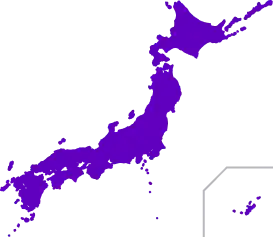
Nagasaki
Shinji Fujiwara・Yoshimi Fujiwara
After graduating from a technical high school, Shinji Fujiwara joined a construction company and obtained his First-Class Civil Engineering Construction Management Technician certification. In 2006, he joined Anryu Kobo, where he began working in the production of tortoiseshell products. Yoshimi Fujiwara worked as a kindergarten teacher after graduating from junior college. After getting married, she helped with the family business while working part-time, and in 2009, she officially joined Anryu Kobo.
Nagasaki Bekko
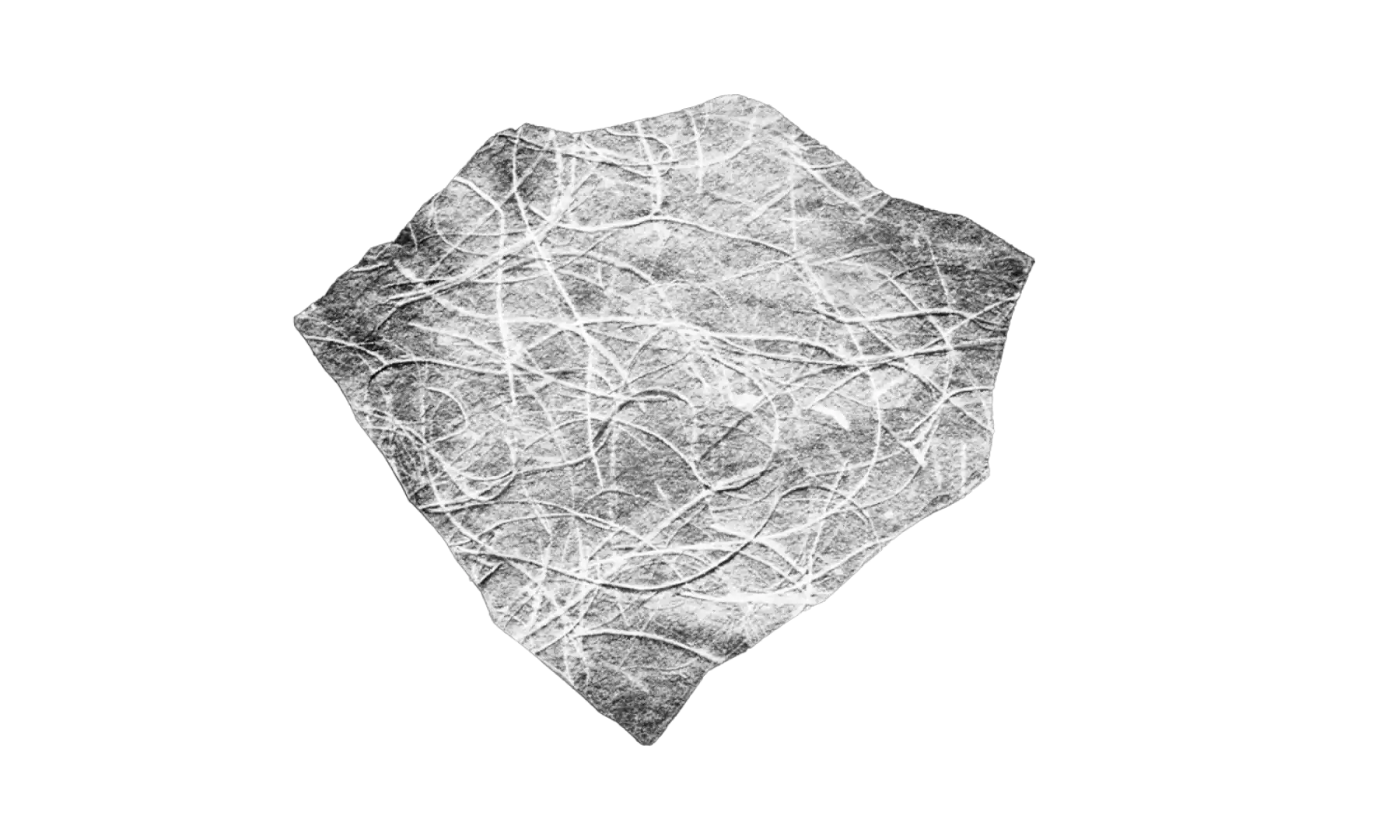
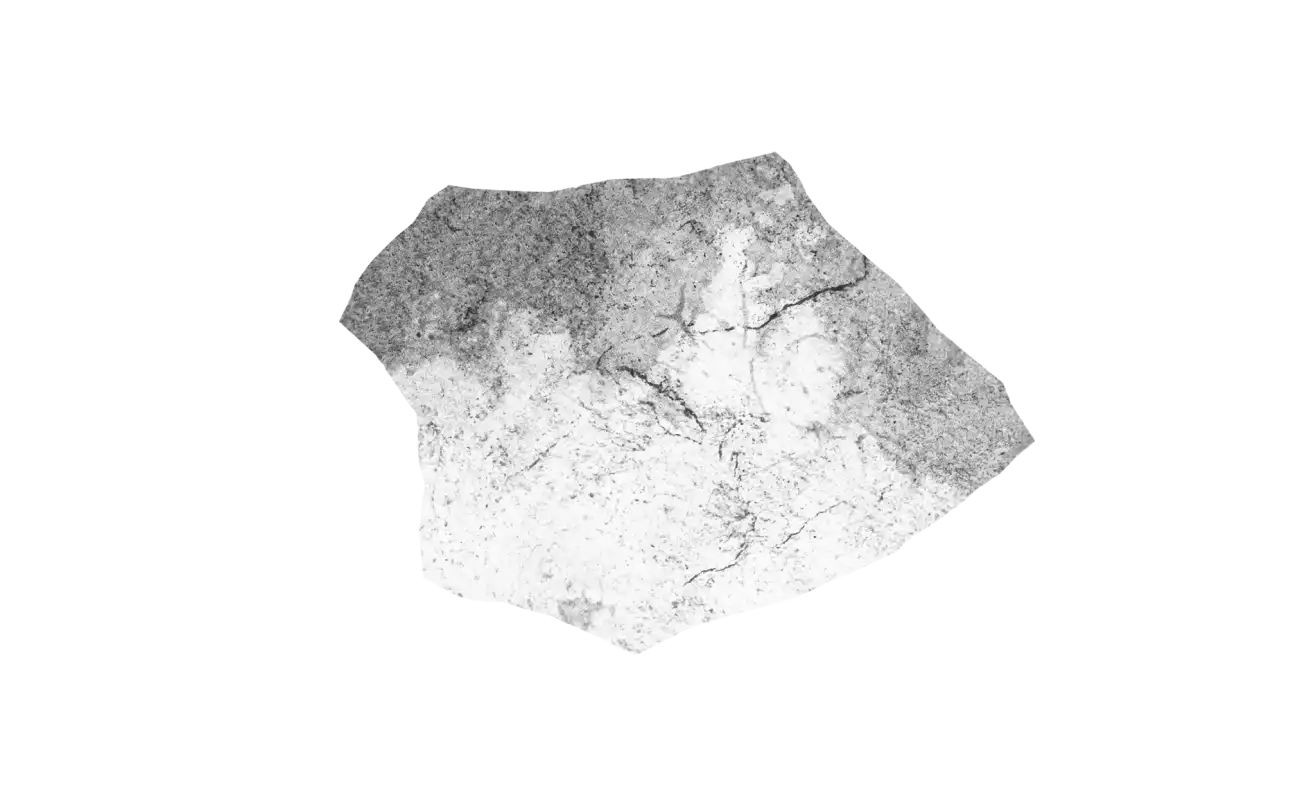
Nagasaki Bekko is a traditional craft of Nagasaki Prefecture made from sea turtle shell, claws, and plastron. With a history of more than 300 years, the craft developed in Nagasaki due to the availability of raw materials. Its distinctive techniques include bonding and shaping shell with heat and pressure and preserving the natural patterns of the material, and it is used for hair ornaments, eyeglasses, rings, brooches, and other accessories.
Tortoiseshell crafts, made skillfully from turtle shells, claws, and plastrons, have a history of over 300 years. In Nagasaki, these crafts have been thriving since ancient times due to the abundance of raw materials, and in 2017, 'Nagasaki Tortoiseshell' was designated as a traditional craft of the country. One of the companies preserving this history and technology is 'bekkoanryu'.
This time we have interviewed Shinji Fujiwara and Yoshimi Fujiwara of the company to talk about the manufacturing methods, charm, and challenges faced by tortoiseshell crafts.
Only 3 Companies Handle Both Manufacturing & Selling Tortoiseshell Products
Can you tell us about your company first?
Yoshimi Bekkoanryu was founded by my father, Tatsuo Yasuda, in 1969. My father was always full of different ideas, constantly taking on challenges and bringing a fresh perspective to the tortoiseshell industry.
However, he never tried to patent even his own invented techniques. It seems his mindset was, "In Nagasaki, it's important to develop tortoiseshell, so it's not good to monopolize it." He used to say, "As long as tortoiseshell products spread, Nagasaki's tourism industry will also thrive. That's all I need."
While we used to only manufacture tortoiseshell products almost 100% of the time, we have recently started selling them online as well, and we are thinking the proportion of sales will gradually increase in the future. Also, we have a joint booth with several companies at Nagasaki Airport, where we sell our products.
We have products with designs that haven't changed since my father's time, but we also remake and sell products in contemporary designs.
Shinji, when did you start getting involved in manufacturing?
Shinji I started 18 years ago, helping with the manufacturing of tortoiseshell products. My father-in-law was more about 'learning by watching' style instead of teaching from scratch, and we often got into arguments, to the point where people around us were surprised. I was worried about whether I could keep up with him because he was a strict person.
Yoshimi My father was kind to others, but he was tough on the family. He was strict with both of us.
Shinji I also have a mind to stick to my own ideas, so I've often spoken up.
At that time, the products were selling well, so we just had to produce a lot. My father-in-law thought "cheap and fast," but I thought "cheap but careful, as fast as possible."
With my father-in-law's method, we could finish 100 products in 3~4 days, but with my method, it took a week to make 100 products. We often had arguments because of our different ways of thinking.
Yoshimi Now that it's difficult for my father to work anymore, we continue to manufacture as the core of our team.

Tortoiseshell has been designated as a traditional craft of the country, hasn't it?
Yoshimi It was designated in January 2017. It had been designated as a traditional craft of Nagasaki Prefecture since ancient times, but it was difficult to be designated as a traditional craft of the country, and we had hardly been designated.
The opportunity for the designation came when a certain university professor took notice. From there, two associations cooperated in PR activities and it was designated as a traditional craft of the country.
How many companies are members of the Nagasaki Tortoiseshell Association?
Yoshimi There were 14 companies registered with the association up until 2022, but now there are 12.
The association was established in 1962. Originally, about 100-200 companies had registered, but by a 2020 survey, this number had dropped to around 30. Now, out of the 12 companies, including ours, only three companies handle both manufacturing and sales.
There are a few people who manufacture individually without joining the association, so I think the number is a little higher, but the scale of the industry is about one-tenth of what it used to be.
What's the reason behind the reduction in the number of businesses?
Shinji The reason is indeed a shortage of materials. The Washington Convention has restricted imports, making it difficult to obtain raw materials. The materials we are currently using were imported before the restrictions were started.
While turtle meat, which is high in protein and collagen, is eaten in some regions overseas, in Japan we only imported the shells.
But now, due to the restrictions, we can't import them. To overcome this, a sea turtle farming business was started on Ishigaki Island, but it's still difficult to use the shells for products.
The shells of farmed turtles are softer than those of wild ones, making heat processing challenging. Also, farming turtles costs a lot in terms of facilities and maintenance, thus the price per turtle becomes high.
Are you running out of raw materials?
Shinji As for our portion in Nagasaki, I think it'll last about 10 more years. Actually, there was a major tortoiseshell dealer in Nagasaki that essentially went out of business. The union bought up the raw materials they had and stockpiled them.
In addition, the tortoiseshell industry in Japan has three major production areas: Nagasaki, Osaka, and Tokyo (Edo tortoiseshell). A few times a year, the dealers hold an auction where they buy and sell raw materials they don't use. Even though it costs more because of the bidding process, it's a good opportunity to understand the current trends and price ranges.

Tortoiseshell Products Conform to your Body Over Time
Can you tell us about the manufacturing process of tortoiseshell products?
Shinji The main steps are: 'Selection', where you choose a shell that suits the product; 'Cutting out', where you cut the shell with a saw; 'Grounding', where you determine the thickness; 'Adhesion', where you attach them together; 'Shaping', where you carve detailed designs; and 'Polishing', where you bring out the gloss.
If you're making a tortoiseshell product with thickness, you stack several shells and attach them together during the grounding process. Even without adhesive, we take advantage of the property of turtle shells to stick together with heat, moisture, and pressure. When bending the shell, we soften it with heat. We use hot water to bend the tortoiseshell.
Also, depending on the part of the shell and its thickness, the strength varies. There are some cases where cutting in a certain way can waste less material, so you need to switch tools to avoid breaking it.

Do you have any unique techniques?
Shinji The white pattern on the inside of the shell, 'Water grain', tends to disappear when heat is applied, and is likely to vanish during the processing stage. So, in our company, we apply a coating to prevent it from disappearing. I think that this is a point that other companies can't imitate.
To apply this coating, I went to various places to study. Still, there's no 100% guarantee that it won't disappear, so we don't know exactly how it will turn out until it's finished each time.
Yoshimi Also, our company's strength is in our technology for forming three-dimensional shapes. Because the shell is slightly curved to begin with and tends to return to its original shape due to its shape memory after processing, maintaining its shape is technically quite difficult.
While it may be hard for the general public to distinguish, people in the industry can tell right away. That's how much difference there is in the technology to create three-dimensionality. Even the technique of 'bending the shell' varies from company to company.

Does the part of the shell you use vary depending on the product?
Shinji In our company, we change the part of the shell we use according to the product we are making. There are ones that are curved or have striped patterns, so we choose according to what we want to make.
In fact, 'water grain' only makes up about 0.001% of the entire shell, so it's very rare. This rarity has increased its value significantly. When tortoiseshell product manufacturing started in Nagasaki, there was no demand for the 'water grain' pattern, so shells with it were not used.
Even so, my father-in-law used to make products utilizing this pattern, saying, "I want to make products that take advantage of this pattern." Recently, these products have become popular because they are often advertised on TV.In our company, we change the part of the shell we use according to the product we are making. There are ones that are curved or have striped patterns, so we choose according to what we want to make.

What are the characteristics of tortoiseshell products?
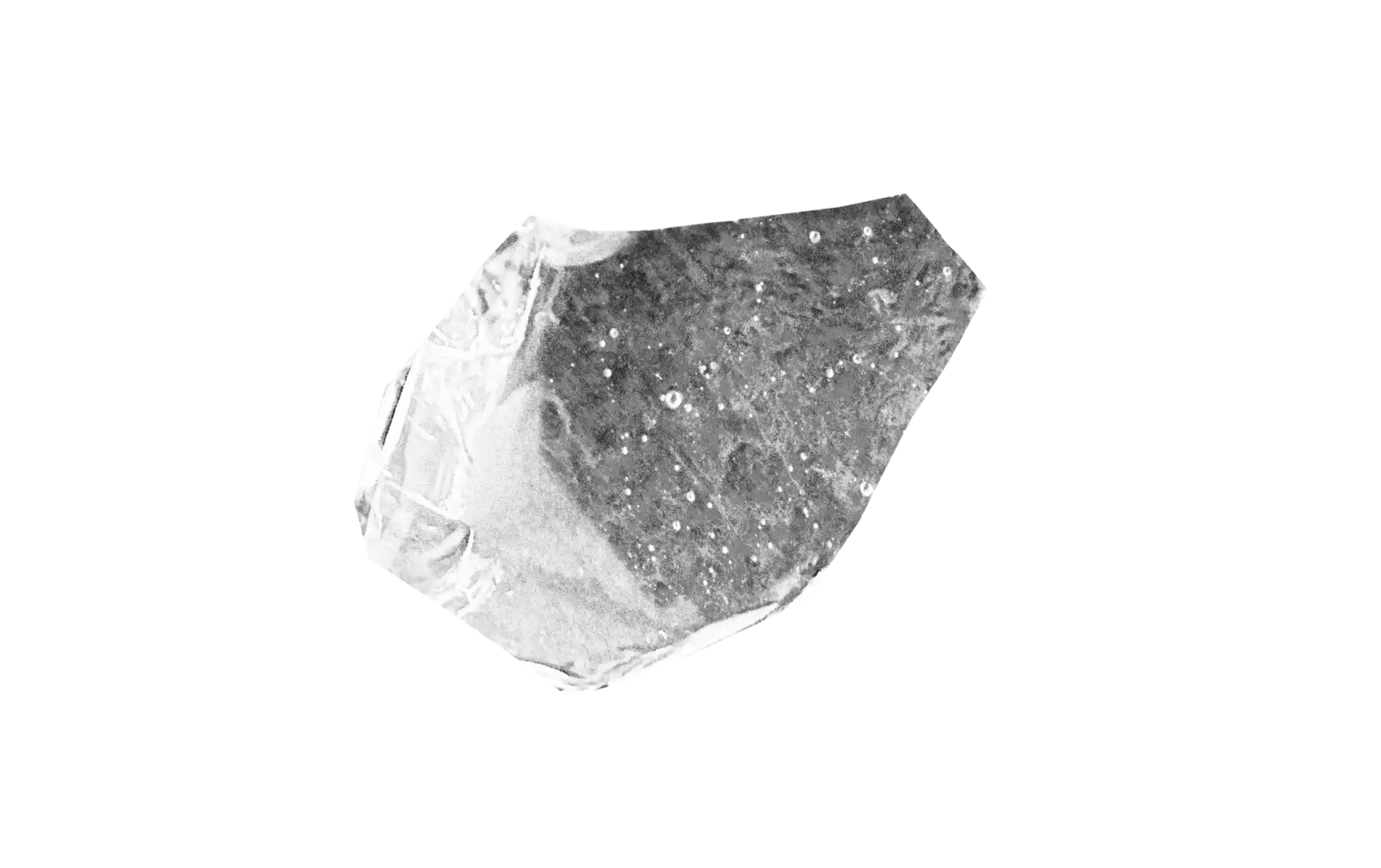
Shinji Tortoiseshell changes its shape when heated, so it conforms to your body as you wear it. Glasses and rings, for example, fit the contours of the wearer's face or fingers over time.
However, to put it bluntly, you have to be careful because if you leave a product in a car under the blazing sun in summer, it might reshape back into a flat piece.
Also, because tortoiseshell is a natural material, another characteristic is that even people with metal allergies can wear it without any problems.
Yoshimi I think one of the charms of tortoiseshell is its lightness and the fact that it doesn't break easily, even if you drop it lightly.
Tortoiseshell products, like brooches, which have multiple shells layered, can also be repaired. However, if it's not our product, repairing may be difficult. Because techniques of processing and adhesion may vary, it might become irreparable if tampered with carelessly.
Therefore, if it's a product that our company has manufactured, we also accept repairs. Along with requests for broken items, we often receive maintenance requests saying, "The water grain has disappeared."
What do you value in the process of making your products?
Shinji Typical tortoiseshell products, such as hairpins, often capitalize on the thickness of the product. However, such thick products are inevitably expensive.
My father-in-law mentioned, "When it becomes expensive, there are people who cannot afford to purchase it." So, at our company, we considered how to make a product with volume using minimal raw materials. If we can reduce the use of materials, we can set a price that encourages everyone to buy.
Furthermore, even if it's a laborious production method, we strive to create visually appealing, user-friendly products. For example, in necklaces, we incorporate magnets to make them easy to wear with just one click.
However, using magnets can be unsuitable for people with metal allergies, so we also accommodate requests to replace the magnet parts.
Yoshimi In the case of items with water grain, if you don't handle them correctly, the pattern may disappear. We do explain the precautions when they are purchased, but there are customers who forget and accidentally spray perfume or immerse the product in water. Nevertheless, if they consult with us, we can restore about 70-80% of the erased pattern.

Aiming to Provide Products that Even Younger Generations Can Easily Choose
In addition to the lack of raw materials, what other challenges does the tortoiseshell industry face?
Yoshimi Especially, the cost of raw materials with water grain has surged, and even if customers desire water-grained products, it is becoming difficult to meet the demand. The balance between demand and supply is beginning to waver.
Shinji Moreover, the shortage of artisans is another problem. Although the raw materials will endure for about 10 more years, after 10 years, the artisans in the union will also become elderly. As a result, concerns about the shortage of skilled workers have started to arise.
Many vendors who are only involved in selling have been complacent about the impending raw material shortage. However, they are starting to panic as all the artisans begin to disappear.
Is it really difficult to pass on these technical skills?
Yoshimi In the past, everything was divided into specializations to prevent the business from being spun-off. Therefore, there are few artisans who can handle the entire process from beginning to end, making it difficult to inherit all the techniques.
Moreover, a technique is required to ingeniously use raw materials according to the wanted pattern and the product to be created, and it has become increasingly challenging as it now has to be done within the limited raw materials available.
Shinji Even if children did express a desire to inherit the skills, considering the raw material shortage, many artisans hesitate, thinking, "Should I encourage them to enter this tough industry?"
Could you tell us about your future prospects?
Yoshimi We wish to continue manufacturing as long as there are raw materials available and as long as our physical strength lasts. If there are people who need our manufacturing skills, we would like to make use of the techniques that my father left and those Shinji has established. However, whether to reveal or keep the techniques we have cultivated in-house is a dilemma.
In addition, we desire young people to understand the appeal of tortoiseshell products and wear them. Consequently, we are also investing effort in creating products for the younger generation.
We offer relatively inexpensive products such as straps that are more easily accessible. We would be delighted if you take a look at them.
In the future, instead of expensive products, we aim to increase the production of low-cost products that are easy to use on a daily basis.

Text by Rika Okuyama

Japanese Craft Glossary
The History of Arimatsu Shibori: Tracing 400 Years of Turning Points From 1608 Settlement to Global Fashion

Seeking the Artisans
