.JPG?w=430&fm=webp&dpr=2)
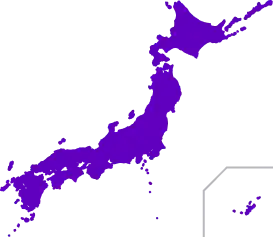
Niigata
Mutsumi Hinoura
He produces high-quality blades using forge welding techniques, creates custom machetes through free forging, collaborates on products, promotes Japanese craftsmanship overseas, and trains younger artisans.
Echigo Sanjo forged blades
Echigo Sanjo forged blades are traditional cutting tools produced mainly in Sanjo City, Niigata Prefecture. Developed from blacksmithing work that began as a side occupation for farmers in a flood-prone region, they include sickles, hatchets, and kitchen knives. Using forging and forge-welding techniques, the metal structure becomes dense, resulting in blades that are easy to sharpen and resistant to chipping, making them suitable for forestry tools and kitchen use.
With sickles, hatchets, and kitchen knives... this is Tsubame-Sanjo in Niigata Prefecture, known as a town of metalwork. In this region, we find the dedicated craftsman, Mutsumi Hinoura, who is committed to creating blades with a deep focus on the forging process, which involves striking hot iron to enhance its strength at the Hinoura Hamono Koubou.
"Right now is the most enjoyable time for me," says Hinoura. He reveals that he has participated in numerous overseas exhibitions and collaborates with young craftsmen. I interviewed him about the history and passion behind the traditional craft of Echigo-sanjo Uchihamono as well as his vision for the future.
The Birth of "Kana-mono no Machi" Tsubame-Sanjo from Battling Water Disasters
First, could you explain why Tsubame-Sanjo is called "Kana-mono no Machi (Ironmongery Town)"?
In the past, this area frequently experienced flooding. When floods occurred, farms were devastated. In response to this situation, farmers began making nails as alternative work. It is said that this led to the start of blacksmithing in the region.
Up until now, it's similar to other regions like Osaka, known for kitchen knives, or Kochi for hatchets; however, Tsubame-Sanjo had many wholesalers. Consequently, they could easily receive information about what sold well in Tokyo or Osaka, leading to an increase in blacksmiths who could respond to demands and produce various items.
Here at our company, we also manufacture woodworking blades, kitchen knives, and a variety of other items.
How many workshops are there currently?
In this area, there are probably around 30. In the past, many craftsmen were active, and there were workshops specialized in thin or thick knives, specifically for kitchen knives alone.
Currently, due to a lack of successors, the number of workshops is decreasing.
Unlike before, the social labor environment has changed, and since it is a field with a lot of dirt, we are experiencing a reality where new people are not entering the industry.

From Sickles to Hatchets and Later Kitchen Knives: The 110-Year History of Hinoura Hamono Koubou
What kind of history does your company have?
Founded around 1908, we have a history of about 110 years.
Initially, we produced many sickles for mowing grass, and from the second generation on, we started making a lot of hatchets. The third generation believed that merely producing in quantity would not suffice for the future, so he studied metallurgy to enhance quality. Following that, under my generation, the production of kitchen knives increased, resulting in a current ratio of 70% kitchen knives to 30% hatchets.
A distinctive feature of our workshop is that we shape the products through forging. When forging, the grains that make up the metal become finer, and density increases, resulting in blades that are easier to sharpen, less likely to chip, and maintain sharpness longer, even with hard steel.
In recent years, Japanese blades have become very popular and have begun to be sought after internationally. In response to these changes, blade crafting in the industry has significantly evolved. Specifically, major companies now rely on outsourcing for laser cutting steel plates and heat treatment as mainstream practices.
Against this backdrop, Hinoura Hamono Koubou values the consistent forging process leading to completed blades.
We have two brands: "Echigo-Kaji Ajikataya" and "Echigo-Kaji Tsukasa Saku." These brands strive to produce products that earn more trust while, regarding "Echigo-Kaji Tsukasa," we focus on the manufacturing process so we can gain even more fans.

A Relationship that Cannot Be Cut
What thoughts does Hinoura cherish when making knives?
I strive to create knives that look appealing when displayed.
A knife only reveals its value when it is used. That's why I focus on making knives that users want to use, and that look great to them.
It's difficult to explain what I mean by looking appealing, but I'm attentive to the finish, shape, and thickness. For example, when asked, "Which knife do you prefer, right or left?" I want customers to have a specific image that makes them want to choose.
To help others acquire the skills to make such knives, I want all craftsmen to be able to handle every process. For instance, the steel I forged could be ground by one staff member, and then worked on by another craftsman.
In this way, I encourage them to imagine the outcome of the next steps, considering what would be ideal and what might be problematic.

What does a knife represent to Hinoura?
A relationship that cannot be cut, just like the blade itself (laughs).
I quite enjoy this time in my life. I never imagined I'd be making knives. Our company had been focused on manufacturing hatchets, which was my responsibility.
About 20 years ago, we had the opportunity to exhibit at a trade show in Germany and began making knives. Since then, requests to create knives have come in, leading me to focus on knife-making as I do now.
I wasn't the only one caught off guard; my craftsmen were also surprised that I would end up employing three artisans to work together. Being the eldest son, I naturally succeeded in the family business, but my craftsmen each had their own reasons for joining, as they found our recruitment notice on social media or our website.
This year, I traveled with them to the Netherlands, Taiwan, and New York, and we have already planned trips to two more countries next year. I feel truly fortunate.
Knives are currently in global demand, and even mass-produced knives labeled as Japanese can sell for 40,000 to 50,000 yen.
Given this situation, I want to be prepared in case sales decline in the future. I believe that the heart and craftsmanship I've honed over the years are what will endure. Properly forging and crafting tools is what matters most to me.
A Desire to Share Our Industry Because It Is Closed Off
Lastly, could you tell us about your future plans?
I have many dreams, but my immediate goal is to establish a distribution function.
Currently, our business model involves supplying products to wholesalers, who then sell them to retail stores. However, considering the current global popularity, I believe it’s better to have our own distribution capability.
Even now, we have customers visiting our workshop to purchase knives, so if we could also operate as a wholesaler or shop, it would make things clearer for customers.
This industry is rather closed; for example, very few people engage with social media. As a result, I feel that the general public may struggle to understand what we produce, the processes involved, and the enjoyment it brings.
However, when you work in this field, it is genuinely enjoyable, and you also have opportunities to travel abroad. In the Netherlands, there was even a child who brought a knife they had made themselves just to meet me.
Such experiences are hard to come by in Japan. Traveling the world has broadened my perspective and has led to wonderful encounters.
I believe we need to change the notion that this industry lacks a structured way to learn the craft, but I'm also aware it offers valuable experiences. Therefore, I hope many people come to learn about the blacksmithing industry.

Text by Kouki Takahashi

