


Okinawa
Ryukyu Glass
Molten recycled bottle glass is shaped using glassblowing, with air bubbles intentionally formed inside during the process. The material consists of reused bottles such as cola and beer, preserving their naturally occurring colors. It is used for everyday items like tableware and lamps, characterized by thickness and a soft texture created by bubbles.

"Yachimun no Sato" in Yomitan Village, Okinawa, is a celebrated hub for local crafts. Tucked away in a corner, amidst a lineup of pottery workshops, one studio makes its presence known as the sole glassblowing workshop: "Chubuki Glass Studio Niji." It was founded by the late Moriyoshi Inamine, a man renowned as a "Contemporary Master Craftsman," and is now helmed by his son, Seiichiro. While the studio has carved out a unique niche with its signature "bubble glass" technique, its history is steeped in the story of two generations of intense father-son conflict and reconciliation, and an unwavering passion for creation.
The Origins of "Niji": The Maverick of Ryukyu Glass
Ryukyu glass has its roots in postwar Okinawa, where artisans began melting and repurposing empty Coke and beer bottles discarded by stationed U.S. forces. Born from the hardship of resource scarcity, this craft has evolved in step with Okinawan history. Moriyoshi Inamine, the founder of Chubuki Glass Studio Niji, was an artisan right in the middle of it all.
Moriyoshi initially worked at a large-scale glass craft facility in Itoman City. At the time, there was a movement to consolidate the numerous glass studios scattered across Okinawa. However, Moriyoshi, a craftsman with a fiercely independent spirit and a drive to create on his own terms, couldn't conform to the rigid structure. He left the facility after only three months and, after a stint at places like the Okuhara Glass Factory in Naha, forged his own path to independence.
His journey to independence was fraught with challenges. After his first studio failed, he aimed for a comeback, working out of a corner of a former foreigner's residence in Oyama, Ginowan City. The turning point arrived unexpectedly. A plate he had crafted was being used for lunch specials at a local café. A pottery expert spotted the plate and was immediately struck by the unique quality of Moriyoshi's glasswork.
At the time, "Yachimun no Sato" in Yomitan was strictly a village for potters, with no precedent for welcoming a glass studio. However, supporters who recognized Moriyoshi's immense talent made an exception, allowing him to establish his workshop there. And so, Chubuki Glass Studio Niji began its journey as the sole glassblowing studio in a village celebrated for its pottery.

Forging a New Form of Beauty from Waste and Bubbles
A signature style of 'Niji' is its 'bubble glass' (awa-garasu), which encases countless air bubbles within the glass. This technique was born out of a unique challenge inherent in recycling discarded bottles. Recycled glass made from waste bottles is susceptible to impurities, making it difficult to create perfectly clear glass. In the past, glass with bubbles was considered a 'second-rate product,' and it was often returned by vendors.
Frustrated by the stubborn bubbles that defied his technical skill, Morikichi had a radical idea. "If they won't disappear, why not just make the bubbles the star of the show?" From that point on, he began researching how to intentionally create beautiful bubbles.
He experimented by adding various materials like aluminum cans, sugar, salt, and turmeric into the molten glass to see what would happen. He also adopted carbonized coffee beans, rice bran, and binchotan charcoal as bubble-producing agents. Using rice bran, in particular, creates whitish bubbles, while binchotan charcoal produces powerful black bubbles.
Initially, the resulting bubble glass was met with skepticism, viewed as "an oddity in the glass industry." However, it caught the eye of a buyer from Kyoto, and everything changed at an exhibition held there. The pieces, with their unique texture and warmth, drew a massive response, and his success was so great that every piece he brought was sold out. Through Morikichi's sheer tenacity, the recycled bottle glass once deemed 'second-rate' was transformed into a one-of-a-kind art form.
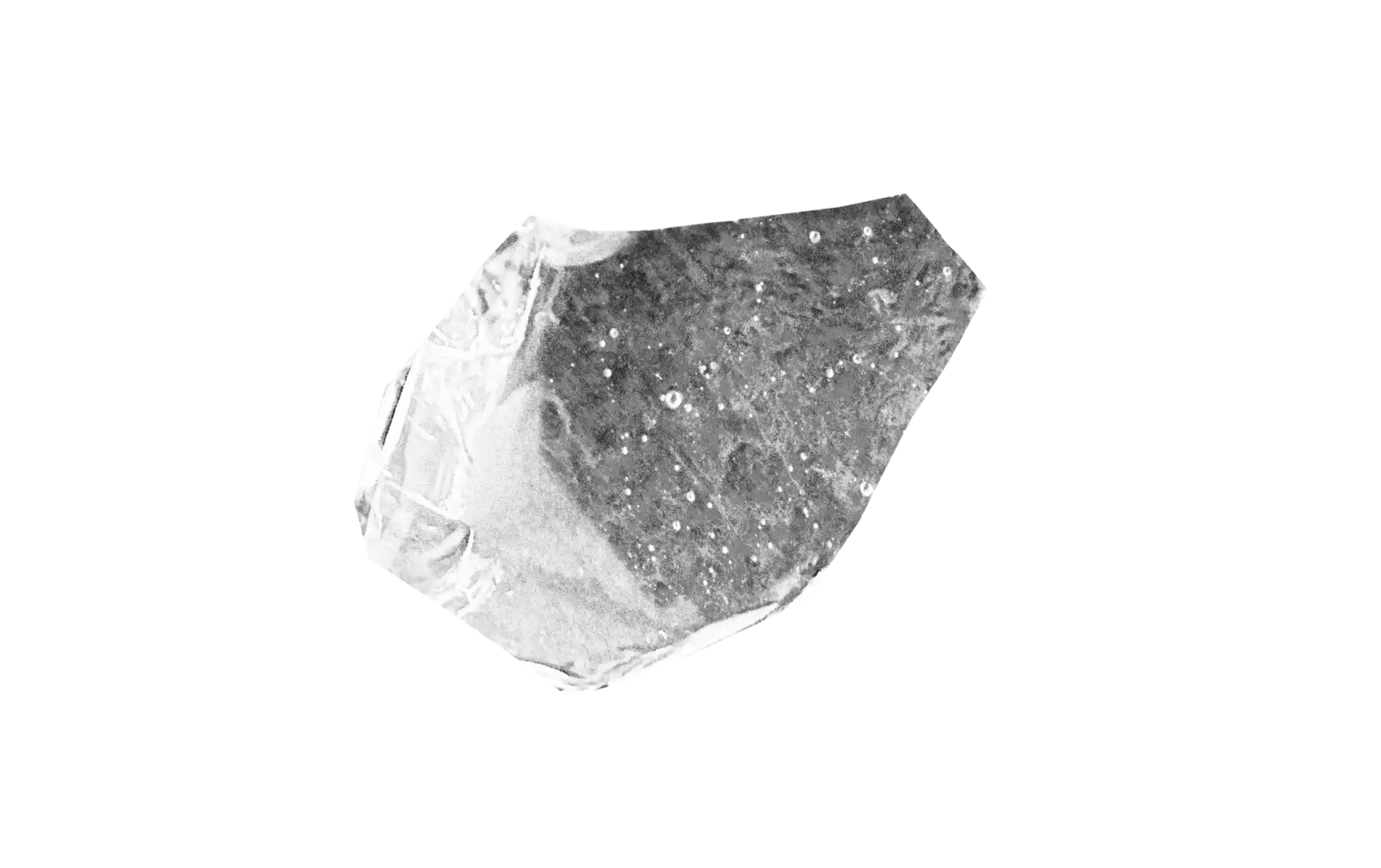

The 'bubble glass' from 'Niji,' where accidental bubble patterns make each piece a unique work of art.
Rift with His Legendary Father and Leaving Home
The current head, Seiichiro, began his journey as a glass artisan right after graduating from junior high school. Initially, rather than working under his father, he joined Okuhara Glassworks in Naha through his father's introduction. He recalls that his dive into the demanding world of artisans at the tender age of 15 wasn't fueled by a love for glass. He made the decision driven solely by the desire to become independent and start a family quickly.
After about 10 years of training, Seiichiro joined 'Niji,' the studio run by his father. However, what awaited him was a clash with his larger-than-life father. The traditional techniques and philosophy he had honed during his apprenticeship clashed with Morikichi's pursuit of originality. Morikichi, who accepted no compromises in his own work, would sometimes fiercely reject Seiichiro's creations, reportedly saying, "Never make something like this again."
Seiichiro also felt conflicted by his father's stance: while Morikichi entrusted him with managing the studio and dealing with the public, he refused to relinquish his creative control as the master artisan. He was always seen by others as "Morikichi Inamine's son," and the constant pressure of being compared to him took its toll.
The rift deepened, and when Seiichiro was 43, the breaking point finally came. Following a fierce argument, Seiichiro declared, "I'm done with glass for good," and walked out of the studio he had called home for over two decades.

Struggles in a New Field and the Return to Glass
After leaving the studio, Seiichiro began working in fields far removed from glass. He worked tirelessly to support himself, taking on jobs from construction sites to cleaning crews. However, switching careers in his mid-40s proved to be more grueling than he could have ever imagined.
One day, while on a cleaning job, he was scolded by an older colleague. Although he believed he was tackling the job with sincerity, his efforts fell short in the eyes of a seasoned professional. The experience was a wake-up call: he saw that people take pride in their work no matter the profession, and he realized that the only work he could truly take pride in was glass.
He came to appreciate how fortunate he had been, able to make a living and bring joy to so many people with his craft. After a year-long hiatus, Seiichiro resolved to return to glass.
He humbly asked his father, Morikichi, for permission to work independently on the studio grounds. Seiichiro launched his own workshop, embarking on a creative path distinct from his father's. He says that creating while maintaining this physical distance allowed him to appreciate his father's greatness from a new, objective perspective.

A True Father-Son Bond Forged Through Caregiving
A turning point arrived unexpectedly. A few years after striking out on his own, Seiichiro was called back by his father, Seikichi. It was then he sensed his father’s aging and limitations. Though he didn't say it out loud, his father, nearly 80, was ready to entrust the future of the workshop to his son. Understanding his father’s unspoken wish, Seiichiro decided to return as the head of "Niji."
Soon after he took the helm, the world was hit by the COVID-19 pandemic. On top of that, it was discovered that Seikichi was ill. The illness had already progressed to a point where surgery was no longer an option, and doctors told him he didn't have long to live.
This marked the beginning of a year and a half of round-the-clock home care. The workshop staff pitched in, taking turns to help with his care, and the entire team rallied to support Seikichi. Once bound by a strict master-apprentice dynamic where they only spoke formally, the father and son reconnected during this time, rediscovering their bond as a "normal family."
When Seikichi passed away, Seiichiro says he shed no tears of regret. All that remained was a sense of accomplishment for having done everything he could, and a profound gratitude for his father.

A Philosophy Passed Down: "Never Imitate Others"
Seiichiro believes his father’s greatest legacy isn’t the "bubble glass" technique itself, but the philosophy: "Never imitate others." While others commonly used cow bones, Seikichi used tuna bones. When stable, ready-made raw materials were available, he deliberately insisted on using discarded bottles. He constantly forged his own path, always searching for a unique form of expression.
It's a philosophy that Seiichiro has deeply inherited. He believes there's an almost bottomless depth to be found just by exploring familiar, everyday materials and techniques—so much so that a lifetime isn’t enough to master them. He guides his own apprentices to develop their unique styles rather than simply copying their master.


A Workshop Oasis Surrounded by Glass
Seiichiro is now working to evolve the workshop's very purpose. His goal is to create more than just a retail space; he envisions a welcoming environment where visitors can stay, relax, and enjoy their time.
He has placed benches throughout the workshop, creating a space where people can sit and read a book or simply watch the artisans at work, with no pressure to buy anything. As Seiichiro puts it, "I want this to be a place where people can spend time however they like, a place they’ll want to visit again and again."
He wants visitors to experience the "Niji" brand in its entirety—not just through the high-quality products, but also through the workshop's unique vibe and the warmth of its people.
Breathing new life into "unwanted things" like discarded bottles, the "Chubuki Glass Workshop Niji" now shines even brighter, enriched by the story of two generations of a father and son. In every single piece of glass, the spirit of these artisans, who relentlessly pursued their own unique vision, continues to breathe.


Japanese Craft Glossary
The History of Arimatsu Shibori: Tracing 400 Years of Turning Points From 1608 Settlement to Global Fashion

Seeking the Artisans
The Timeless Technique and Evolving Tradition of "Tsugaru Nuri Genbei": Growing More Beautiful with Every Layer

Seeking the Artisans
Amidst Shifting Traditions: Ikutouen, an Okinawan Yachimun Pottery Studio, Envisions the "Tsuboya Landscape"

Seeking the Artisans
The Nakamine Sanshin Shop: Crafting the Sanshin's "Measurable" Tone and a Sustainable Future

Seeking the Artisans
The Future of Ryukyu Lacquerware Envisioned by Kakuman Shikki: Layering the Island's Spirit with Digital Technology and Handicraft

Seeking the Artisans
Marumasa Orimono's Third-Generation Head on a Mission to Redefine Ryukyu Kasuri ── Craft as an 'Industry'

Seeking the Artisans