

Wakayama
Kohei Hyakkendani
He leads new business development mainly with domestic and international maisons, while expanding the company’s textile collections and launching the factory brand “KANEMASA PHIL.”
Knit
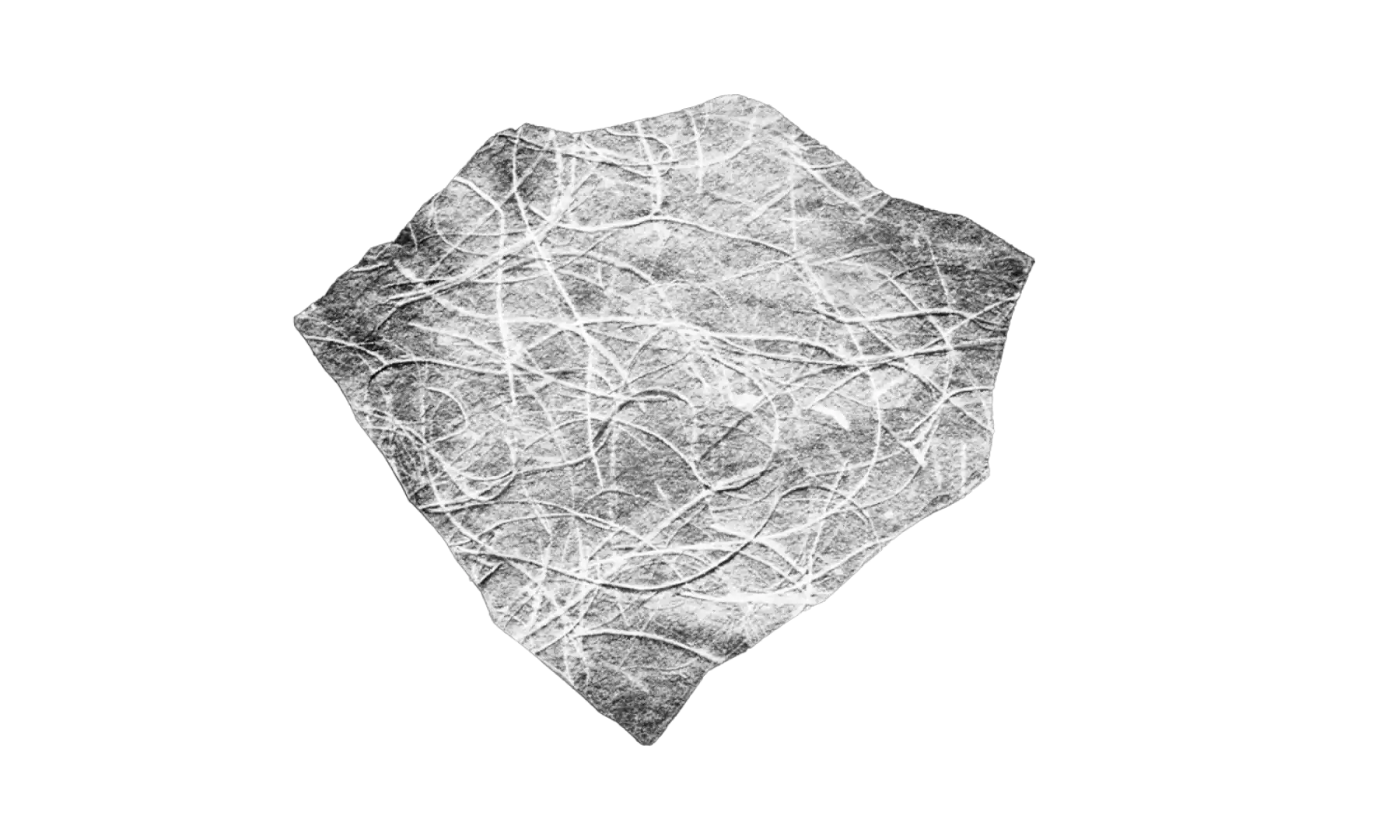
From yarn production to knitting and finishing, the entire process is carried out in-house, employing original knitting techniques such as combining yarns of different gauges. The primary material is wool, with yarns made by blending fibers of varying lengths and qualities. These textiles are used for garments such as sweaters and other knitwear.
Based in Wakayama, Kanemasa Meriyasu Co., Ltd. has carved out a unique niche in the world of circular knitting since its establishment in 1964.
With tradition and innovation as its driving forces, the company continuously ventures into uncharted territory. We sat down with Kohei Hyakkendani, the third-generation leader of the company, to discuss the spirit of 'unique manufacturing' passed down from his grandfather, the game-changing technological advancements that defy industry norms, and the story behind the birth of their factory brand, "KANEMASA PHIL.", which emerged from the challenges of the COVID-19 pandemic.
The Origins of 'Unique Manufacturing' Forged by a Grandfather
The story of Kanemasa Meriyasu begins in 1964, when Hyakkendani’s grandfather first installed knitting machines. The company was a relative latecomer to Wakayama, Japan's top region for circular knit production. But the founder, with his background in science, wasn't satisfied with simply knitting fabric. He poured his passion into modifying the machines themselves, creating textiles that no other company could replicate. This drive to 'create what only Kanemasa can' evolved into the philosophy of 'unique manufacturing'—a principle that remains at the company's core and serves as the launchpad for its relentless technological innovation.

A Father's Drive: Accelerating Global Expansion and a Push for Custom Machinery
The founder's spirit was inherited by the current president, Hyakkendani's father (the second generation). Though his background was in trading and he didn't directly handle the machinery, his pursuit of 'unique manufacturing' accelerated in a new direction. A major milestone in this endeavor was the development of the company's signature 'high-gauge' technology, which uses a vast number of needles to create incredibly dense knits.
In the knitting world, 'gauge' refers to the density of needles on a machine. While a standard T-shirt is typically made on an 18 to 28-gauge machine, Kanemasa Meriyasu utilizes ultra-high-density machines of up to 46-gauge—virtually unparalleled anywhere in the world. With 46 needles packed into a single inch (approx. 2.5 cm), these machines demand exceptionally delicate adjustments and maintenance, a challenge met by the superior skills of the company's artisans.
'A single knitting machine has about 4,300 needles in one rotation. If even one of them is damaged, it flaws the fabric, turning it into a B-grade product. To consistently produce A-grade items, it's essential to pull out this massive number of needles one by one, inspect them visually, and make sure not to miss a single scratch.'
Furthermore, for the past two decades, the company has been a proactive exhibitor at international textile fairs like "Première Vision," building its reputation in overseas markets. This history of pioneering initiatives is what cemented Kanemasa Meriyasu’s unshakable status as a premier 'high-gauge knitter.'

A Pandemic Pivot: The Birth of a Game-Changing Factory Brand
Hyakkendani himself returned to the family business eight years ago. At first, he saw it as nothing more than a 'small local factory' and had no intention of taking over. But as he built his career at a textile trading company, he came to recognize the exceptional nature and value of his family's technology. While he felt they were 'doing some really interesting stuff,' he grew frustrated by their lack of 'selling power' to get that technology out into the world. That's when he decided to join the business.
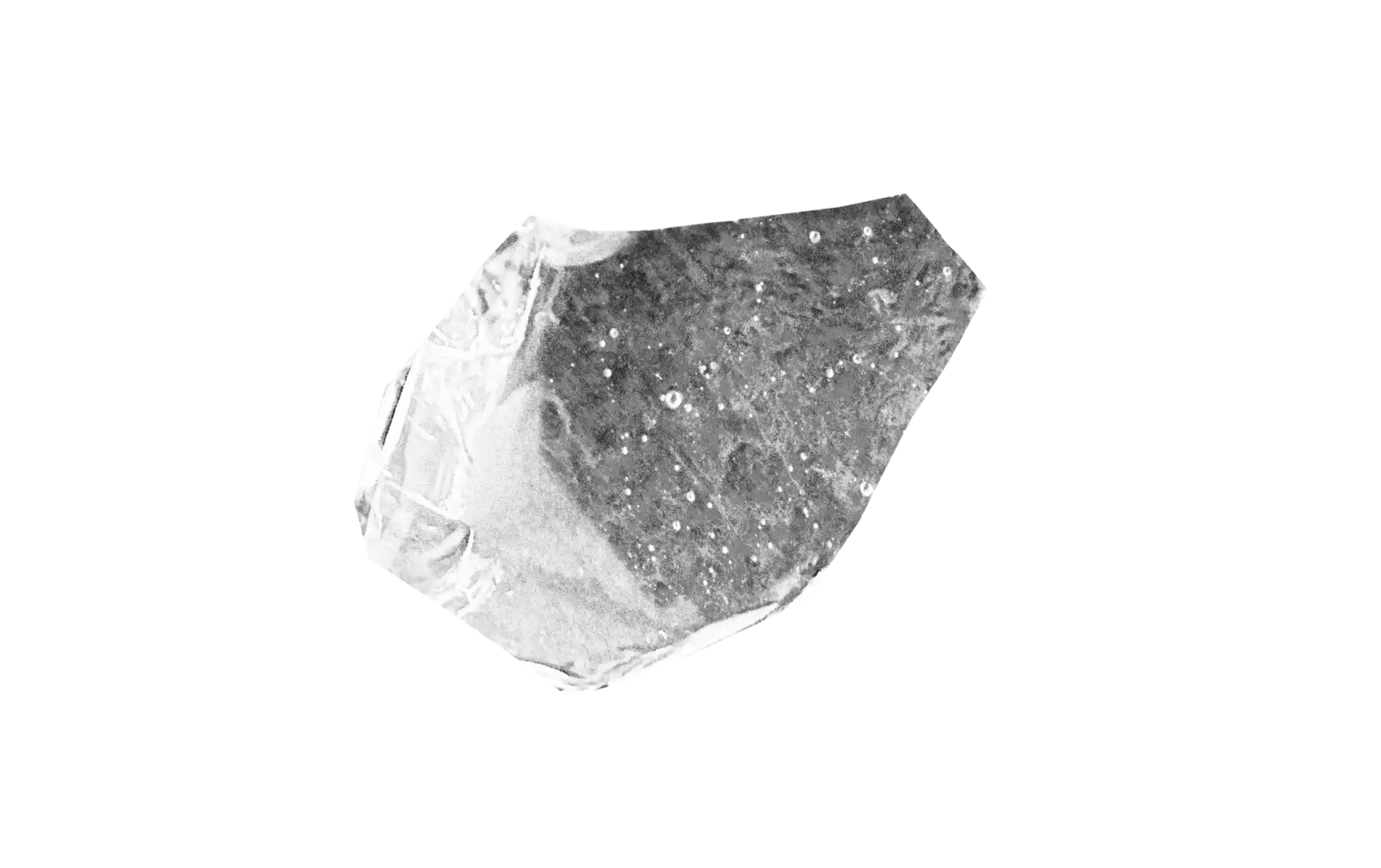
He shares that the COVID-19 pandemic was a major turning point. 'There was a brief period when all our work completely vanished. We had intense debates about whether to play it safe or go on the attack. That’s when the concept for our factory brand, "KANEMASA PHIL.", first emerged. If the pandemic hadn't so thoroughly decimated our conventional business, we never would have done it.'
A B2B textile manufacturer, with no retail experience, delivering its own products directly to consumers. It was a daunting challenge, forcing them to push forward into the unknown without a clear starting point.

The Three Factors Behind the Rule-Breaking 'Woven-Like' Knit
The most distinctive characteristic of Kanemasa Meriyasu's fabric is that it achieves a crispness and tailoring quality like a woven material, despite being a knit. Conventional circular knits, typically used for T-shirts and innerwear, are known for their supple nature that follows the body's lines, but they struggle to maintain a beautiful silhouette, making them unsuitable for items like jackets and pants. The company is shattering this conventional wisdom with its proprietary technological developments.
"You can't create a 'woven-like' fabric without combining three elements: the yarn, the knitting, and the final finishing," he explains. "It all starts with the premise of high-density knitting. This requires a specific method for making the yarn to achieve the right crispness, and a finishing process that defines the texture. Just look at the finishing process alone—we use high-pressure iron-core rollers to compress the fabric for a lustrous sheen, and we've even developed a resin that gives the material a resilience unheard of in conventional knits. It's this three-part combination that makes a woven-like knit possible."
Makuake Success: Proof of 'Sensibility' and Demand
With his pride as a high-gauge knitter and the technical prowess to create 'woven-like' fabric, Hyakkenya chose the crowdfunding site Makuake as the first step in his B2C challenge.
"I had this one fabric that I poured my heart and soul into, but it had never been released to the world," he recalls. "I wanted to put it out there and see what people thought. With no experience in clothing design or retail, I just went for it, created what I thought was a cool sweatshirt, and listed it on Makuake. It ended up being well-received by so many people, which really boosted my confidence."
This successful crowdfunding experience became the solid foundation for the birth of their factory brand, "KANEMASA PHIL."

The Infinite Equation for the Ultimate Shirting Fabric
The culmination of the company's technology can be seen in its shirting fabric, which is also the face of the brand. Boasting a crispness and sheen almost unbelievable for a knit, along with easy-care properties that resist wrinkling even after washing, this fabric is a condensation of all the techniques mentioned so far.
The strength of the yarn's twist, the presence or absence of gas singeing (a process that removes fuzz by passing the yarn through a flame), the spinning method, the knit structure, and a variety of finishing processes—Hyakkenya says the combinations of these elements are "infinite." From these endless options, they use their experience to derive the ultimate formula, one they "can't imagine improving upon," and perfect it into a single fabric.
"My biggest focus isn't just on comfort while wearing it, but on a superior quality that endures. For the consumer, it doesn't really matter whether something is a knit fabric or not. They might happen to buy a shirt they love and only later realize it's a knit. From there, they can truly appreciate its quality and start seeking it out. That's the kind of craftsmanship I'm aiming for."
The goal is to create a cherished piece that will be loved for years, balancing not only design but also functionality like comfort and ease of care. This philosophy is embedded in every piece of their shirting fabric.

"KANEMASA PHIL." is not only a new B2C challenge but also a mirror reflecting the pride of its artisans. By showing the final form—how technology built up from a single thread is elevated into a piece of clothing—everyone involved in the manufacturing process can feel the value of their work.
"Manufacturing is cool." Hyakkenya's candid sentiment is directed not just at his company's artisans, but at society at large. By turning adversity into strength and managing the entire process from upstream yarn production to the downstream finished product, Kanemasa Meriyasu is challenging the very potential of the manufacturing industry itself.
Designing the yarn, knitting the fabric, and applying the finish. It is this meticulous process, combined with the skill of people who never stop challenging the status quo. As long as these two wheels keep turning, Kanemasa Meriyasu will continue to redefine what's possible with knitwear.



Japanese Craft Glossary
The History of Arimatsu Shibori: Tracing 400 Years of Turning Points From 1608 Settlement to Global Fashion

Seeking the Artisans

