
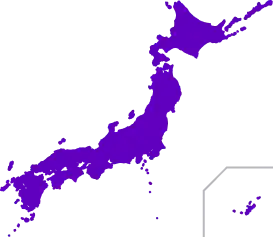
Shiga
Shuji Nakagawa
Shuji Nakagawa, third-generation head of Nakagawa Mokkougei. He established the Hira workshop and engages in diverse activities in Japan and abroad centered on wooden bucket craftsmanship.
Kioke
It is made by splitting wood into staves, assembling multiple pieces into a circular form, and tightening them with hoops. Materials include 200–300-year-old timber, often using outer sections of the wood, with even knotted or curved pieces repurposed into works. It is used for daily items such as rice containers, sushi tubs, and bath buckets, as well as champagne coolers and art pieces.
The art of *kioke* (wooden bucket) making is said to have arrived from the Asian continent around 700 years ago. At Nakagawa Mokkougei Hirakoubou, they are continually expanding the potential of this craft by adapting traditional *kioke* for modern lifestyles and collaborating with other fields. Here, we found an innovative philosophy of craftsmanship that brilliantly defies the conventional image of traditional arts.
We visited their studio, nestled at the foot of the mountains along the western shore of Lake Biwa in Otsu, Shiga Prefecture, to hear their story.
A Contrasting Perspective, Forged from the Dream of Becoming an Artist
Could you tell us about your business and how it began?
About 100 years ago, my grandfather, Kameichi Nakagawa, was the 11th of 12 children born to a farming family in Mie Prefecture. At the age of 11, he became an apprentice at 'Taru-gen,' a long-established cooperage in Kyoto. In those days, wooden buckets—like *ohitsu* rice keepers, sushi tubs, and bathtubs—were common household items and essential to daily life. After working at the studio for about 40 years, my grandfather struck out on his own, establishing Nakagawa Mokkougei in Kyoto to begin crafting traditional *kioke*.
My father, Kiyotsugu, the second-generation head, continued the family business while also creating woodcrafts that featured patterns formed by intentionally aligning the wood grain. For this technique, which creates ornamentation reminiscent of *yosegi-zaiku* marquetry, he was designated a Holder of Important Intangible Cultural Property (Living National Treasure) in 2001.
From that point on, people always referred to me as the son of a Living National Treasure. In a spirit of rebellion, I wanted to escape my father's shadow and the prestige of the 'Kyoto' name. I felt a strong desire to see what I could achieve on my own. So, in 2003, I established my own studio at the foot of the Hira Mountains in Shiga Prefecture, a place I had often visited for hiking during my university years.
What led you to take over the family business?
From a young age, my father and grandfather expected me to take over the family business. But during my teenage years, I resented our unconventional home life, where the entire family worked together in one place. I enjoyed making things, but I had no intention of joining the business right after high school. I managed to persuade my parents, who wanted me to start my apprenticeship as soon as possible, to let me enroll in the Faculty of Fine Arts at Kyoto Seika University, where I majored in sculpture.

During university, I hardly touched wood at all, focusing instead on making sculptures from iron. I was fascinated by the world of contemporary art, with its deep ideas and philosophies, and I wanted to make a living as an artist, but reality proved to be harsh. After graduating, I joined the family business. But I made a deal: in exchange for working 15-hour days, I got a two-day weekend. I built a small prefab studio in the mountains and for ten years, right up until I established my own workshop, I would head there on Friday nights and work on my art. It feels like a strange twist of fate that the dream I once had of holding solo exhibitions in Paris and New York with my contemporary art has now come true, but with *kioke*. I can really feel how the gap between art and traditional crafts has narrowed over the past decade, allowing them to intersect.
In 2000, I installed a sculpture on the shore of Lake Biwa. It was an iron piece shaped like a cross-section of a log. Today, I create similar sculptural forms, but with wood. Since *kioke* are made using wood from the outer part of the log rather than the core, we can use pieces of wood that are donut-shaped, with a hole in the center. I still have vivid childhood memories of playing on piles of logs, and that formative experience is reflected in my work.
In the world of *monozukuri* (craftsmanship), fine art and traditional crafts often feel like polar opposites. My experience with contemporary art taught me that the conventions of traditional crafts are not absolute. It gave me a new awareness, allowing me to see things from multiple, often opposing, viewpoints. These two perspectives—from fine art and traditional craft—have gradually merged, and this fusion now breathes life into my work. It allows me to find fascination and make new discoveries even in the repetitive, daily tasks of making *kioke*.

The "Yorishiro": Weaving Memories Through the Sacred Power Inhabiting Discarded Wood
Please tell us about your approach to both your minimal, sophisticated wood products and your craftworks that showcase the raw expression of nature.
My main focus is always on how to draw out the wood's inherent appeal. Part of my work involves being a craftsman who controls the wood completely, following a design to the letter. But I also create pieces that embrace the wood's raw, natural state, shaping a beauty that's only revealed when human control is set aside.
Around 2017 or 2018, I suddenly began to notice the charm of wood that would normally be discarded—pieces that were bent or had knots, making them unsuitable for *ki-oke* (wooden buckets). Then, in 2021, I started creating my "Yorishiro" series using this scrap wood.
The series name "Yorishiro" was inspired by a comment from Atsuhiko Irie, a writer based in London, UK. Whenever I'm in London, I stay at his home, and I would always give him a prototype from the series as a thank you gift. It turned out that items full of memories—like a glass pen that was a memento from his friend, or a watch that was a keepsake from his partner's father—fit into them perfectly, as if they were custom-made. It was as if the sentiments held within these cherished objects had come to dwell in the wooden vessels. Irie remarked, "It's like a *yorishiro*, a sacred vessel for the gods. This isn't just an *iremono* (container), it’s a *yoremon*." His clever play on words inspired me to name the series "Yorishiro."

Another time, a sake brewer requested a "Yorishiro" for a bottle of expensive sake that had been aged for 40 years. He wanted the box to be made from wood from the same environment—the same water, air, and soil—that the sake had absorbed over those four decades. The brewer even rented a crane and a truck to personally transport the wood from Yamagata for the project.
Natural materials have the power to weave connections that are often severed and lost with mass-produced industrial products. Just like the healing feeling you get from walking in a forest, I believe the "Yorishiro" pieces possess a natural force that weaves together human emotions. The "Yorishiro" series is also made using traditional *ki-oke* crafting techniques. I don't store the discarded wood in a warehouse; I keep it in my studio where I can always see it and feel its presence. By doing this, the image of each piece of wood becomes imprinted on my mind, maturing until I feel compelled to transform it into a work of art with just the slightest touch.
For bucket making, I use wood from 200- to 300-year-old trees. I want to use every single part of the wood, bringing out its maximum appeal, even turning the wood shavings (*kannakuzu*) into lampshades, so as little as possible goes to waste.
My home is nestled by the mountains, and my daily commute to the studio takes me through a forest-like grove, where I catch glimpses of Lake Biwa between the trees. I find beauty in the everyday scenes of nature—a potter wasp building its nest on a tree, waves crashing against the rocky shore—and I store these images within me. They are my motivation and inspiration for my work.

The Subject of Art is "I," the Subject of Craft is "We." Innovation Born from Dialogue with Others.
What are your thoughts on "tradition and innovation" in the world of crafts?
I believe the history of crafts is built on two wheels: preserving tradition and embracing change to ensure continuity. For instance, even if you can freely change the shape, you would never make a *ki-oke* with the wood grain running horizontally. There's a natural logic to things, and it's crucial to respect the logic of the wood itself.
The freedom to create comes from having traditions to uphold, and having constraints is what pushes you to challenge the very limits, which in turn leads to innovative work. I cherish that balance between tradition and innovation.
I like contemporary art, but in self-expression, the subject is always "I." For crafts, on the other hand, the subject is "We." Crafts are made for a purpose, often customized to a client's request. Through that back-and-forth, a collective "we" begins to take form. It’s also the "we" of my time with my father and grandfather, and the "we" of my dialogue with the wood. This process of creating through dialogue with others is what I find so fulfilling about craft.
Please tell us about the appeal of *ki-oke*.
To me, wood is both a teacher and a friend. The appeal of the *ki-oke* lies in the human thought, philosophy, and wisdom hidden within it. A *ki-oke* isn't carved from a single block of wood; it's created by joining many individual staves together. I see my job as carrying on this culmination of wisdom that has been passed down for 700 years.
With its many staves of wood joined together, and the ability to replace just a single damaged part, you could say the *ki-oke* is a symbol of diversity. Just as we have the idiom *taga ga hazureru* (literally, "for a hoop to come loose," meaning to lose self-control), these buckets were once a familiar part of everyday life. I hope to continue sharing the many lessons that the *ki-oke* has to teach.

In this second installment, we spoke with him about the diverse activities that were sparked by his innovative wooden buckets, which have captivated the world. We also touched upon his efforts to expand the potential of this traditional craft and his vision for the future of artisanship.
Text by Riko

Japanese Craft Glossary
The History of Arimatsu Shibori: Tracing 400 Years of Turning Points From 1608 Settlement to Global Fashion

Seeking the Artisans
The Timeless Technique and Evolving Tradition of "Tsugaru Nuri Genbei": Growing More Beautiful with Every Layer

Seeking the Artisans
Passing Down 400 Years of Skill to the Future: Kiyohara Orimono on the True Worth and Evolution of "Tsuzure-Ori" Weaving
![[No. 5 (Final Episode)]: The Future of Crafts and Hopes for the Next Generation—The Teachings of Living National Treasure Teiji Miyamoto](https://images.microcms-assets.io/assets/1775a3633c8b428d9f011c6a758a8a5c/2046ba6fe8404b47aff23e31fc75384a/002_2.png?w=430&fm=webp&dpr=2)
A Century of Craft, A Master's Voice
[No. 5 (Final Episode)]: The Future of Crafts and Hopes for the Next Generation—The Teachings of Living National Treasure Teiji Miyamoto

Seeking the Artisans
Uzan-yoh on the Present and Future of Shigaraki Ware: The Luminous 'Shigaraki Touki' and a Philosophy for Modern Times
![[No.4] The Responsibility of Living National Treasure Teiji Miyamoto—Passing on Skills and the Essence of Education](https://images.microcms-assets.io/assets/1775a3633c8b428d9f011c6a758a8a5c/35443f2c53d54ec2b9ba8cebc2227cf4/002_6.png?w=430&fm=webp&dpr=2)
A Century of Craft, A Master's Voice
[No.4] The Responsibility of Living National Treasure Teiji Miyamoto—Passing on Skills and the Essence of Education
![[No.3] Independence and Trial and Error—The Birth of Living National Treasure Teiji Miyamoto's Artistic Style](https://images.microcms-assets.io/assets/1775a3633c8b428d9f011c6a758a8a5c/ab53e6ee18b04150b4e003d015e0f2c2/002_3.png?w=430&fm=webp&dpr=2)
A Century of Craft, A Master's Voice