

Shiga
Kohei Murata
Third-generation head and certified traditional craftsman at Rakugei Kobo. He preserves the essence of Hikibaku while pursuing new creations through innovations in materials, tools, and design.
Hikihaku
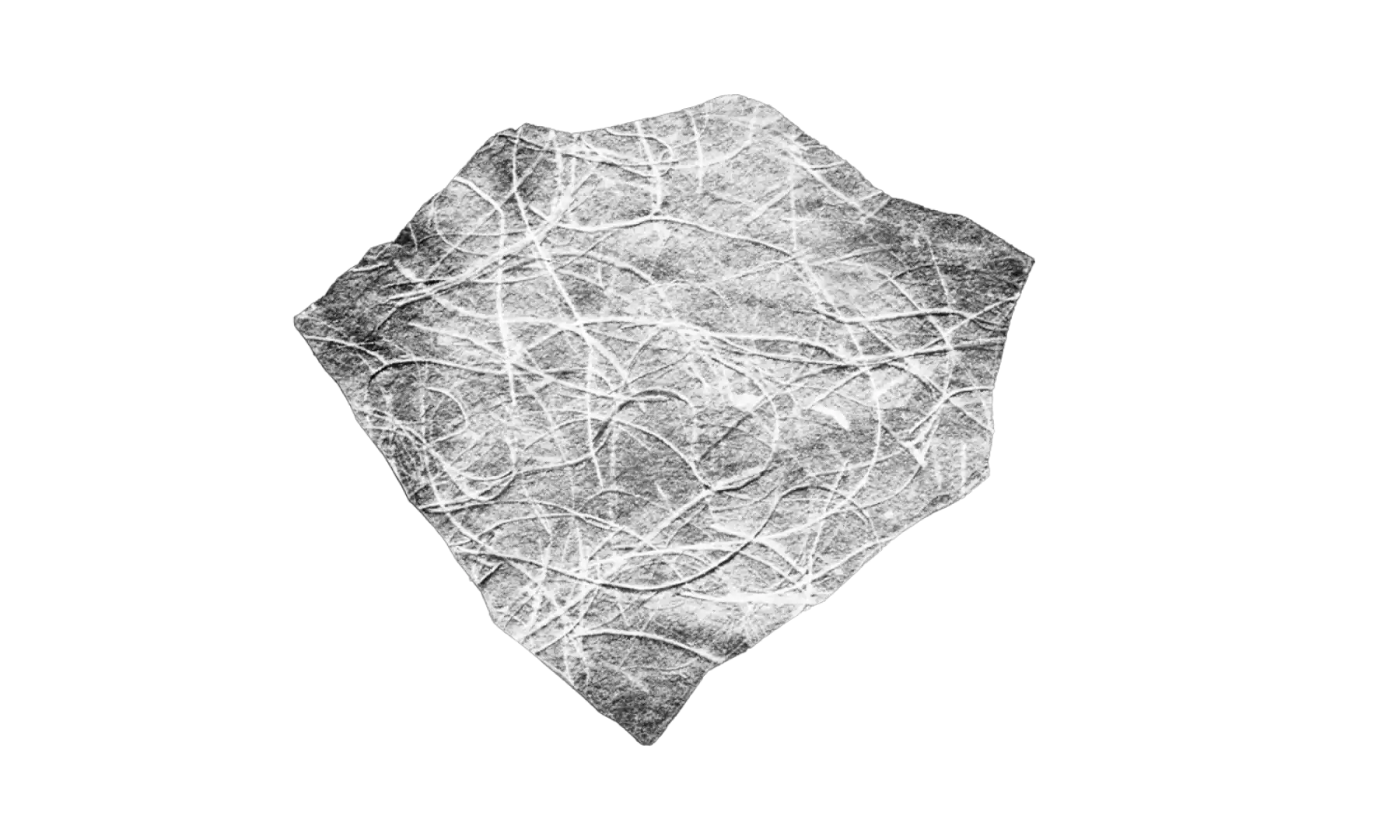
Hikihaku is a traditional Nishijin weaving technique that has been practiced in Kyoto for more than 300 years. Multiple layers of foil are applied to lacquered washi paper, cut into fine strips, and woven as weft threads. Its rich textures and changing reflections create distinctive patterns and are widely used in Nishijin textiles, especially obi sashes.
Rakugei Kobo, Inc. produces Hikibaku, a traditional technique in Nishijin-ori weaving that has been passed down for over 300 years.
Carrying on the creativity and spirit of freedom from the first generation, the workshop values encounters with people and constantly takes on new creative challenges. We visited the workshop in Otsu, Shiga Prefecture, to hear about their creative philosophy and innovative approaches.
The Inherited "Maverick" Spirit—The Roots of Rakugei Kobo
Please tell us about your business and its origins.
My grandfather founded Murata Shoten, a foil workshop, in Nishijin, Kyoto in the late 1890s. Later, my uncle managed the business, and my father, Teruyoshi Murata, oversaw manufacturing. The company was incorporated in 1971, and in 1989, Rakugei Kobo was established as a directly managed workshop of Murata Shoten to continue producing Hikibaku. We still protect the Hikibaku technique, which originated over 300 years ago.
Both my grandfather and father were highly imaginative and initially aimed to become painters. While Nishijin is known for its textiles, my grandfather chose to create expressions using gold leaf foil, not weaving.
My father was called a "maverick" and sometimes faced criticism from unions and those around him. Still, while inheriting the artistry and advanced techniques of Nishijin-ori, he ventured boldly beyond the conventions of traditional crafts, pioneering new creations in diverse fields. He proposed innovative designs for both domestic and international markets.
Could you share what led you to take over the family business?
Growing up, I always perceived the world of artisans as tough, with strict, old-school training, so I never intended to take over. However, during my high school spring break, I helped with the busy family business and got involved in applying silver foil to display tables for a globally renowned high-fashion brand. That was the turning point: my image of traditional industries switched from "old-fashioned" to "cool." After learning Nishijin-ori at our workshop, I went to work at an apparel company in Osaka after university to study distribution, gaining experience in sales before eventually returning to continue the family legacy.

Change Creates Beauty—Timeless Value Born from Old Foil
Please tell us about your production process.
Hikibaku is a technique where black-lacquered washi paper is layered with various sizes of foil, creating the intricate patterns that appear on the fabric. The washi, cut by the Kiriyasan (paper cutter), is sent to the weaving workshop, where it is woven as weft into silk warp threads, resulting in a finished textile. The name Hikibaku comes from the craftsman “hooking” each foil thread onto a spatula and weaving them one by one—the slight adjustments made by hand are the artisan’s distinct technique.
Drawing designs while envisioning the woven result requires not only knowledge and experience but also a sense of artistry. At the same time, foil workshops face harsh realities as subcontractors. Nishijin-ori has five stages and over 20 separate processes, all thoroughly divided among specialized craftspeople, with the weaver at the top overseeing everything. The union often tells foil makers, "Your role is to support—don’t step into the spotlight." The main attraction is always the fabric; the foil is simply its background. In this demanding world, both my grandfather and father kept pursuing their own creative expressions.

Are there any unique features in your production process?
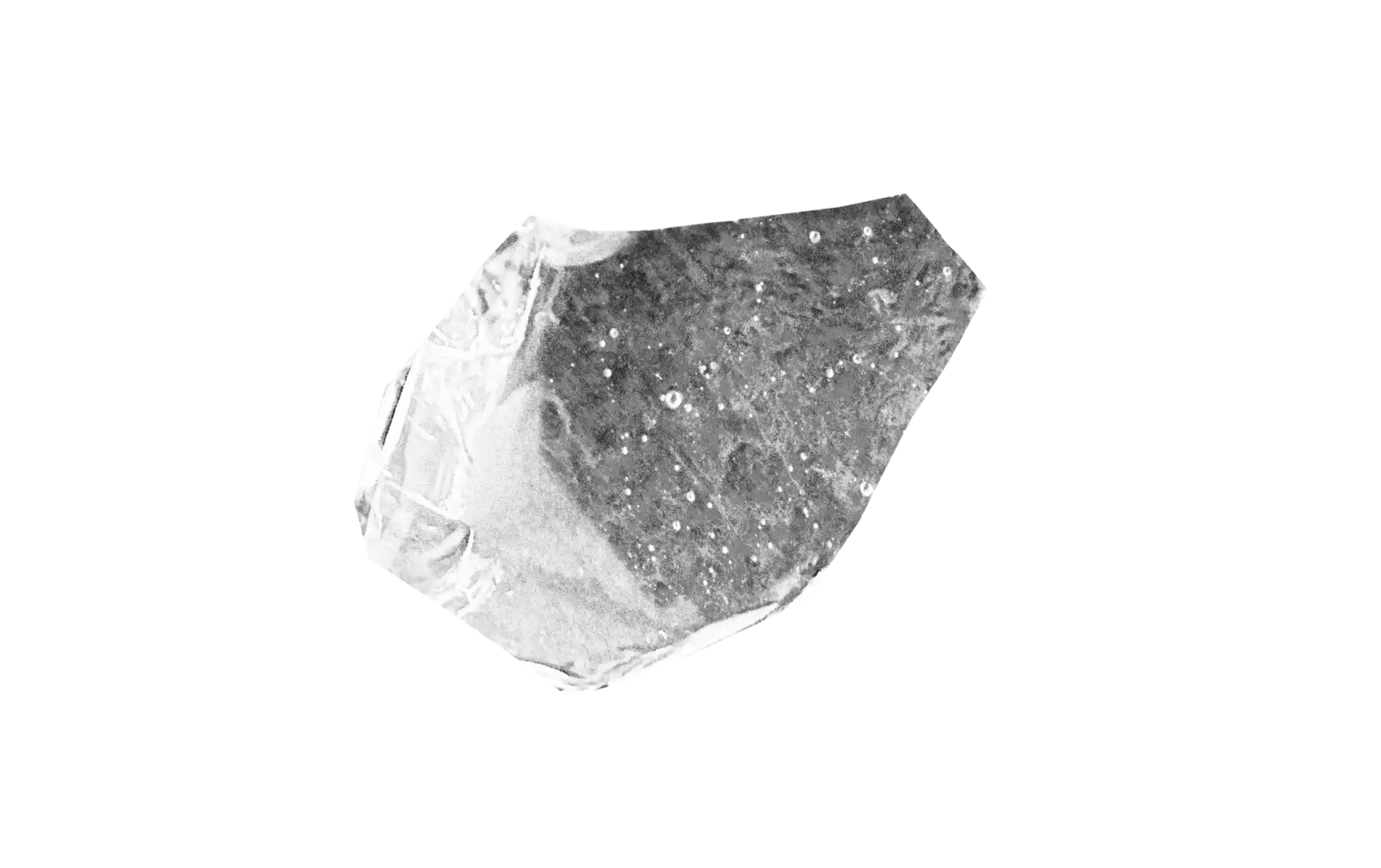
About 70 years ago, my grandfather collected vintage foil, which I still use in all of my creations today. Depending on the angle and lighting, its color changes in a myriad of ways—it's as if you’re traveling beyond time and space through the foil itself. These days, I collect fired foil as well, in hopes of passing it down for the next generation, to my children and grandchildren.
"Goshiki Kingasane (五色金重)," which my grandfather devised about 60 years ago, is one of our signature works. Back then, ornate patterns were the trend, but his designs using fired foil conveyed a sense of wabi-sabi amidst opulence and garnered much attention. Silver foil, often used in Hikibaku, can be divided into two types: colored foil dyed with pigments, and fired foil whose color changes through sulfurization. In the world of obi, where lasting beauty is prized, almost unchanging colored foil was preferred, yet my grandfather recognized the value in fired foil that changes with time. The idea that “value is created by the passage of time” has become my guiding philosophy.
Nishijin-ori has endured for 1,200 years because tools and techniques have evolved in step with the times, relentlessly seeking innovation. While safeguarding the core of craft—its warmth, texture, skills, history, and spirit that machines cannot replicate—we aim to evolve our approach and expression, preserving the Nishijin region as a craft center.
To do so, we’re proactive in adopting new tools and technology. For example, we use airguns to spray color, and cutting-edge inspection technologies to quantify the safety and hue of materials, reducing waste and creating more sustainable, SDG-friendly materials. But efficiency isn’t everything. What’s lost in the name of efficiency or rationality can actually be the most invaluable aspect of craft itself.

What inspires your creativity?
I reinterpret and arrange around 3,000 different obi patterns left to me by my grandfather and father as inspiration for my own creations. I’ve always loved painting, with a particular fascination for expressing color and technical elements. Especially striking is the use of gold leaf by Gustav Klimt, a prominent Viennese painter from the late 19th century. The allure of foil lies in its reflection; its character seems to change like a living thing depending on the viewing angle, time of day, and lighting. Klimt precisely calculated even the placement of lights in exhibition halls to highlight foil's reflective qualities in his works.
When I created an art panel this year for a hotel slated to open soon, I studied how the light would fall into the exhibition space all day long to determine how best to utilize the bumps and different sides of the foil. Under natural light, the foil’s brilliance truly stands out. In particular, fired foil, which is also used in ink paintings, gives off a subdued but deeply dignified glow of wabi-sabi.

New Encounters Open Up the Future of Creation
Have you discovered any differences or insights from working abroad compared to Japan?
I’ve participated in events such as Maison et Objet in Paris, Ambiente in Germany, and Milan Salone in Italy, and I’ve noticed that the pace at which work leads to business opportunities is much quicker overseas. While the Nishijin brand itself isn't as influential abroad, there is a profound respect for Japanese craftsmanship and artisan skill. The fact that work showcased at exhibitions can immediately lead to negotiations and business deals—that’s a major difference from Japan.
Could you share any memorable collaborations with other industries, how these came about, and what your approach was?
My father, a sociable and dynamic person, actively reached out to people in many fields and never turned down a job offer. Through the wide range of challenges born from relationships, new opportunities for making things emerged, and these connections helped my father grow. I’m now following in his footsteps.
Recently, a project with a luxury car dealer in Kyoto led to a collaborative partnership. In 2021, for BMW’s "Japanese Master Craftsmen Project," we applied Hikibaku using three different techniques to the interior of the X7 SUV, making the shine of foil the main theme. In the second phase of the collaboration coming in February 2025, the interior will be designed around the theme “Light Shining in the Night Curtain,” with a related event planned at FREUDE by BMW in Azabudai Hills in July.
Another example is a collaboration with the Taiwanese stationery brand Y STUDIO, where we applied the fired foil “Unryu-haku” directly onto their brass ballpoint pens. Similar to the BMW project, these works let owners enjoy how the craft changes with their lifestyle. In all of these cases, the key was how best to merge craft with finished products and how to integrate foil with various materials.
In the future, we also plan to create pieces in collaboration with apparel brands.

Please tell us about your future goals and vision.
Moving forward, I want to continue taking on challenges in various fields and create new types of craftsmanship. I also dream of one day making an art piece together with my father. Ultimately, I hope to give back the skills and experience I've gained to my roots in obi-making. The reason I became a certified traditional craftsman was that I wanted to contribute in my own way to the revitalization of the Nishijin-ori industry through my new endeavors.
There are only two Kiriyas foil cutters left in the world, both in Kyoto. If things continue as they are, this technique will disappear in the near future. A laser cutter can handle the cutting itself, but the unique method of leaving both ends of the foil uncut to preserve the pattern order as it becomes thread can't be reproduced by even the most advanced technology. The most crucial part of a Kiriya's craft is sharpening the blade, and having an ear trained to catch the faintest change in sound during cutting is indispensable. Aiming for more creative freedom, I want to master this skill within five years and produce everything from foil to thread in-house.
As a Hakuya foil artisan, I hope to lead the industry and create opportunities for more people to discover the allure of Hikibaku foil. With this passion in mind, I will continue to pursue craftsmanship.


Text by Riko

Japanese Craft Glossary
The History of Arimatsu Shibori: Tracing 400 Years of Turning Points From 1608 Settlement to Global Fashion

Seeking the Artisans
The Timeless Technique and Evolving Tradition of "Tsugaru Nuri Genbei": Growing More Beautiful with Every Layer

Seeking the Artisans
Passing Down 400 Years of Skill to the Future: Kiyohara Orimono on the True Worth and Evolution of "Tsuzure-Ori" Weaving
![[No. 5 (Final Episode)]: The Future of Crafts and Hopes for the Next Generation—The Teachings of Living National Treasure Teiji Miyamoto](https://images.microcms-assets.io/assets/1775a3633c8b428d9f011c6a758a8a5c/2046ba6fe8404b47aff23e31fc75384a/002_2.png?w=430&fm=webp&dpr=2)
A Century of Craft, A Master's Voice
[No. 5 (Final Episode)]: The Future of Crafts and Hopes for the Next Generation—The Teachings of Living National Treasure Teiji Miyamoto

Seeking the Artisans
Uzan-yoh on the Present and Future of Shigaraki Ware: The Luminous 'Shigaraki Touki' and a Philosophy for Modern Times
![[No.4] The Responsibility of Living National Treasure Teiji Miyamoto—Passing on Skills and the Essence of Education](https://images.microcms-assets.io/assets/1775a3633c8b428d9f011c6a758a8a5c/35443f2c53d54ec2b9ba8cebc2227cf4/002_6.png?w=430&fm=webp&dpr=2)
A Century of Craft, A Master's Voice
[No.4] The Responsibility of Living National Treasure Teiji Miyamoto—Passing on Skills and the Essence of Education
![[No.3] Independence and Trial and Error—The Birth of Living National Treasure Teiji Miyamoto's Artistic Style](https://images.microcms-assets.io/assets/1775a3633c8b428d9f011c6a758a8a5c/ab53e6ee18b04150b4e003d015e0f2c2/002_3.png?w=430&fm=webp&dpr=2)
A Century of Craft, A Master's Voice