
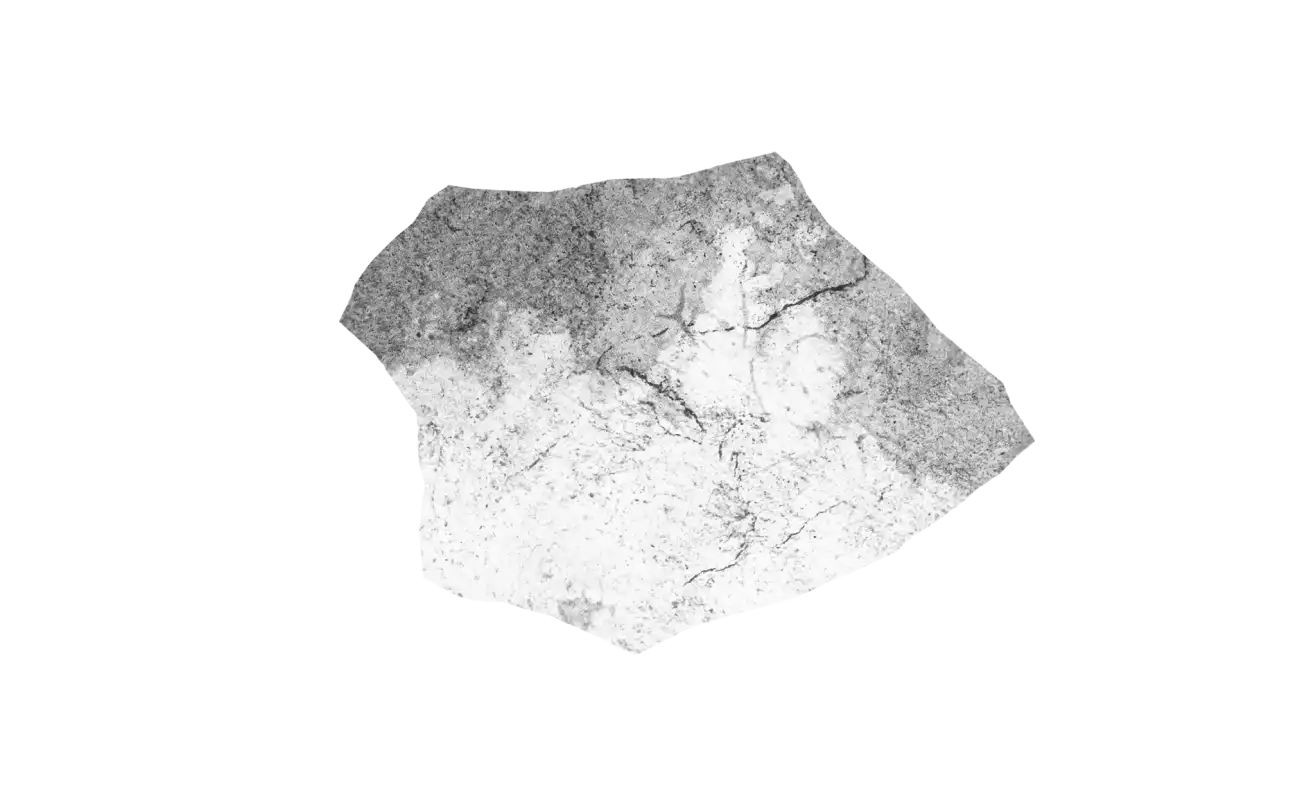


When you hear the words "Shigaraki ware," you might picture those charming tanuki (raccoon dog) statues. But hold one of its ceramic pieces in your hands, and you'll discover a much deeper world. You'll feel the powerful, coarse texture of the clay and see the unique patterns painted by fire, realizing there's more to it. As we explored the allure of Shigaraki ware, one question kept coming to mind: How has this quiet, mountainous region managed to be one of Japan’s leading pottery centers for over 800 years?
For a craft to thrive for such a long time, there has to be more to it than just passing down techniques; there must be a special reason tied to the land itself. In this article, we'll start with that simple question and dive into the secrets of how the very origins of Shigaraki and the culture of its people have nurtured this exceptional form of pottery.
It All Began with the 'Lake's Memory' Sleeping in the Earth
To truly understand the unique character of Shigaraki ware, you have to start with its essential ingredient: high-quality clay. This special clay is sourced from strata that formed at the bottom of a massive ancient lake that existed here roughly four million years ago. Known as the "Paleo-Biwa Lake," it was the predecessor to today's Lake Biwa. These layers, called the "Kobiwako Group" (Kobiwako-sōgun), were formed over eons as sediment and the remains of flora and fauna accumulated, creating the perfect clay for pottery.
The clay from Shigaraki masterfully balances two contradictory qualities: it is both easy to shape and highly resistant to fire. This is possible because several types of clay with different properties are found in the same geological layer. These include the extremely fine and sticky "Kibushi clay" (kibushi nendo) and the "Gairome clay" (gairome nendo), which contains coarse particles of quartz and feldspar, making it resilient at high temperatures. By masterfully blending these clays based on the size and desired texture of the final piece, artisans have been able to craft a diverse range of items, from massive jars (tsubo) to delicate vessels.
What’s fascinating is that the beauty of Shigaraki ware is essentially the earth’s memory—the Paleo-Biwa lakebed—revealing itself on the surface when fired. For instance, the warm "hiiro" (scarlet color), a signature of Shigaraki ware, emerges when iron in the clay combusts inside the kiln. Other features, like the whitish specks of "ishihaze" (popped stones) and the "biidoro" glaze—a natural green glass formed from melted wood ash—are part of the "scenery" created by feldspar particles in the Gairome clay. The "wabi-sabi" aesthetic found in Shigaraki ware is a beauty that emerges naturally when the inherent potential of the clay meets the flames. In essence, it is this geological gift of the land that forges Shigaraki ware’s unique identity, setting it apart from all other pottery centers.
.JPG?w=430&fm=webp&dpr=2)
The Blessings of the Mountains That Fueled the Flames and the Roads That Carried Culture
Even with the finest clay, you can't build a pottery industry on that alone. The art of creating ceramics, particularly using traditional wood-fired kilns, hinges on two crucial factors: a massive supply of fuel to keep the kilns roaring and a transportation network to ship and sell the finished pieces. Fortunately, Shigaraki was blessed with both.
First, there were the abundant forests. Much of traditional Shigaraki ware is fired in what’s known as a "noborigama," a climbing kiln built into the mountainside. For several days straight, artisans work around the clock in shifts, constantly stoking the fire to slowly bake the pottery at temperatures soaring above 1200°C. This demanding process consumes a staggering amount of firewood. The mountains encircling Shigaraki provided a steady, reliable source of this crucial fuel, becoming the backbone that sustained its large-scale pottery production.
The second key was its prime location. From ancient times, Shigaraki was a vital crossroads, linking the cultural heartlands of the Kinki region, such as Kyoto and Nara, with the Tokai region. This strategic position offered a double advantage for the growth of Shigaraki ware. For one, it created an open channel for cutting-edge techniques and information to flow into the area. Early Shigaraki ware, for instance, was heavily influenced by the more advanced methods of Tokoname ware. At the same time, it provided an efficient route to ship finished products to major markets like the imperial capital of Kyoto. It was the trifecta of superior clay (the "advantage of the land"), the bounty of the forests for fuel, and the highways that connected culture and commerce that allowed Shigaraki to blossom into one of Japan's most celebrated pottery regions.

The Spirit of Craftsmanship, Nurtured by a Simple Bowl of Tea
The encounter with the tea ceremony culture marked a pivotal moment in the history of Shigaraki ware. During the Muromachi and Azuchi-Momoyama periods, influential tea masters like Sen no Rikyu began to turn away from lavish imported wares, instead finding a new kind of beauty in ordinary, locally-made objects. They saw the quiet, profound spirit of "wabi-sabi" in the rough, unpretentious jars and pots that Shigaraki farmers used for everyday tasks like storing seed rice and water.
What’s fascinating is that Shigaraki is also home to "Asamiya-cha," one of Japan’s most celebrated teas. It’s surely no accident that two sophisticated traditions—the culture of drinking tea and the culture of crafting the vessels for it—flourished side-by-side in the same place. Being a tea-producing area created a constant, local demand for high-quality tea ware, which in turn provided the perfect training ground for potters to refine their skills and aesthetic judgment. Tea masters went beyond simply selecting pieces from existing stock (a practice called "mitate"); they would even collaborate with artisans to create custom-ordered tea implements that perfectly suited their tastes.
Having these tea masters—the ultimate end-users and sharpest critics—right on their doorstep was a game-changer. Through this close collaboration, humble everyday objects were elevated into works of art, imbued with a deep spiritual quality. It's easy to see how this constant cultural exchange fostered a mindset among Shigaraki potters dedicated to the relentless pursuit of excellence. This, too, is part of what makes Shigaraki so unique.

A Dialogue with the Harsh yet Bountiful Climate
Shigaraki's basin climate means sweltering summers and bitterly cold winters. At first glance, this might seem like a disadvantage for pottery making. But in reality, this challenging climate is precisely what has honed the artisans' skills and become a cornerstone of Shigaraki ware's exceptional quality.
Take the drying process, for example. Before a shaped piece can be fired, it must be dried completely. If this happens too fast, the clay will crack and warp as it shrinks. This is especially true for the large-scale works that are a Shigaraki specialty, where the outside can dry much faster than the inside. To prevent this, pieces must be left in a well-ventilated, shady spot to dry slowly and evenly over several days, or even weeks. Artisans rely on their senses, feeling the day's temperature and humidity on their skin, to create the perfect drying conditions.
The firing process in a wood-fueled kiln is another delicate dance with the elements. On a humid, rainy day, the flames inside the kiln behave differently. Potters must use all five senses—reading the color of the fire, the way it dances, the look of the smoke billowing from the chimney—to understand what’s happening inside and make constant, tiny adjustments to how and when they stoke the fire. This unforgiving environment demands a heightened sensitivity and profound insight from the artisans. It is through this perpetual conversation with nature that the lively, spirited character of Shigaraki ware—something that could never be replicated by a machine—is born.

A Fertile Ground Where People and Technology Converge to Cultivate the Future
During my visit, I discovered that another defining feature of Shigaraki is its remarkably open atmosphere. Potters here are said to welcome fellow artisans into their studios without hesitation, sharing their space and knowledge freely. This spirit of openness extends to newcomers, and the town has long embraced creators from all over Japan and beyond.
This culture is supported by both a collective ambition to innovate and the infrastructure to make it happen. Shigaraki is home to a public institution called the "窯業試験場," which conducts specialized R&D for the ceramics industry. Artisans can easily consult with experts about new materials, glazes, and techniques, and even launch joint development projects. The area is also home to manufacturers of specialized machinery like potter's wheels and kilns, creating a hub where every aspect of the ceramics trade converges.
This synergy between the "openness of its people" and a "concentration of technical infrastructure" has fostered an environment where new ideas can flourish. While continuing to honor traditional techniques, creators are also free to develop new products for contemporary lifestyles and experiment with unprecedented materials. This adaptability is the true source of Shigaraki ware's power, allowing it to navigate the tides of change and continue to captivate people today.

What allowed Shigaraki to become one of Japan's most celebrated pottery centers? It was a perfect storm of factors: the geological fortune of miraculous clay left by an ancient lake; the geographical advantages of lush forests and cultural highways that helped maximize the clay's potential; and a sincere spirit of artisanship, cultivated by continuously meeting the exacting demands of users. All these elements intertwined and fermented over centuries, giving rise to the one-of-a-kind craft that is Shigaraki ware.
When you hold a piece of pottery in your hands, you can feel the quiet whisper of this land's long history. Knowing its story, the vessel before you might just become a little more precious.

