
Aomori
Toshiki Tanaka
Toshiki Tanaka, President and CEO of Tanaka Meisan Co., Ltd. He is responsible for managing Tanaka Meisan Co., Ltd.
Tsugaru-nuri
Tsugaru-nuri is produced through a “togidashi kawari-nuri” technique, involving about 48 steps over more than two months, where layers of lacquer are repeatedly applied and polished. Natural lacquer is combined with materials such as raden (mother-of-pearl), charcoal powder, and seeds to create intricate layered patterns. It is used for tableware like bowls and chopsticks, and recently also for art panels and signage.
Imagine lacquerware that lets light filter through, unveiling a hidden layer of shimmering mother-of-pearl (raden) that glows like a starry night sky. This is "Translucent Tsugaru-nuri," a radically new expression born from Tsugaru-nuri, the celebrated traditional craft of Aomori. While conventional lacquerware is known for its deep, light-absorbing colors, this technique flips that image on its head.
This game-changing technique was pioneered by Tsugaru-nuri Tanaka (Tanaka Meisan Co., Ltd.), a venerable workshop in Hirosaki, Aomori. The president, Tanaka, has a unique background, having previously forged a career as an IT engineer in Tokyo. As someone who bridges the worlds of tradition and technology, what potential did he see in his hometown's 400-year-old craft, and how is he shaping its future? We delved into his trailblazing journey.
An Innovator's Homecoming: The Origin Story of a 'U-Turn' CEO
"To be honest, the idea that I might one day take over the family’s traditional craft business was always in the back of my mind, and I wasn't thrilled about it."
That's how Tanaka recalls his teenage years and time as a student. Fascinated by gadgets and the IT world, he moved to Tokyo for university and went on to work as an engineer, carving out a career worlds away from his family's trade.
His life took a pivotal turn with the 2011 Great East Japan Earthquake. Seeing the devastation in his native Tohoku region prompted him to rethink his path. "Should I stay in Tokyo with my IT job, or should I go back and keep the family business alive?" After some deep soul-searching, he decided to make the U-turn home.
The roots of his innovative ideas stretch back to his childhood. His playground was the workshop, a place abuzz with artisans. He remembers being fascinated not only by the sleek beauty of the finished pieces but also by the intriguing, uneven texture of the lacquer during its creation. He laughingly admits he often got scolded for playing with it.
This core memory of finding “the beauty in the making” would later sow the seeds for a groundbreaking new product.

The Soul of Tsugaru-nuri: A Deep Dive into its 48 Steps and 4 Core Techniques
What truly sets Tsugaru-nuri apart is its signature technique, togidashi kawari-nuri (grind-and-polish varied lacquering), a method found nowhere else in Japan. It involves meticulously applying dozens of layers of lacquer, which are then polished down to a smooth finish. This process reveals intricate, beautiful patterns that look like the colorful cross-section of a mineral.
It's a craft demanding incredible patience and time, requiring around 48 distinct steps and taking more than two months from start to finish. The primary methods passed down today are known as the “Four Core Techniques.”
The most emblematic is Kara-nuri. Using a custom spatula called a shikake-bera, an artisan creates a speckled, textured pattern. Layers of different colored lacquer are then applied over it and polished away, revealing a complex and richly textured design.
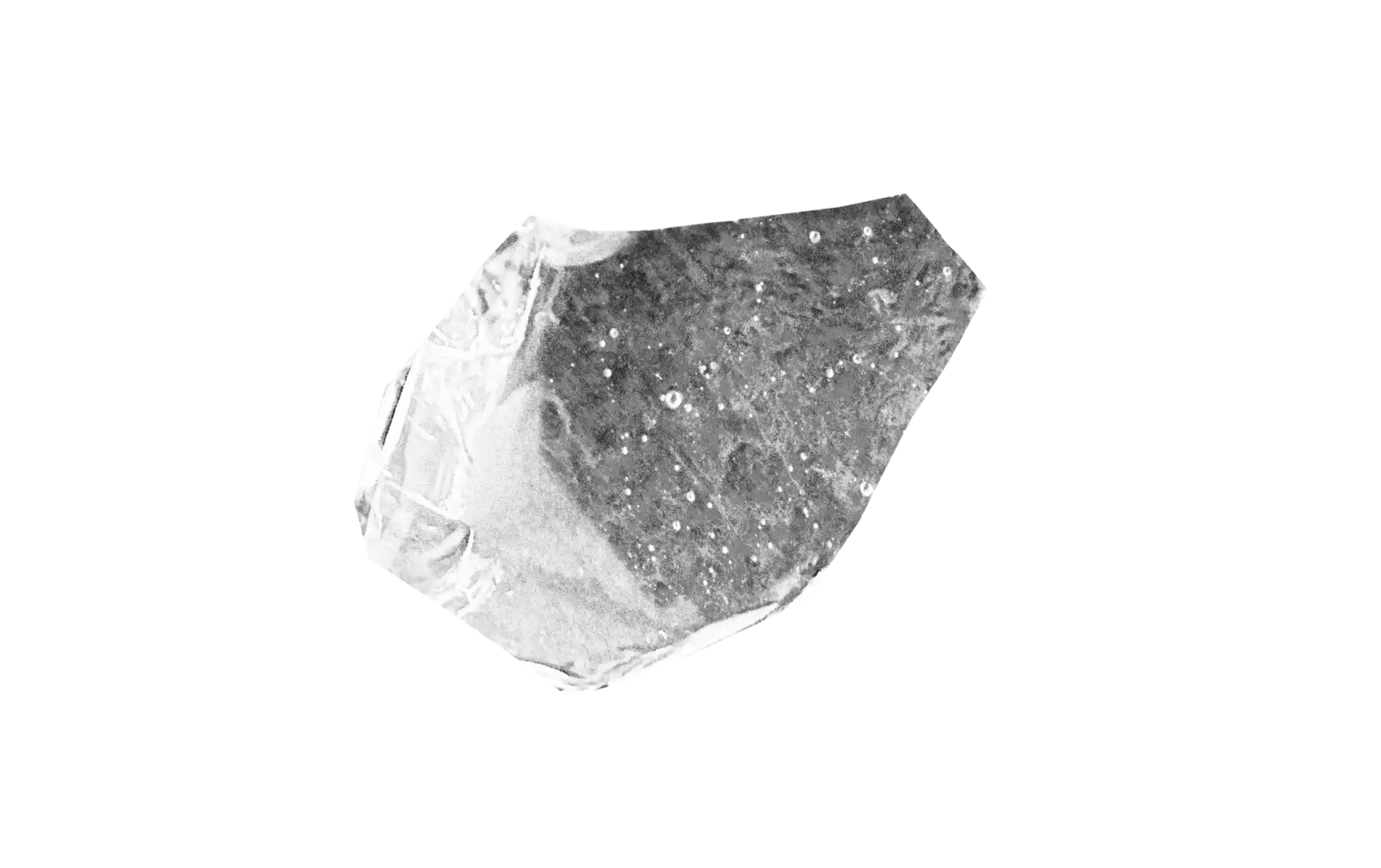

In contrast, Nanako-nuri offers a delicate beauty. This technique involves sprinkling rapeseed evenly over a wet lacquer base. Once dry, the seeds are removed, leaving behind a distinctive pattern of tiny, uniform rings. The process is unforgiving and requires a master's hand.
For a more modern and chic aesthetic, there is Monsha-nuri. An artisan draws a pattern with black lacquer, then sprinkles it with charcoal powder made from rice husks before polishing. This creates a stunning contrast between glossy black and a velvety, light-swallowing matte black.
Finally, the most sophisticated and decorative of the four techniques is Nishiki-nuri. Built upon a Nanako-nuri base, an artisan adds elaborate patterns like the sayagata (interlocking key fret) motif before the final polishing. This method, which layers multiple designs onto a single vessel, truly represents the pinnacle of Tsugaru-nuri craftsmanship.

A Leap Beyond Tradition: A New Era of Tsugaru-nuri
Building upon this traditional foundation, Tsugaru-nuri Tanaka is continuously innovating with new forms of expression.
Particularly noteworthy is their "透ける津軽塗" (Translucent Tsugaru-nuri) technique. It emerged from the revolutionary idea of using "suki-urushi," a highly transparent lacquer that has always been available, to let the undercoat show through.
For example, when this lacquer is applied over a base with raden (mother-of-pearl inlay), it produces a magical effect, as if light is emanating from within, much like stars twinkling in the night sky. This technique was so easy to copy that its research and development were reportedly conducted as a top-secret project within the company for several years until a patent could be filed.
Today, harnessing its unique expressive power, the company is now looking to expand into new areas beyond tableware, such as creating art panels for hotels and signboards for shops.
Meanwhile, another series was developed from a completely different angle, focusing on the inherent "feel" of lacquer. This series intentionally preserves the "interesting, uneven texture" that Tanaka remembers feeling on half-finished pieces from his childhood, making it the final finish of the product.

The "YUINURI" series, a refinement of this concept designed for gifting, has earned high acclaim, even winning the prefectural governor's award.
Another unique product is the "UTAKATA" (Chopsticks for Enjoying Aging). Achieving a smooth, brushstroke-free gradient with natural lacquer is incredibly rare and a testament to the company's painstaking efforts. While they may look like typical fine-grained Nanako-nuri chopsticks at first, with use, the surface gradually wears away, revealing the underlying base color lacquer.
The user's personal habits create the evolving pattern, offering a new way to connect with a craft item, where "the design develops alongside the owner's personal journey through time."

A Responsibility to the Future: The Challenges Facing the Lacquerware Region
Behind this wave of innovation, however, the region faces critical challenges. The most pressing issues are an aging workforce and a shortage of successors. At Tsugaru-nuri Tanaka's own workshop, more than two-thirds of the artisans are over the age of 60. Most critically, the only remaining *kijishi* (woodturner) who creates the wooden bases for the lacquerware is an 84-year-old master with no successor.
In the old days, a traditional apprenticeship system was the norm, where apprentices would live in, work, and learn the trade for little more than pocket money. However, that model is no longer sustainable in the modern job market.
The pressing question is how to spark interest in young people, train them in the necessary skills, and convince them to build a career in the craft. A solid training model has yet to be established, a problem that weighs heavily on Tanaka.
With other local lacquerware businesses closing one by one, Tsugaru-nuri Tanaka is fast becoming the "last bastion" of the industry in the region. The immense responsibility to keep this cultural flame alive rests squarely on his shoulders.

What is Tsugaru-nuri? — Passing Down Both "Things" and "Stories"
In Tanaka's own words, the value of Tsugaru-nuri isn't just found in the beauty of the finished object, the *mono* (thing). Naturally, its fundamental value as a sturdy, beautiful vessel that enlivens the daily dining table is undeniable to him.
But what he describes as having a truly "priceless value" is the story behind its creation—the *koto* (experience), the very scene of artisans silently honing their craft in the workshop.
It's about appreciating the creator's passion, the immense time invested, and the long, venerable history passed down through generations. For him, Tsugaru-nuri is the very embodiment of this intangible worth.
"I'm not taking on these new challenges just to make a hit product," says Tanaka. The translucent lacquer and "YUINURI" are experiments aimed at ensuring that the entire culture of Tsugaru-nuri, including traditional styles like Kara-nuri, can be passed on to the future.
After all, Tsugaru-nuri was originally an incredibly free-spirited and creative craft; records from 400 years ago show that more than 400 different designs were developed.
Preserving tradition isn't about rigidly maintaining a form. It’s about inheriting its spirit and continually evolving with the times. Tanaka's endeavors are nothing less than a beacon of light, illuminating the future of traditional Japanese crafts.


Japanese Craft Glossary
The History of Arimatsu Shibori: Tracing 400 Years of Turning Points From 1608 Settlement to Global Fashion

Seeking the Artisans
The Timeless Technique and Evolving Tradition of "Tsugaru Nuri Genbei": Growing More Beautiful with Every Layer
Seeking the Artisans
The Timeless Technique and Evolving Tradition of "Tsugaru Nuri Genbei": Growing More Beautiful with Every Layer
![The Craftsmanship and No-Compromise Philosophy Behind "Tsugaru Vidro" [Part 2]](https://images.microcms-assets.io/assets/1775a3633c8b428d9f011c6a758a8a5c/665919c6f8ea441599edb993bb4d33aa/DSC_2760.JPG?w=430&fm=webp&dpr=2)
Seeking the Artisans
The Craftsmanship and No-Compromise Philosophy Behind "Tsugaru Vidro" [Part 2]
![Born From the Sea, Forged Into Glass Reflecting the Seasons: The Story of 'Tsugaru Vidro' [Part 1]](https://images.microcms-assets.io/assets/1775a3633c8b428d9f011c6a758a8a5c/8700173831e74601b74047dff1e7c093/180723_074_99e6ea9d-148d-47f0-bca9-f5f3ace7fc7b.webp?w=430&fm=webp&dpr=2)
Seeking the Artisans