
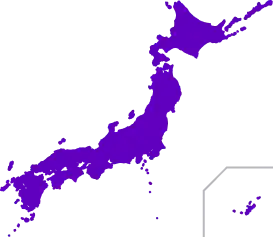
Nara
Fumio Matsutani
Fumio Matsutani, Traditional Craftsman at Akashiya Co., Ltd. He is an artisan engaged in the production of Nara brushes.
Nara Brush
It is made through a process of carefully selecting and blending different types of animal hair, adjusting hardness and elasticity according to use to form the brush tip. Materials include over ten kinds of animal hair such as goat, horse tail, and rabbit hair, with Chinese goat hair being particularly important. It is used in calligraphy for styles like kaisho and sosho, enabling diverse line expressions depending on pressure and movement.
Nara brushes are a craft with a proud history stretching back over 1,000 years, making them the oldest in Japan. Their existence was even documented in the Taiho Code of 701, and they have since evolved hand-in-hand with the culture of calligraphy. For this article, we visited Akashiya Co., Ltd. to speak with Matsutani, a Nara brush artisan and certified Traditional Craftsman.
Upon entering the showroom, we were drawn into the profound world of brush making. We witnessed the delicate process of sorting animal hairs and saw replicas of brushes preserved in the Shosoin Treasure House. Matsutani describes the brush as his "sixth finger," and through his words, we will explore the very essence of Nara brushes.
The Origins of Nara Brushes: The Dawn of Japanese Calligraphy Culture
The history of Nara brushes can be traced all the way back to the Asuka period (592–710). The Taiho Code, enacted in 701, records that brush and ink makers were assigned to the "Ministry of Central Affairs" (Nakatsukasa-shō), marking the first documented evidence of brush making in Japan. As the capital and a hub of politics and learning, Nara provided fertile ground for a culture of writing to flourish.
Today, Nara, along with Kumano, Kawajiri, and Toyohashi, is designated by the national government as one of the "Four Major Brush Production Areas." Among these, Nara holds a special place as the birthplace of brush making in Japan. The tradition of Nara brushes goes beyond mere craftsmanship; it has been passed down through the ages as a cornerstone of Japanese calligraphy culture.
Strolling through the ancient streets and temples of Nara, you can feel an undeniable connection to the history of the brush. The brushes and calligraphy preserved in the Shosoin Treasure House reveal how deeply the people of that time valued scholarship and aesthetics. A brush was more than just a writing tool; it was a symbol for preserving knowledge and ideas for future generations.

The Artisan's Eye: Mastering the Selection of Bristles
The most critical steps in crafting a Nara brush are selecting and blending the bristles. Brushes are made from more than ten different types of animal hair, each with its own unique properties. For example, goat hair is soft and has excellent ink retention, making it a versatile material used in everything from affordable brushes to the most luxurious ones. In contrast, horse tail hair is long and ideal for creating powerful, dynamic strokes. In ancient times, short rabbit hair was commonly used for practical brushes.
An artisan's work goes far beyond simply bundling the hairs. It involves discerning the unique qualities of each type of animal hair and carefully balancing firmness and elasticity to suit the brush's intended purpose. For instance, a brush for block script (kaisho) incorporates more firm hairs, while one for cursive script (sosho) uses a higher proportion of soft hairs. This "combination of bristles" ultimately defines the brush's writing feel and expressive potential.
"The personality of a brush is determined by which hairs you combine and how," Matsutani explains. The final quality of a brush hinges on the artisan's ability to maximize the potential of the bristles. The brush tip absorbs the writer's pressure and speed, holds the ink, and spins lines across the paper. Reacting almost as if it were alive, the tip is a concentration of the artisan's intuition and years of experience.
What's even more astonishing is that the quality of goat hair varies dramatically depending on its region of origin and breeding environment. The goat hair used for brushes is exclusively sourced from goats in China's lower Yangtze River region, a practice that has continued since ancient times. This hair has unique characteristics that Japanese goat hair cannot replicate, making it an indispensable material for high-end brushes even today.

The Diversity of Brushes: A Legacy of Calligraphy Schools
The evolution of Nara brushes is deeply intertwined with the history of Japanese calligraphy. During the Heian period, various schools of calligraphy emerged, championed by figures like Kukai and Emperor Saga. Each school developed distinct methods for holding the brush and handling the bristles, and these differences influenced the shape and purpose of the brushes themselves.
One particularly remarkable shift came with the start of compulsory education in the Meiji era. The need for standardized writing instruction across Japan led to the adoption of "futofude" (thick brushes), which were easier for children to learn with. In contrast to the slender "hosofude" used for practical, everyday writing, the focus shifted to drawing large, precise characters one by one with a thick brush. For modern people accustomed to pencils and ballpoint pens, using a brush correctly has become a challenge, but this challenge reveals the true depth of Japan's calligraphy culture.
Matsutani explains, "Just changing how you hold the brush can dramatically alter the character's personality." The modern style of gripping the lower part, much like a pencil, fails to harness the brush's natural resilience. It is the ancient method of holding the upper part that creates fluid, dynamic lines with varying strength. While standardization was a necessary step in school education, he notes that many nuanced sensibilities were lost in the process.
It's also fascinating that unique teaching methods persist within different calligraphy schools, such as instructions to "only use the bottom half of the bristles." This is more than just a lesson on using a writing tool; it's an educational approach that reflects specific cultural backgrounds and philosophies, showcasing just how deeply these tools are woven into the Japanese spirit.

Bringing the Brushes of the Shosoin Repository Back to Life
In the showroom, shelves are lined with brushes of every size. Among them are rare brushes known as "kamimaki-fude" (paper-wrapped brushes). Used since the Nara period, they are crafted by wrapping washi paper around a core and then bundling bristles around it. The Shosoin Repository still houses kamimaki-fude that were used in the eye-opening ceremony for the Great Buddha at Todai-ji Temple.
The company also undertakes the restoration of such historical brushes, and some restored during the Taisho era still exist today. During the restoration, they analyze the original bristles and use materials that are as close as possible to the originals. A brush is not a piece of art; it is a tool that only finds its true purpose through use, and its re-creation requires immense precision and a keen feel.
Also on display are tools that have been used for decades. Metal fittings with worn-down blades and wooden tools with smoothed-down handles are a testament to an artisan's journey. The tools themselves seem to live alongside the craftsperson, becoming one-of-a-kind treasures forged through years of shared history.

The Brush as a "Sixth Finger"—An Artisan's Philosophy
It's no surprise that for Matsutani, a brush is far more than just a writing instrument. He sees it as a "sixth finger." The tools he has used for decades in brush-making have worn down and changed shape, embodying the artisan's skill and history. An apprentice learns the craft, at times questions the master's teachings, and seeks answers through their own intuition. It is this journey of discovery that ultimately gives birth to an artisan's "own brush."
Furthermore, a brush that an artisan deems "well-made" is not always the easiest for a calligrapher to use. In fact, a writer might praise a brush that the artisan felt was "a failure this time." This unpredictability is part of the brush's profound nature, enriching the relationship between the user and the maker.
"Even when a brush is finished, how someone perceives it differs from person to person," Matsutani says. The lines a brush produces can change depending on the user's pressure and the type of paper, even with the same brush tip. That is why a brush is anything but a static tool; it is an entity that reveals a new expression each time it is used. The craft of brush-making, which constantly evolves while preserving tradition, is filled with infinite possibilities.
A brush is a tool for writing and, at the same time, a mirror that reflects the writer's soul and culture. From ancient times to the present, Nara brushes have been the bedrock of Japanese language and expression. Each brush, born from an artisan's hands, carries over 1,000 years of history, inherited skill, and spirit. In an age where ballpoint pens and digital tools dominate, experiencing the "origin of writing" that Nara brushes embody offers a precious opportunity to reconnect with the very essence of calligraphy culture.


Japanese Craft Glossary
The History of Arimatsu Shibori: Tracing 400 Years of Turning Points From 1608 Settlement to Global Fashion

Seeking the Artisans

