
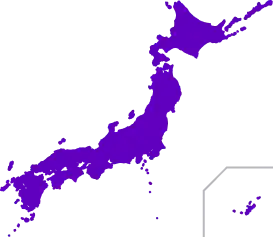
Nara
Daisuke Okai
Daisuke Okai, President of Okaimafu Shoten. He founded the in-house brand “Mafu a Mano,” developing new products and promoting the appeal of Nara sarashi.
Nara Sarashi
Nara Sarashi is a traditional hemp textile produced mainly in Nara City, Nara Prefecture, and has been passed down since before the Edo period. It is made through three main processes—hemp thread preparation, weaving, and bleaching—and is characterized by the natural texture and color of undyed hemp. Traditionally used for tea ceremony cloths and sukiya bags, it is now also applied to products such as noren curtains, tapestries, pouches, and coffee filters for contemporary lifestyles.
Mafu Okai started as a wholesaler of handwoven Nara Sarashi, later establishing its own brand. They pursue the unchanging beauty of handwoven Nara Sarashi, aiming to create products that fit modern lifestyles. We visited their atelier nestled in the serene mountains of Nara City, Nara Prefecture, to speak with the company representative, Daisuke Okai.
A Weaving Family Line Continues from Pre-Edo
Please tell us about your business and its beginnings.
During the Edo period, weaving was the sole industry in Nara, with approximately 90% of residents in Naramachi involved in it. The Okai family has engaged in weaving for generations, launching the house name "Mafu Okai Shop" in 1863. They primarily wove items related to the tea ceremony, such as kamishimo, cloths, and sukiya bags for samurai. They wholesaled to traders, but as the demand for tea utensils waned, they feared decline. Thus, they aimed to create products suitable for modern lifestyles by using hand-spun, handwoven Nara Sarashi, opening a store 20 years ago.
What prompted and led you to take over the family business?
Anticipating future benefits, I studied business at a university in Kyoto. While I intended to someday inherit the family business, I initially thought it might be better to explore other fields. However, just as I graduated, we decided to open a store, prompting me to immediately engage in the family business. I started as the store manager, learning alongside the staff about customer service and sales, in addition to weaving.

Harnessing Nature's Texture for a Modest Allure
Tell us about the charm of Nara Sarashi.
The greatest charm is its simplicity. Instead of expressing through colors on hemp fabric, you can feel the material's beauty through its undyed, plain-colored threads. Despite attempts to whiten by submerging in water and beating to remove pigments, parts of the hemp bark remain, preventing complete whiteness. Its appeal lies in retaining the natural texture with visible hemp bark, showcasing a unique, natural imperfection.
Could you briefly explain the production process? Are there any particularly difficult or prioritized steps?
The production process is broadly divided into "Oumi (Ramie Weaving)," "Weaving," and "Bleaching." Fibers are procured from Tochigi Prefecture, spun into threads (Oumi), twisted to create warp threads, and organized by frequency. Then, they are glued, moistened, and layered onto a loom.
Subsequently, we make a heddle, insert the weft yarn into the shuttle, and weave through the warp threads. The woven hemp fabric undergoes several bleaching processes for completion. We hand-sew tea cloths for various tea ceremony schools and produce norens, tapestries, and pouch accessories using mainly stencil dyeing. Although the weaving phase receives attention, thorough pre-loom preparation is crucial for achieving beautiful woven fabric.
We acquire fibers dried after being stripped from hemp stalks and tear them into threads. Our grandmother's era saw the creation of a significant stock of threads stored in the warehouse. Each bundle bears the name of the person who tore the fibers, as thread thickness varies with each person. We adapt to different thread thicknesses depending on our product creations.
Do you have any unique features or competitive advantages?
We are now the only company still producing products with Nara Sarashi using ancient techniques. While the fabric's weaving width used to be 32cm to 40cm, we rebuilt the loom to create widths up to 45cm, broadening product varieties like norens and parasols.

A Craftsman Network that Materializes Thoughts
Please share the sources of your ideas or references you have.
Besides information available online, I go out and explore places on my own. Especially in museums, I get to experience timeless expressions that have been passed down through generations, which is quite educational. In Nara Prefecture, there is a Nara Brand Development Support Project where 21 small and medium-sized manufacturing companies regularly meet. I often communicate with them and gain inspiration. For example, when I have the idea to prototype a stool, I can immediately ask a nearby acquaintance who is an upholsterer, which makes it easy to bring my ideas to life. Customers who visit Matsuyaginza have discerning eyes, which has been a trigger for realizing aspects of brand building that were not apparent while being in Nara.
Can you tell us about the inspiration and process behind starting your original brand "Mafu a Mano"?
We have two stores called "Mafu Okai," but there was a desire to express something more authentic to ourselves through varied product lineups. Instead of many souvenirs typically associated with Nara, I wanted to pursue simple products in natural linen colors like unbleached and white that evoke emotions. For instance, considering that coffee is stored in burlap bags, I developed a coffee filter for Nel drip. Compared to common cotton filters, linen dries quickly and retains less odor. It also does not absorb too much of the coffee's oils like paper, allowing the aroma to flourish. For the filter, I partnered with a bicycle basket manufacturer for the dripper and a metalworking acquaintance for the stand.

The Importance of Creativity & Communication
Are there any challenges in the industry? What do you think is necessary to solve these challenges?
The low awareness of Nara Sarashi is a challenge. If there is no demand, successors are not nurtured, and craftsmen who create tools to support manufacturing disappear, leading to an inability to procure necessary items. Also, due to the low brand awareness, even if much time is spent weaving, prices cannot be increased.
Efforts to first introduce Nara Sarashi are essential. Although well-known as tea utensils, it is not recognized in the apparel or interior sectors. We are carrying out promotional activities through various products and through social media, media, and workshops. "Mafu Okai" provides familiar products as a gateway, and Mafu a Mano aims at branding that pursues aesthetics, achieving differentiation.
Please share your thoughts on PR activities and branding in the textile industry.
Although online shopping has become commonplace, the different hues and yarn thicknesses of Nara Sarashi are difficult to convey on screen. The density of the hemp cloth also varies, making it almost impossible for the base fabric color to be uniform when dyed. Words noted in descriptions do not convey this, so I hope people will see and touch the products in person. In fact, there are overwhelmingly more customers who purchase products in physical stores than online and then become repeat customers. I would like to focus on communication and continue creating good products.

What plans do you have for innovation or new technology initiatives? If you have any future prospects, please share them.
I am considering products that integrate Nara Sarashi into lifestyles. Tinkering with things thought impossible and going through trial and error is enjoyable.
Currently, I am interested in space design and apparel. Hemp is a comfortable material that is breathable and cool. Although most hemp used in apparel is machine-woven, I would like to make shirts using hand-woven Nara Sarashi. Also, I am contemplating creating screen dividers, like mosquito nets, that maintain privacy while allowing interaction between individuals. With increased remote work during the COVID-19 pandemic and situations where children cannot attend school, I thought of designing a space using hemp netting fabric that allows family members to concentrate on separate tasks in one area. It could potentially be used during disasters as well.
By making traditional items part of daily life and known to many people, we can foster better craftsmanship and craftspeople. I aim to connect the essence of Nara Sarashi, passed down over hundreds of years, to future generations.

Text & Photo by Riko

Japanese Craft Glossary
The History of Arimatsu Shibori: Tracing 400 Years of Turning Points From 1608 Settlement to Global Fashion

Seeking the Artisans

