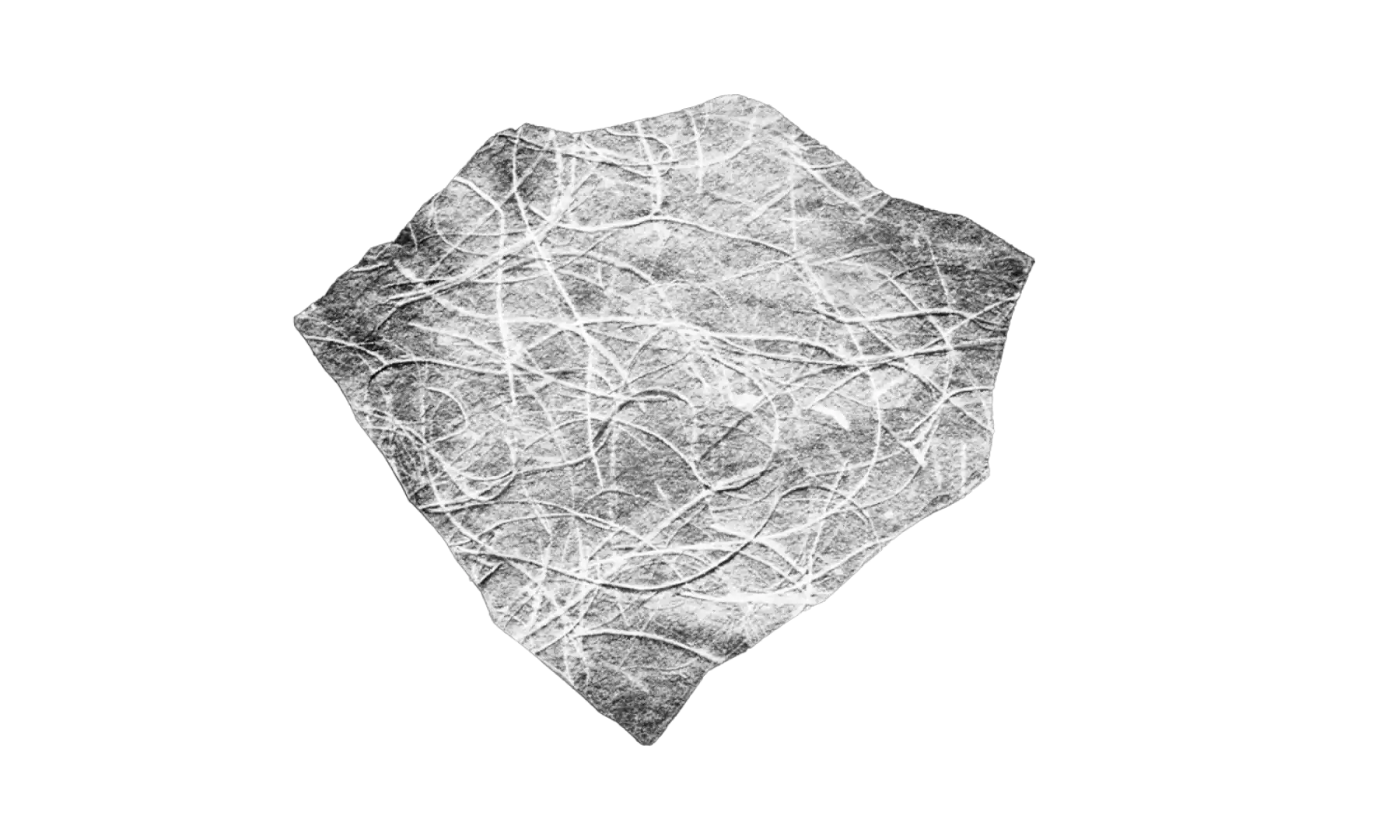

There are certain materials that a traditional Japanese Nihonga painter absolutely cannot do without. Paper, mineral pigments, animal protein, and brushes. And of those items, I consider the most sacred of them all to be paper. The most popular TV drama this year follows the life of author Lady Murasaki who lived 1,000 years ago. In it, the beauty of paper from Echizen is mentioned many times. We learn that as famous throughout Japan as it was, even to the people of the Heian imperial court Echizen paper was considered a great luxury. During the more than forty years I have been painting in Japan, of the many kinds of paper created in Echizen, the one I use the most is called torinoko, named for the white color and texture of a chicken’s egg. I am constantly impressed by its strength and beauty. Until my first introduction to Japanese paper, when I thought of paper, I thought of the kind of mass produced cheap mimeograph paper which didn’t particularly impress me all that much. Nevertheless, as a nihonga painter painting hanging scrolls and folding screens, my interest in Japanese paper naturally rose to a near obsession.

It is said that Japan is poor in resources, but I believe that in the area of craftsmen, their technical facility is an unrivaled resource in the world. Their wisdom has accumulated over the ages from generation upon generation. Echizen paper, is the living crystallization of ancient wisdom faithfully mastered by craftsmen today. They have mastered a complete knowledge and understanding of the all-natural materials that go into paper making. It cannot be emphasized enough how different this is from the various kinds of paper we come across every day.
Technically speaking, the paper made in Echizen is made with either mulberry fibers or fibers from a plant of the daphne family. The silky fibers of about one meter in length, are put in a tank of water and mixed around until they form a complex knot. This three dimensional knot is then turned into two dimensions as the water is drained. This is how a paper stronger than fabric is created. And remarkably enough, this technique was believed to have been divinely bestowed. Such a deity, Kawakami Gozen, the patron deity of paper, is celebrated at the Okamoto and Ootaki shrines in Echizen city. The origins of this legend can be traced back 1,500 years. Once every fifty years a special ceremonial festival of gratitude is celebrated in honor of this heavenly intervention. As someone who uses Echizen paper, I was fortunate to be invited by Mr. Yokoo Yasushi of Masumi who mounts my folding screens and hanging scrolls to participate in 2018, the most recent of these ceremonies. Because it is the ideal base for gold and silver leaf, I am particularly partial to their torinoko paper. I was excited to be able to formally express my thanks in this unusually appropriate way. I’d like to share with you my experiences of that magical three days.

On the first day, fifty Shinto priests dressed in pure white Heian period robes carried the image of Kawakami Gozen inside a sacred palanquin. The procession came carefully down the holy mountain where she was gently placed into the inner recesses of the shrine. The imperial court’s Gagaku orchestra, with roots going back three thousand years preformed their hypnotic music for the ceremonial dancers. After which, Princess Aiko spoke about Japanese traditional paper in the present day, addressed Kawakami Gozen, and presented the report to the head priest of the shrine. The second day began with thirty Buddhist priests dressed in all black vestments reciting holy sutras while swinging censers emitting clouds of fragrant smoke. Especially chosen paper craftsmen approached the shrine and paid their respects in order. Next, the major corporate heads of the paper industry, and then it was our turn. At calligraphers and nihonga artists’ turn, we ceremoniously presented three pinches of incense, bowed twice, clapped twice, and bowed again as we had been instructed. And then, we receded as we withdrew so as not to show our backs. The third and final day there were koto and shamisen performances after which we all wrote the prayers of our heart on cedar plaques which were then placed and ignited into a roaring fire underneath great cauldrons of water. Once the water was boiling, the priests dipped sacred sakaki branches into the water and waved them vigorously over our heads while reciting a ritual prayer of blessing. The solemnity of the fragrance of burning cedar smoke, the billowing steam from the cauldrons and the flying drops of hot water filled the air. It was like nothing I had ever experienced before. There, in my heart I was able to express my deep gratitude to the deity, the bringer of paper, Kawakami Gozen. As the fire sank into embers, and the light began to fade, the priests, now changed into the colorful courtly dress of ten centuries ago, with ceremonial masks and gloves they carefully enfolded the sculptural embodiment of Kawakami Gozen in soft paper, and transferred her back to the sacred palanquin. With a taste of sake offerings for strength, their sure feet returned our paper deity back to her shrine at the mountain’s summit.

Once these formalities had ended, and the Shinto priests were on their way, the inner court we occupied appeared to return to the real world. Honored guests and dignitaries consulted their train schedules, gathered their personal items and began to leave. All that remained were the local citizens. The choir from a nearby high school took to the deity and performed as did a local band. Rival schools competed singing their anthems with increasing vigor. Then the centuries old auspicious masked dance of the humorously loving couple, Okame and Hyottoko turned the formality of the day into a festival for the local crowd. We exited the shrine’s inner court to find a carnival atmosphere. Cuttlefish grilling, caramel puffs cooking. I saw at one of the stands a man spreading noodles over grilling okonomiyaki cabbage pies. I looked up to see none other than Tanino sensei, national living treasure, unrivaled maker of gampi paper. No one has ever been able to reproduce the sheen, strength and translucent thinness of his paper. His celebrity as a paper craftsman is legendary. It was impossible to fully express my respect, gratitude and awe for him and his skill. But such a conversation was the highlight of my trip. In the end, the best I could do was awkwardly grip his hand firmly to convey the depth of my emotion. Perhaps it was the will of the paper goddess to bring us together, but whatever the reason, I am deeply grateful for the opportunity to meet a hero, and thank him personally.
To be able to witness for myself the five neighborhoods of Echizen gather in this historic ceremony, and to participate in the joy of celebrating the legacy that sustains this area was one of the most memorable experiences I have had as a nihonga artist in Japan.
I imagine Lady Murasaki opening a case of white Echizen paper and being inspired by it to write her literary masterpiece. She expresses the joy of seeing black ink letters chase each other across the white paper. And now, a thousand years later, I am moved to watch as my own brush dances across the sparkling surface of this strong and beautiful paper. What I do is supported by a legion of dedicated men and women for whom I am moved to gratitude.


