
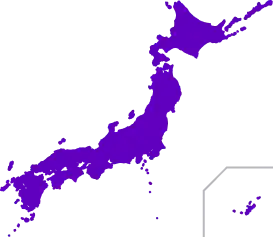
Yamagata
Yamagata cast iron
The process uses sand molds, blending river sand and mountain sand to create fine surface textures, followed by repeated coating with lacquer while heating to finish the surface. Materials primarily include iron and natural lacquer, emphasizing safety. These products are used as everyday items such as teapots and cooking utensils.

The moment you step inside the Yamagata workshop, the atmosphere shifts. You’re met with a blast of heat from a blazing fire and the earthy scent of sand. A quiet, palpable tension hangs in the air. You can't help but catch your breath, thinking, "So this is what it means to be handmade." This is the home of Kikuchi Hojudo, a venerable workshop with over 420 years of history. Its master, Noriyasu Kikuchi, is a craftsman at the forefront of traditional arts, one who isn’t afraid to embrace change.
Soft Iron, Born in the Casting Town of Yamagata
"You see, our process is different right down to the type of sand we use," Kikuchi begins, holding a handful of the sand used for the molds.
The secret to Yamagata casting lies in this very sand. Sand from the Mogami River basin has round grains, which yields a smooth finish. In contrast, mountain sand is angular and compacts tightly. This distinction is what gives the iron its delicate surface texture.
"The secret to creating iron that appears soft is all in the blend of this sand."
Achieving such fine detail is an incredibly difficult feat.
"Mastering fine sand is incredibly challenging. But that’s a skill the artisans of Yamagata possess."
It's this combination of local resources and the artisans' intuitive touch that elevates Yamagata casting to an "art for everyday life."

Sand, Fire, and Urushi Lacquer: A 9,000-Year-Old Material
In the finishing workshop, artisans with intense focus apply urushi lacquer to the iron's surface. Uniquely, they do this while the iron is being baked over a fire. This step is a signature technique of Kikuchi Hojudo.
"We apply a layer, bake it in, and repeat the process again and again. It ends up being about three layers."
When asked why they use urushi, Kikuchi answers with a voice full of passion.
"There are many kinds of coatings available today, but a lot of them contain carcinogenic substances. Urushi is different. It's a material that's been used for 9,000 years and is completely safe for people."
His words reveal a deep-seated belief in creating products that are "people-friendly."
"There's a beauty in things that are safe for people."
This philosophy extends beyond function and design, embodying the creation of tools that allow humans and nature to coexist.
Recently, they have also been developing lacquered cookware compatible with IH stovetops. It's a challenge to redefine traditional materials for modern life—not an attempt to preserve the past, but a creative endeavor to connect to the future.

The World Falls in Love with Yamagata Handiwork
Products from the Yamagata workshop now reach customers across the globe. For Safran, a luxury tableware retailer in Paris, they created a custom order of white vessels.
"'Make us a white teapot,' they requested. Achieving the right color was a challenge, and we had many failed attempts, but in the end, we created something we were truly proud of."
The resulting white is as clear as porcelain. The company's ironware is also used at the Parisian tea specialist Palais des Thés, making Yamagata iron a part of Paris's cafe culture.
They also once supplied a large volume of products to a major American coffee chain.
"The representative we worked with changed every year. So each time, we had to build a relationship of trust from square one. But we kept at it because we have confidence that our products speak for themselves."
In Europe, by contrast, business partners tend to cultivate long-term relationships. "I appreciate that culture of building things up over time," Kikuchi notes. While the pace of business varies from country to country, their commitment to honest work serves as a universal language, strengthening their global connections.

The Quiet Crisis Facing Traditional Crafts
Today, the casting industry is at a major turning point.
"There's a shortage of young people," Kikuchi explains. "Our craft involves many processes and relies on intuition and a hands-on feel. But fewer and fewer young people are drawn to this kind of work."
Local administrations have also prioritized attracting large corporate factories over supporting traditional local industries. As a result, young people have flocked to stable corporate jobs, leaving workshops staffed mostly by older artisans.
"I wish Yamagata City would take more pride in its own culture."
A hint of frustration underlies Kikuchi’s otherwise calm demeanor.
But he doesn't stop at criticism. "A crisis is also an opportunity," he insists.
"Young designers and chefs from overseas are now visiting our workshop. They say they 'want to experience something authentic.' That gives me hope."

Balancing Tradition and Innovation
At Kikuchi's workshop, the factory manager, now in his 70s, is still at the top of his game. A high-voltage 2,000V current hums through the melting furnace, liquifying iron in a mere 30 minutes.
"It's an American-made machine. We're using a modified version of equipment originally for munitions," he says with a laugh.
His smile reveals a remarkable adaptability, effortlessly navigating the space between tradition and technology.
"In our factory, old handcrafted tools live alongside state-of-the-art machinery. I believe the artisan of the future will be someone who can master both."
In essence, for Kikuchi, carrying on tradition isn't about stagnation; it's about having the courage to continuously evolve. This is his guiding principle.

A Quest to Preserve Authenticity
As our interview drew to a close, Kikuchi spoke softly.
"This factory is a place dedicated to preserving authenticity. That's precisely why we can't create anything that's halfway there."
This is more than just a lofty ideal. For him, "authenticity" means sparing no effort, creating with the user in mind, and being true to both people and nature.
"Neither iron nor lacquer can be tamed solely for human convenience. But if you approach them with respect and care, they will always respond. Those are the kinds of materials I want to build my life around."
In a corner of the workshop, finished iron kettles stood in quiet rows. Lacquer captured the light on their glossy black surfaces. These were living works of art, etched with the touch of the artisans' hands and the memory of the forge's fire.

In Yamagata, Kikuchi Hojudo masters the art of iron and lacquer. Their work transcends the simple act of passing down tradition. By engaging with materials that have a 9,000-year history, they deliver "people-friendly iron" to dinner tables around the world and into the heart of modern living. They strive to keep the flame alive and pass its light to the future. Even today, iron melts quietly in the Yamagata furnace, its sound echoing like a call to the next generation of artisans.

Japanese Craft Glossary
The History of Arimatsu Shibori: Tracing 400 Years of Turning Points From 1608 Settlement to Global Fashion

Seeking the Artisans
The Timeless Technique and Evolving Tradition of "Tsugaru Nuri Genbei": Growing More Beautiful with Every Layer
.JPG?w=430&fm=webp&dpr=2)
Seeking the Artisans
The Dedication Embodied in a 40-Piece Set: Nakajima Seikichi Shoten's Enduring Craft of Shogi Pieces

Seeking the Artisans
From Yamagata to the World: The Branding Journey of 'Yamagata Dantsu' by Oriental Carpet

Seeking the Artisans
The Journey of the Unknown Knitting Factory 'Sato Seni' to Global Recognition

Seeking the Artisans