


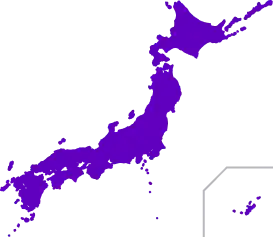
Ibaraki
Koji Masubuchi
Born in Ibaraki Prefecture in 1944, he founded Kouzangama in 1970. In 1999, he was certified as a Traditional Kasama Ware Craftsperson. He is dedicated to managing the kiln in a way that brings out the individuality of his artisans and to mentoring the next generation. In 2015, he was awarded the Order of the Sacred Treasure, Silver Rays.
Kasama ware
Kasama ware is a style of ceramics produced around Kasama City in Ibaraki Prefecture for about 250 years. Originating from techniques introduced from Shigaraki during the Edo period, it developed a handcraft tradition using highly plastic local clay. Today it is characterized by wheel-thrown and hand-formed production, diverse glaze expressions, and versatile designs used for everyday tableware.

Kasama in Ibaraki Prefecture is known as the oldest pottery region in the Kanto area. It's home to Kouzangama, the largest kiln in the region, where a team of artisans continues to create pottery. Committed to handcrafted work that celebrates individuality, they cater to a wide range of needs—from professionals like restaurants and trading companies to individual customers—and can even handle large-volume orders.
It's neither an individual artist's studio nor a factory. We spoke with this unique kiln, which continually explores the middle ground between handmade craft and industrial production, to learn about its philosophy of craftsmanship.

A Region That Chose the Path of Handcrafting
A 20-minute walk from JR Kasama Station leads you to an art village, home to Shunpubanriso, the relocated residence and studio of the epicure and artist Rosanjin Kitaoji. Kouzangama is the kiln in this village that continues the tradition of making Kasama ware.
"The history of Kasama ware is said to be about 250 years old. It began in the Edo period when Han'emon Kuno, the headman of Hakoda Village in the Kasama domain, studied under Chōemon, a potter from Shigaraki."
About 100 years later, Keizaburo Otsuka, who mastered the techniques in Kasama, would go on to establish Mashiko ware in the neighboring Tochigi Prefecture.
"Mashiko is in Tochigi and Kasama is in Ibaraki, but they are neighbors separated by the Yamizo and Keisoku mountain ranges. We have made pottery as 'sibling regions' within the same cultural sphere. There are surprisingly many pottery regions separated by mountains at a prefectural border, such as Shigaraki ware in Shiga and Iga ware in Mie, or Seto ware in Aichi and Tajimi ware in Gifu."
From the end of the Edo period to the Meiji era, both Kasama and Mashiko thrived as production centers for everyday items for people in the Kanto region, like water jugs and grinding bowls (suribachi). However, as lifestyles changed over time, the focus shifted from daily necessities to producing pottery as an art form.
"It was a time when mechanization and mass production of pottery were becoming common. But Kasama's clay is highly viscous and ill-suited for mass production. As a result, we were spared from that competition and followed the path of a handcrafted pottery region."

Studying in Seto, Building a Life as a Kasama Kiln Owner
Before the war, Masubuchi's father was an arts and crafts instructor for the Ministry of Commerce and Industry, the predecessor to the Ministry of Economy, Trade and Industry.
"My father graduated from the Tokyo School of Fine Arts and taught crafts at production sites across Japan and even for the Government-General of Korea. After the war, he returned to his hometown in Ibaraki and became an art teacher."
Partly on his father's recommendation, Masubuchi, who loved making things, chose the path of pottery. At 16, he enrolled in Aichi Prefectural Seto Ceramic High School, which at the time was the only high school in Japan where one could study ceramics.
"After graduating, I stayed in Seto and trained at a local pottery studio. Unlike Kasama, Seto was a large-scale pottery region with a well-established system for mass production."
After working there for about five years, Masubuchi returned to Ibaraki. He worked as an artisan at a pottery studio in Kasama before going independent and establishing Kouzangama in 1970.
"At that time, Kasama was also in the midst of a transformation. Demand for everyday housewares had dropped, the region was in decline, and there was a push to shift from producing daily necessities to creating art and craft pieces.
I knew that if I were to start a kiln in Kasama, it had to be dedicated to handcrafting. But to make a living as a potter here, I also wanted to build a kiln that could produce vessels in large quantities. That was the vision that I started with."

No Division of Labor: Honoring the Individuality of Each Artisan
"Come, see our artisans in action," he says, giving us a tour of the workshop. Fifteen artisans, from master craftspeople holding the esteemed title of "Traditional Craftsperson" to fresh young talent, are hard at work. Among them are artisans from overseas who, captivated by the charm of pottery, came to Japan to work here.
"We are the largest kiln in Kasama. A trading company we partner with once told us we're the largest handmade pottery kiln in Japan by scale.
The number of workshops that produce handmade pottery is dwindling. For mass production, handmade methods present many challenges. You mostly see either factories that mechanize for mass production or individual artists who stick to handmade methods and produce in small quantities."
Another key feature setting them apart is their rejection of the division-of-labor system, which is common in pottery production regions. Here, a single artisan handles every single step from start to finish.
"A division of labor is certainly more efficient. But here, we expect our artisans to handle everything. I believe that for a piece to be a true work of craftsmanship, it must be completed by a single person. To pour their own passion into it, they need to see it through from start to finish."
When I ask, "By championing the individuality of each artisan, don't you risk losing the kiln's signature style?" Masubuchi replies, "That freedom *is* the Kouzan-gama way."
"We teach them the basic techniques at the beginning, but we don't force our methods on them. We might offer input if a product seems too fragile or could be an issue for the customer, but we essentially tell our artisans, 'We want you to create *your own* pottery.'"

Custom-Made Pieces: The Advantage of a Handmade Approach
By having artisans work as a team, Kouzan-gama can produce handmade pottery in large quantities. Leveraging this strength, they’ve met the wide-ranging needs of professional clients, including major restaurant chains and trading companies.
"When you use machines, you have to change the molds, which is a huge task. But because our work is handmade, we can be flexible and cater to intricate designs and specific concepts. That's a real advantage of our handmade process."
Furthermore, they leverage their handmade mass-production system to create custom pottery gifts for individual customers. These one-of-a-kind pieces have become treasured gifts for many, especially for weddings and other special occasions.
"Unless a request is truly impossible, we'll basically make whatever a customer asks for. Seeing the sheer delight on a customer's face gives us a deep sense of satisfaction as craftspeople. It's a wonderful feeling."
However, for pottery artists who are fiercely protective of their personal expression, custom-order work can present a challenge.
"Some artists who are pursuing their own unique expression feel that if they listen to what others want, the work is no longer their own. It's not a matter of right or wrong. But personally, I'm not bound by that. I simply want to keep on creating things that will bring joy to the customers right in front of me."

A Constant Search for New Discoveries Within Tradition
In 2018, Kouzan-gama developed "Heljä Keramiikka," a name that means "delicate ceramics" in Finnish. It's a thin, lightweight line of pottery that shatters the stereotype of Kasama ware as being thick and heavy.
"The idea was sparked when a customer told us, 'Kasama ware is heavy.' Due to the properties of the local clay, Kasama ware has traditionally tended to have a thick finish.
Restaurants often prefer substantial, heavy pottery to give their dishes a more luxurious presentation. But for everyday use, we realized something lighter might be better. So our artisans changed the clay blend and refined their techniques, including how they apply pressure, to create this new style."
When you hold it, it feels as light as plastic, yet you can still feel the warmth of a handmade piece. Heljä Keramiikka, designed to brighten up daily life with its colorful glazes, was chosen for the Theme Selection at the Ibaraki Design Selection 2018.
"Heljä Keramiikka is also a big hit at the Himatsuri, Kasama's annual pottery festival. We were surprised ourselves by how popular the thin pottery was. It was an experience that completely overturned our own preconceptions about Kasama ware."
We asked Masubuchi—who has faithfully upheld the kiln's legacy by valuing the warmth of handiwork, honoring tradition, and prioritizing customer joy—what he plans to tackle next.
"As a production region, we want to see Kasama aim even higher. To do that, we must constantly search for new discoveries. Long-standing traditions obviously have their merits, but there are always new possibilities hidden within them. I want to continue pursuing those."
After the interview, I went home and tried out the Heljä Keramiikka for myself. I was stunned. The pottery, with its handmade feel yet incredible lightness and thinness, was not only a joy to use but also a breeze to wash. It is neither just about tradition nor just about convenience. Day in and day out, Kouzan-gama continues its quest to create products that perfectly complement modern life.
Text by Shino Arata

Japanese Craft Glossary
The History of Arimatsu Shibori: Tracing 400 Years of Turning Points From 1608 Settlement to Global Fashion

Seeking the Artisans
