
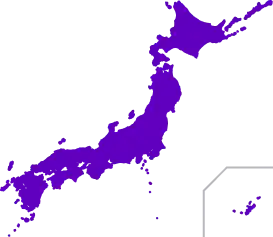
Kanagawa
Shosei Fujitsuka
A bamboo craft artist designated as a Holder of Important Intangible Cultural Property ("Bamboo Crafts") (Living National Treasure). After working for a record company and an optical equipment manufacturer, he entered the world of bamboo crafts at age 23 and established his unique technique, "Saihenge." While pioneering new forms of expression, he is also dedicated to passing down and promoting these traditional skills.
Bamboo craft
Bamboo craft is a traditional Japanese craft practiced in regions such as Beppu in Oita Prefecture and throughout Japan. Thin strips of bamboo are woven into baskets, flower containers, serving trays, and other objects. Originally developed for everyday use, it has also evolved into a form of fine craft characterized by sophisticated weaving techniques and artistic expression.

Is any time in life truly wasted?
Shosei Fujitsuka chased the stars, immersed himself in music, was drawn to video, and eventually became a master who weaves bamboo. Standing at the end of a journey filled with seemingly roundabout detours, the now Living National Treasure looks toward one central question: what will he leave behind for the next generation?

Taking No Apprentices—Leaving Behind Videos Instead
In Shosei Fujitsuka's studio in Oiso, alongside bamboo crafting tools, multiple cameras and monitors are lined up. Splitting bamboo, crafting strips, dyeing, and weaving—since around 1993, Fujitsuka has been recording his entire creative process on video with his own hands.
Pausing at natural breaks in his work, he stands up, adjusts the camera to find the best angle showing his hands, and sits back down to resume crafting. He imports tens of hours of raw footage into his computer and uses editing software himself to assemble 40- to 50-minute videos. Why does a Living National Treasure go to such great lengths to document himself?
"I don't have any apprentices. Instead, if I preserve the sights of my work to pass them on to future generations, someone, somewhere down the line, might watch them and try it themselves."
Fujitsuka currently takes on no apprentices. When he was young, he built a stable livelihood under a master Nitten artist by handling large volumes of subcontracted work for manufacturers. In today's world, however, providing apprentices with a steady income and supporting their livelihood has become extremely difficult.
That is precisely why he keeps records. By embedding his unique techniques—such as his signature "Saihenka"—into video, he aims to pass them on to future successors he has yet to meet.
Even so, his proficiency in handling everything single-handedly—from camera work and video editing to creating slide presentations for lectures—far exceeds what one might expect from a traditional bamboo craftsman. When asked about the reason, Fujitsuka laughed and revealed a surprising chapter from his past.
"To tell you the truth, when I graduated from high school, I thought about becoming a TV cameraman. I even went through the admission procedures at an electronics vocational school in Ueno, and my father paid the entrance fee for me. But at the very last minute, I lost interest and called it off."

Detours Shaping a One-of-a-Kind Expression
After backing out of becoming a TV cameraman at the last minute, he took a job at a record company, spending his days listening to Kenji Sawada records. Later, simply wanting to gaze at the stars, he moved to the service center of an astronomical telescope manufacturer. From there, driven by the personal and pragmatic logic that "to watch the stars all night, I need to be self-employed," he plunged into the world of bamboo crafts.
This remarkably free-spirited path stands in stark contrast to the conventional image of an artisan who has dedicated a lifetime to a single craft since childhood. Yet Fujitsuka has no regrets about the way his life unfolded.
"I'm just not cut out for sticking to a single path my whole life. I've taken all sorts of detours along the way. But looking at the big picture, every single one of those experiences connects to the work I do today."
His love for music, the cosmological perspective honed through stargazing, and his once-abandoned dream of becoming a TV cameraman—these seemingly disjointed detours came together beautifully within the vessel of bamboo crafts. They formed his one-of-a-kind style: expressing the universe through "Saihenka" and filming and editing his own process to pass it on to the future.
Suddenly, Fujitsuka recalls a memory from his elementary school days.
In his elementary school graduation essay, he wrote about his childhood memories in Hokkaido. At the very end, an idea struck him, and he penned a single sentence:
"A day passes—seemingly futile, yet not futile at all."
He doesn't clearly remember why he wrote that. However, his teacher at the time praised that line immensely.
"Life seems full of wasted moments, but maybe in the end, it all comes around and connects together. As you get closer to the end, you start to feel that that moment back then, and this one too, were all leading up to where you are right now."

1st Grade Bamboo Class: A "Calling" Discovered by a Young Man Chasing the Stars
He entered the world of bamboo for what could be called an impure reason: "just to look at the stars." Yet half a century later, a mysterious thread of destiny has begun to reveal itself to Fujitsuka.
"In Hokkaido's elementary schools, classes are named after plants like Plum or Pine. Back in first grade, I was in the Bamboo Class."
The words "1st Grade Bamboo Class" were written on his handkerchief in permanent marker by his father. That class name, buried deep in distant memories, converges with his present self after a long and winding journey.
"When I think about how I was in the Bamboo Class back then, I wonder if taking this path wasn't just a coincidence, but destiny... Looking back now, I really can't imagine doing anything else for a living. I truly feel glad I chose this path."
There are many people in the world who are unable to do what they truly love. It might not have been a path he pursued with fierce determination from the start, but Fujitsuka says that being able to look back and feel that "this was the right path for me" and "this was my true calling" is an unmatched blessing.
His master, Shodo Baba, never gave up on him, even as Fujitsuka failed open-call exhibitions continuously for nearly 15 years. Before his master passed away on his sickbed, Fujitsuka shared his heartfelt gratitude.
"I told him, 'I'm so glad you were my master. Studying under you is what kept me going this far.' Then I added:"
"'I will pass on your work to future generations.' Hearing that, my master's face crumpled, and he wept tears of joy. Remembering that moment still brings tears to my eyes today. Then, 12 years after he passed away, I managed to have two of his pieces acquired by the National Museum of Modern Art, Tokyo (currently the National Museum of Crafts). I like to think I was able to give a little something back to him."
Holding tightly to the baton passed down by his mentor while enduring harsh criticism along the way, Fujitsuka has forged new paths of expression in bamboo craft. Now recognized as a Living National Treasure, he quietly trusts that the seeds he plants through his recorded videos will sprout one day.
"Young people today are coming up with so many fascinating forms and ideas. I want to see all kinds of people creating works with total freedom."
Once a young man who started weaving bamboo simply to gaze at the night sky, Fujitsuka has transformed over half a century into a shining star in the world of bamboo craft. And the vast collection of videos and works he leaves behind will serve as an undeniable beacon, illuminating the path of a new tradition for the next 100 years.

Seeking the Artisans
Three Sisters, Three Different Dreams: What Three Sisters at a Yoshino Tea Farm Put Into "Chanokichi"

A Century of Craft, A Master's Voice
Part 4: The Title of Living National Treasure—The Dilemma Beyond Recognition | Living National Treasure Shosei Fujitsuka
A Century of Craft, A Master's Voice
Part 4: The Title of Living National Treasure—The Dilemma Beyond Recognition | Living National Treasure Shosei Fujitsuka

A Century of Craft, A Master's Voice
Part 3: Wanting to Be an Expresser—The "Birth Pangs" of Creation | Living National Treasure Shosei Fujitsuka

A Century of Craft, A Master's Voice
Part 2: "You Shouldn't Do It," Said the Master—A Story of Their First Meeting: Living National Treasure Shosei Fujitsuka

A Century of Craft, A Master's Voice
Part 1: A Signboard Dormant for 30 Years—The Story Behind the Birth of "Saihenge": National Living Treasure Shosei Fujitsuka

Seeking the Artisans