


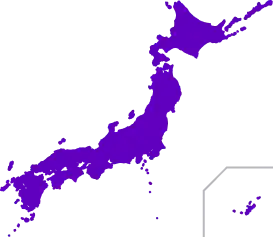
Kanagawa
Shosei Fujitsuka
A bamboo craftsman and Holder of Important Intangible Cultural Property ("Bamboo Crafts", Living National Treasure). After working at a record company and an optical equipment manufacturer, he entered the world of bamboo craftsmanship at age 23 and established his unique technique, "Saikenka." While pioneering new artistic expressions, he is also dedicated to passing down and promoting these traditional techniques.
Bamboo craft
Bamboo craft is a traditional Japanese craft practiced in regions such as Beppu in Oita Prefecture and throughout Japan. Thin strips of bamboo are woven into baskets, flower containers, serving trays, and other objects. Originally developed for everyday use, it has also evolved into a form of fine craft characterized by sophisticated weaving techniques and artistic expression.

When a 23-year-old young man who knew nothing about bamboo craftsmanship knocked on the master's door, he was greeted with the words, "You can't make a living from this, so you shouldn't do it."
While those words sounded like a rejection, for Shosei Fujitsuka, they marked the beginning of a long career as an artist. His journey toward becoming a Living National Treasure quietly began with this unexpected first encounter.

A Baptism of "You Can't Make a Living, So Don't Do It"
"I want to see the stars. To do that, I should be self-employed so I can control my own time."
Thus began Shosei Fujitsuka's journey into bamboo craft—from an extraordinarily frivolous motivation. However, Fujitsuka himself had never even touched bamboo or seen bamboo craftwork; he was a complete novice in every sense. Not knowing whom to learn from, he visited a craft guidance center, where he was introduced to Shodo Baba, a Nitten exhibition artist based in Kawasaki, Kanagawa Prefecture.
When 23-year-old Fujitsuka nervously called and knocked on his door, what awaited him was an unexpected "rejection."
"The moment the master came in, he told me, 'You can't make a living from this, so you'd better not do it.' Looking back, it makes perfect sense. He even said, 'If you're going to do something, ceramics is better. I'll introduce you to someone.'
Fujitsuka had braced himself for a severe, difficult figure as fitting a prominent Nitten artist. What caught him off guard was his master's amazingly frank and warm demeanor. Fujitsuka immediately sensed, "This is a good person."
"An encounter is just like a first impression—you can somehow sense a person's character. Right then, I knew I wanted to study under him."
To the young Fujitsuka, who persistently insisted on pursuing it, Baba offered a metaphor.
"If you go to a diner and just stare at the food samples in the display window, you won't know if it tastes good or not, right? You won't know unless you actually try it, so go ahead and take a bite. If it tastes bad, you can just quit."
"Looking back, I'm amazed he accepted a youngster who knew nothing and had never even seen a bamboo artwork," Fujitsuka laughs. Thus began an unconventional apprenticeship that started with a "taste test."

Parents Nearby Over a Distant Holy Land—and the Difference Between a "Craftsman" and an "Artist"
Why did Fujitsuka choose Shodo Baba as his master in the first place? In fact, that decision also reflected his practical nature.
When he visited the Odawara Craft Guidance Center in search of an apprenticeship, the person in charge presented him with two options: a bamboo craft training school in Beppu City, Oita Prefecture, or a Nitten artist in Kawasaki.
"I was the youngest of four siblings, but my older brothers and sisters had all moved away. Since I ultimately had to take care of my parents, Beppu in Kyushu felt too far. So I thought it would be better to stay close by for now."
Rather than honing his skills in Beppu, the mecca of bamboo crafts, he chose to stay in his home prefecture of Kanagawa out of consideration for his parents. This practical, grounded perspective would later connect to the philosophy of "approachability" and "giving back to the local community" reflected in his works.
However, becoming an apprentice did not immediately pave a glamorous path to art. At the time, alongside his activities as a Nitten artist, Baba was mass-producing hundreds of lampshades a month under orders from major manufacturers such as Toshiba and Mitsubishi. Fujitsuka threw himself into the rigorous training of "producing in volume."
During those grueling days, his master hammered into Fujitsuka the harsh reality of "making a living as an artist."
"He would say things like, 'Listen, making 10 pieces for 10,000 yen versus making 1 piece for 10,000 yen—which is better?' Well, naturally, one piece for 10,000 yen is better. That, in essence, is the difference between a craftsman and an artist."
To sell his work at a fair price and live independently, he had to get selected in open call exhibitions to build his own "brand value." Fujitsuka's long, grueling struggle in open call exhibitions was a vital battle for survival.

Parting Ways with Nitten and 19 Years in the Dark
When a master is a Nitten artist, the apprentice naturally aims for Nitten as well. Fujitsuka threw himself into creating sculptural objets d'art and kept submitting them, but the results were disastrous.
"I spent seven or eight years aiming for Nitten and kept failing. Then my master told me, 'You're better suited for traditional crafts than Nitten.'"
For Fujitsuka, this came as a shock akin to a death sentence. That was because his master himself routinely criticized traditional crafts harshly, saying, "Why is everyone weaving nothing but round baskets? Traditional crafts aren't interesting in the slightest," while prizing the sculptural beauty of Nitten above all else.
"I thought, 'Am I no good for Nitten? Can't I get in?' It was a massive shock."
Devastated, he pivoted to traditional craft exhibitions, but that was where his true ordeal began. Even in the traditional crafts world, piece after piece was rejected without exception. After starting his apprenticeship at 23, his entire 30s slipped by without a single work accepted into a major national exhibition.
"I couldn't make it into traditional craft exhibitions either. I gradually began to think I couldn't make a living as an artist. After all, I had been trying since I was 23, and even past 40, I wasn't getting accepted at all."
Conservative "traditional crafts" versus the avant-garde "Nitten." Fujitsuka's works drew on traditional techniques yet possessed strong sculptural elements, constantly straddling the boundary between the two worlds.
While those around him gained recognition, he continued walking alone through the dark. What sustained him were words his master had once casually dropped:
"Even the greatest masters were all amateurs at first."
Holding those words close to his heart, he made a final, desperate push, thinking, "If this doesn't work, I'm quitting." The piece he created finally won acceptance in 1991, a full 19 years after beginning his apprenticeship. Shosei Fujitsuka was 42 years old. It was the moment a single ray of light finally broke through onto the narrow, steep path leading toward becoming a Living National Treasure.
(Continued in Part 3: "表現者でありたい──創ることの『生みの苦しみ』")

Japanese Craft Glossary
The History of Arimatsu Shibori: Tracing 400 Years of Turning Points From 1608 Settlement to Global Fashion

Seeking the Artisans
The Timeless Technique and Evolving Tradition of "Tsugaru Nuri Genbei": Growing More Beautiful with Every Layer

A Century of Craft, A Master's Voice
Part 3: Wanting to Be an Expresser—The "Birth Pangs" of Creation | Living National Treasure Shosei Fujitsuka

A Century of Craft, A Master's Voice
Part 1: A Signboard Dormant for 30 Years—The Story Behind the Birth of "彩変化": National Living Treasure Shosei Fujitsuka

Seeking the Artisans