![[No. 4] Traveling the World & Discovering Beauty in Everyday Life—The Source of Ideas for Living National Treasure Mamoru Nakagawa](https://images.microcms-assets.io/assets/1775a3633c8b428d9f011c6a758a8a5c/ac32b0de8db14ba789b1f6bc1d7a029c/001_6.png?w=430&fm=webp&dpr=2)
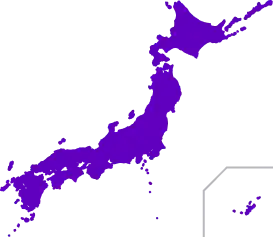
Ishikawa
Mamoru Nakagawa
Mamoru Nakagawa, Living National Treasure (Chokin metal carving) and leading figure of Kaga Zogan. He creates Kaga Zogan works by inlaying gold and silver into metal, earning recognition both in Japan and internationally.
Kaga Zogan
The process involves carving grooves into a metal surface and inlaying gold or silver into those grooves to form patterns. Materials include metals such as iron or copper combined with precious metals like gold and silver. It is used for decorative objects and craft pieces, characterized by highly detailed designs.
![[No. 4] Traveling the World & Discovering Beauty in Everyday Life—The Source of Ideas for Living National Treasure Mamoru Nakagawa](https://images.microcms-assets.io/assets/1775a3633c8b428d9f011c6a758a8a5c/a4718a1393f14543aafdab752cb95b80/fix_DSC_0579.jpg?w=430&fm=webp&dpr=2)
Last time, Living National Treasure Mamoru Nakagawa talked about his flexible approach to the traditional craft of "Kaga Zogan" (加賀象嵌, inlay metalwork), which is completely different from what people usually imagine when they hear the term traditional crafts.
He overcomes the fixed idea that "traditional crafts are wonderful only because they embody ancient techniques," emphasizing that we must pursue beauty suited to the present age. He was taught by Professor Kaishu Takahashi to "make stylish things," and Nakagawa went on to learn diverse values.
This time, we'll uncover the secret of the artistic design found in Nakagawa's works. While pursuing a contemporary sense of beauty, what did Nakagawa notice, and how did he incorporate those discoveries into his creations?
The Beauty of Nature Experienced Abroad
Where did Nakagawa's unique philosophy toward Zogan come from? It turns out that his experiences overseas played a major role. In particular, he was strongly influenced by Turkey.
"There's a place in Mitaka City called the Middle Eastern Cultural Center. At the time, research called 'イスラム圏の商人と職人たち (Merchants and craftsmen in the Islamic world)' was being conducted there, and I joined the research team, traveling to Turkey almost every year.
I took every chance I could to sketch. When I made a detour to Bulgaria after visiting Turkey, I was captivated by the beauty of the grasslands and forests spreading out before my eyes.
As the sun gradually set, the beautiful contrast in brightness between the western and eastern skies made a vivid, lasting impression on me."
This scene became the inspiration for his piece, "重ね象嵌朧銀花器『草原の森』." By using materials like silver and Shibuichi (四分一) —the latter being an alloy of silver and copper—he superbly expressed the delicate light and shade, capturing the passage of time in this work.

重ね象嵌朧銀花器『草原の森』
Finding Inspiration in Everyday Things
As he sketched nature, Nakagawa realized that "ideas are everywhere." He demonstrated this, quickly picking up his sketchbook and pen.
"Take a close look at a persimmon seed, and you'll notice that the curves on each side are different, making it a truly beautiful shape. The curves are subtly different part by part, and those differences connect to create a pleasing form.
This work, too, was created from observing something familiar—can you guess what it is? It's actually gyoza dumplings. When I was eating dumplings, I found the plumpness of the filling inside the wrapper fascinating, so I immediately sketched it."
He says that such sketchbooks are not only for recording designs, but also serve as a place to develop numerous ideas.
"Once, the British Museum asked me to create a piece based on tartan checks.
But I didn't want to make it exactly as requested. So I drew lots of sketches of tartan checks waving or fluttering in the wind.
As I was pondering what to do, the traditional Japanese Ichimatsu pattern suddenly came to mind, and that's how the piece '象嵌朧銀花器「チェックと市松」' was born."
Watching Nakagawa as he continues sketching even while talking gives the impression of a true craftsman at work.
"What I want to tell young people is that ideas are everywhere around you, and it's essential to become sensitive enough to notice them. I always bring a small sketchbook with me wherever I go."

Drawing from and Combining Design Sources
Nakagawa spoke openly about the role of his sketchbook and how he comes up with ideas, holding nothing back. On top of that, there’s one more thing he wants to share with young people.
“I want you to consciously observe things closely, and expand your ‘drawer’ of design ideas.
People involved in crafts tend to only look at craft exhibitions. But if you go to something totally unrelated to your usual work—like an auto show or a housing expo—I believe you can unexpectedly spark new inspirations,” he says.
To illustrate his point, Nakagawa showed us a sketch from his own sketchbook—a drawing of a landscape.
“This was drawn on the train ride from Denmark to Sweden. I captured a grove of Japanese larches and numerous lakes as seen from the window. While these scenes have no direct tie to crafts, I’ve sometimes transformed a landscape or the light reflected on water’s surface into pieces,” he explained.
Nakagawa generously shared the behind-the-scenes stories and creative sources of his works. Interestingly, many of his pieces are themed around nature and scenery, which stands apart from the geometric patterns typically associated with the term “Kaga Zogan.”
He recalls that his idea to combine the Zogan technique with elements from nature was also influenced by his experiences overseas.
“When I visited a mosque in Istanbul, I saw Arabesque patterns created with blue tiles. To me, those felt somehow cold. I realized that my work, too, might come across that way to some viewers, and I didn’t like that.
Zogan tends to be based on simple geometric patterns, which can feel monotonous. So, I decided to try depicting landscapes. But I couldn’t portray them like Japanese paintings or oils, so I aimed to blend Zogan’s geometry with aspects of nature—and that led me to my current style,” he said.
The unique blend of “Tradition and Innovation” in Nakagawa’s designs truly embodies the teachings of Professor Takahashi, pursuing beauty attuned to the present. Now, he continues to create with free ideas unbound by classical frameworks, producing works from animal-themed ornaments to wedding rings.

(In the final part, we’ll share Nakagawa’s awareness as a Living National Treasure, his message to the next generation, and the passion he pours into traditional crafts.)

Japanese Craft Glossary
The History of Arimatsu Shibori: Tracing 400 Years of Turning Points From 1608 Settlement to Global Fashion

Seeking the Artisans
The Timeless Technique and Evolving Tradition of "Tsugaru Nuri Genbei": Growing More Beautiful with Every Layer
![[No. 5 (Final Episode)] To Nurture, Challenge, & Surpass—The Endless Pursuit of Living National Treasure Mamoru Nakagawa](https://images.microcms-assets.io/assets/1775a3633c8b428d9f011c6a758a8a5c/8c41b139fbe746079fe79321be873ff9/001_5.png?w=430&fm=webp&dpr=2)
A Century of Craft, A Master's Voice
[No. 5 (Final Episode)] To Nurture, Challenge, & Surpass—The Endless Pursuit of Living National Treasure Mamoru Nakagawa
![[No. 3] Learning from Repeated Failures—The Skills & Design Polished by Living National Treasure Mamoru Nakagawa](https://images.microcms-assets.io/assets/1775a3633c8b428d9f011c6a758a8a5c/441408311b934b34b0480ab703b08565/001_2.png?w=430&fm=webp&dpr=2)
A Century of Craft, A Master's Voice
[No. 3] Learning from Repeated Failures—The Skills & Design Polished by Living National Treasure Mamoru Nakagawa
![[No. 2] Life Is Like a Marathon—What "Living National Treasure" Mamoru Nakagawa Learned from Balancing Work & Craft](https://images.microcms-assets.io/assets/1775a3633c8b428d9f011c6a758a8a5c/a452dbc38c074ad49129522ecea5759d/001_4.png?w=430&fm=webp&dpr=2)
A Century of Craft, A Master's Voice
[No. 2] Life Is Like a Marathon—What "Living National Treasure" Mamoru Nakagawa Learned from Balancing Work & Craft
![[No. 1] From Electronics Manufacturer Employee to the Pinnacle of Traditional Crafts—Mamoru Nakagawa, Leading Kaga Zogan Expert & Living National Treasure, Shares His Life Story](https://images.microcms-assets.io/assets/1775a3633c8b428d9f011c6a758a8a5c/bf8dd7ccd2684a0f9de2dce55de5d8cb/001_3.png?w=430&fm=webp&dpr=2)
A Century of Craft, A Master's Voice
[No. 1] From Electronics Manufacturer Employee to the Pinnacle of Traditional Crafts—Mamoru Nakagawa, Leading Kaga Zogan Expert & Living National Treasure, Shares His Life Story

Seeking the Artisans