
My Mentor in Mexico: Shozo Tanida
I discovered a passion for ceramics in 1989 under the guidance of Shôzô Tanida, a Japanese potter in San Miguel de Allende, in Mexico.
Shôzo Tanida didn’t consider himself an artist and was really modest. He used to live in some cabins behind Kawanishi highway. But he kindly understood at once that I had more ambition; as soon as I had an idea, he would search for ways to help me.
He always used white Shigaraki clay, but when I tried the red one, I was really pleased with the result in wood Kiln anagama. "So, you will try too?" I asked. He just laughed. He enjoyed having fun and would party with his students. He was born during the war and had seen bombing in Osaka – he didn’t want to expose himself to more suffering, I think. I strove to look beyond my work and he was proud when I could do so.
At that time I discovered a world. A world centered on clay. In Europe, it appeared to me that we had always hidden clay (with white slip, for example, in the case of majolica). Clay means Earth, it means Nature. Until then I had tried to developpe painting wihout frame, but I was not satisfied.

A Fascination with Japanese Culture born in Paris
I deepened my practice through residencies and studio work in Japan between 1993 and 1995, where I notably met with Ryoji Koié. I made objets and chawans. So, my work could be compared to traditional Japanese ceramics — even if I create in France, a place with a completely different climate, culture, and language. Anyway, since 50 years I feel like investigating the forms of Japanese kokoro.
1970, I arrived at Paris. At that time Japanese movies were very much praised among young people running philosophy studies. We were looking for Mizoguchi and Kurosawa as much as we could. Later it was Ozu. From then on, Japanese literature had a great attraction. We read Kawabata, Mishima and Tanizaki. Later came Murasaki Shikibu and Sei Shonagon. Personally I had a crush on Dazai Osamu.

Inspired by a Raku Teabowl
At that time I wanted to be a painter. My childhood in the Limousin countryside had given me the taste and colors of the earth and the caves of Lascaux, a few kilometers away, had fed my imagination.
I don’t see any influence of Japan in my paintings of these years. But, when, in 1980, I came upon Japanese paper, by chance at Canal Street, New York, I became so excited ! And begun to paint large watercolors, 2x3 meters, on washi. These works were close to calligraphy indeed.
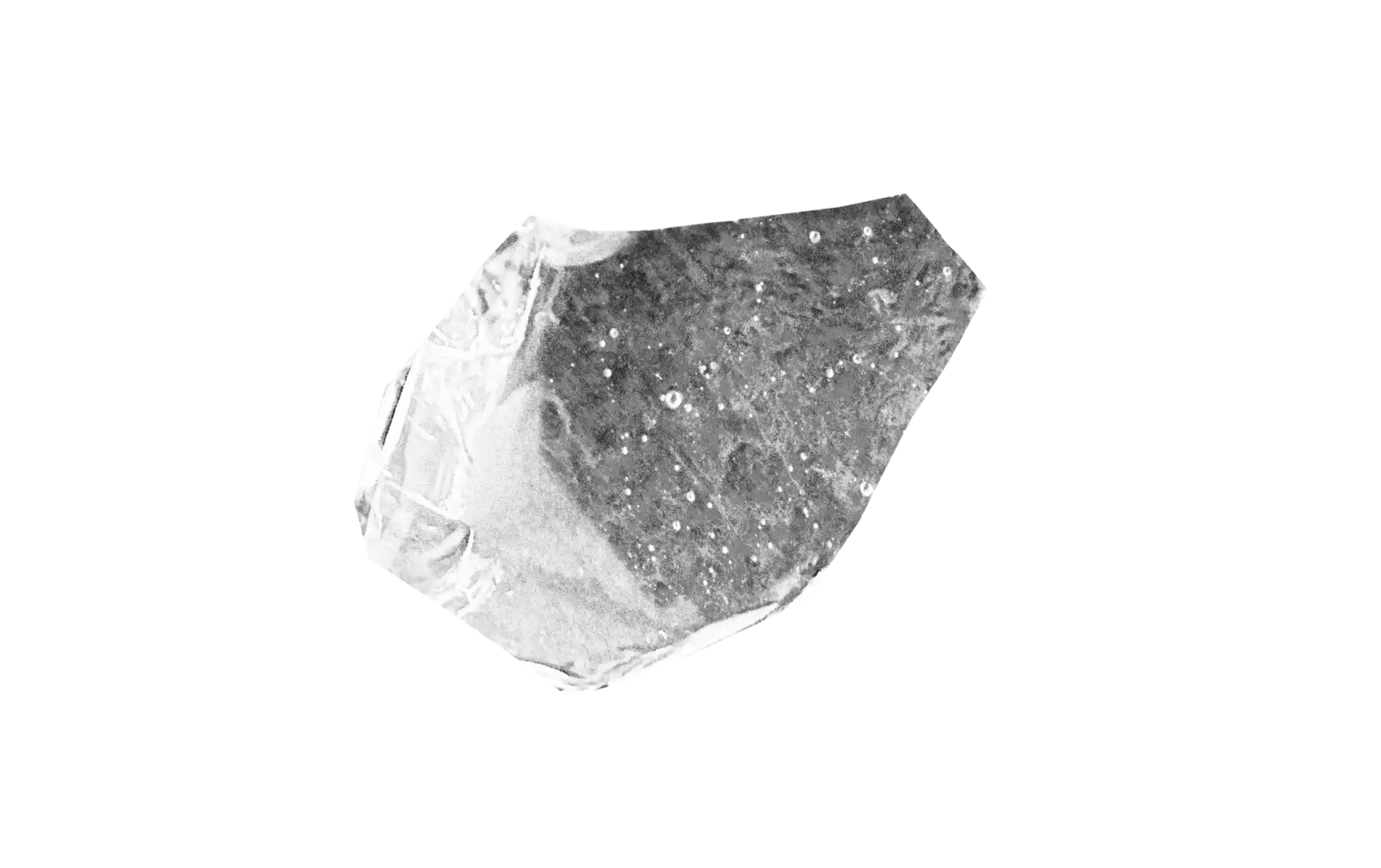
So, when I discovered ceramics with Shôzo Tanida I was impressed with a raku chawan he had made and at once I understood I wanted to go exactly in that direction.
If I wanted to know more about this, he insisted, I had to travel to Japan and spend some time in his studio. It was my chance.
Later I read this words by Raku Kichizaemon XV : « Just as a painter creates a painting, as a sculptor makes a sculpture, I make my chawan one by one. In such a process a serial production develops naturally.
That’s it ! I thought, I don’t equivocate. So, I begun to work, with my hands and with my brains. During my first stay in Japan,(1993) I didn’t stay all the time in front of the kiln in Hyôgo but I traveled around the country in order to discover ceramics, through studios and museums. The most important was to go deeper in Japanese aesthetics.

Clay Regarded as “Mud”
I was wondering why Western countries had neglected so much ceramics when in Eastern ones it had a major role, through the whole History ? Greece and Mesopotamia had however left a magnificent legacy… Actually the West had no idea of wabi-sabi ! Was it the point ? Probably. Clay was mud, it means dirt. It couldn’t be a metaphor of the divine light — on the contrary, glass and oil painting could.
But Japanese culture was saying that he certainty that harmony has to be. It was a great relief.
In Italy, theological quarrels had been able to be embodied in painting ; in France, philosophical debates had provoked revolutions in painting...But in Japan, it was pottery that perhaps best reflected the debate of ideas ( around, for example, Zen philosophy ). This is why Japan throughout the ages had become the Mecca of potters : behind the practice there would always be a deep thought.

Being an “Artist”
Sometimes I think that I am really naive and too clumsy to understand deeply that culture, but on another hand I am really thankful to people who help me and appreciate the originality of my work.
I don’t question myself. Since many years. I agree with Raku-san: I don’t matter if I am a potter, a painter, a poet or anything else. To be an artist is only a wish, not a speciality, not a job ! No doubt I am French, I like Japan. I don’t see any contradiction. Montaigne wrote, "Man, in all and through all, is nothing but patchwork and variegation." However, in truth, we lose any sense of unity unless we rediscover it through Nature.
Ceramics allows us to become one with Fire and Earth; painting teaches us the essence of Light and the liquidity of Water. And perhaps, our hands and eyes teach us about Spirit, much like the Air that envelops us.


