
Ishikawa
Mina Takaoka
President of HAKUZA Inc. / TAKAOKA SEIHAKU Inc. She works on expanding the appeal and possibilities of gold leaf while promoting new value creation rooted in its history.
Kanazawa gold leaf
Kanazawa gold leaf is a traditional craft material of Ishikawa Prefecture, where nearly 100% of Japan’s gold leaf is produced. Historically used to decorate temples, Buddhist statues, and crafts, it is valued for its extreme thinness and light-reflecting properties. Two main production methods—traditional Entsuke gold leaf and mass-production-oriented Tachikiri gold leaf—are used for architecture, crafts, vessels, and other applications.
Ishikawa Prefecture produces almost 100% of Japan's gold leaf. With a climate of high humidity and access to high-quality water, alongside the development of other traditional crafts such as Kaga Yuzen and Wajima lacquerware, Ishikawa has become a major production area for gold leaf. In this region, a company is currently pursuing new possibilities for gold leaf, named HAKUZA Inc. The company's third president, Mina Takaoka, who has roots dating back about 100 years, states, "The possibilities of gold leaf are truly limitless."
In this article, we discussed the company's history, the charm of gold leaf, and its future with Takaoka.
Preserving the Gold Leaf Their Father Loved. The Resolve for Succession Made at 20
First, please tell us about Hakuza Inc. and Takaoka Seihaku Inc., as well as how you became the president.
I decided to take over the company when I was 20 years old.
Originally, the gold leaf business was started by my grandfather. Therefore, having gold leaf at home was normal for me since childhood, and I didn't consider it something special. After my grandfather, my father took over as the second president.
I was raised as the second daughter among three sisters. During my childhood, I naturally assumed that my older sister would continue the family business and become the third president.
However, at one point, my sister declared that she would "pursue what she wanted to do" and would not take over the family business. The moment I heard that, I resolved, "I have no choice but to do it myself."
At that time, I didn't have strong feelings about gold leaf. However, I had witnessed my father's deep affection for gold leaf and the company since I was a child. For my father, gold leaf and the company that developed it were vital. That’s why, as someone who understands that love, I didn’t want to see the company come to an end.

After joining the company, I took various actions based on the belief that "I must first come to love gold leaf before anything else." I tried applying gold leaf to familiar objects, delved into its history, and so on…
Fortunately, I quickly realized that gold leaf is a unique material, and I began to feel fortunate to be able to continue to challenge myself with it.
Gold leaf production used to be done by craftsmen in their homes. Wholesalers would purchase gold ingots, craftsmen would turn them into gold leaf, and then the wholesalers would sell them, which was the main style. Our company was one of those wholesalers.
However, as time passed, the demand decreased due to a shift away from religion and changes in lifestyle in society, leading to a decline in the number of craftsmen. Once, there were over 1,000 gold leaf craftsmen; now, there are only about 50 across the industry. Moreover, the aging population among them is advancing.
Therefore, our company is reviewing the traditional structure and simultaneously promoting the hiring of craftsmen as employees. We are working on establishing a sustainable production system.
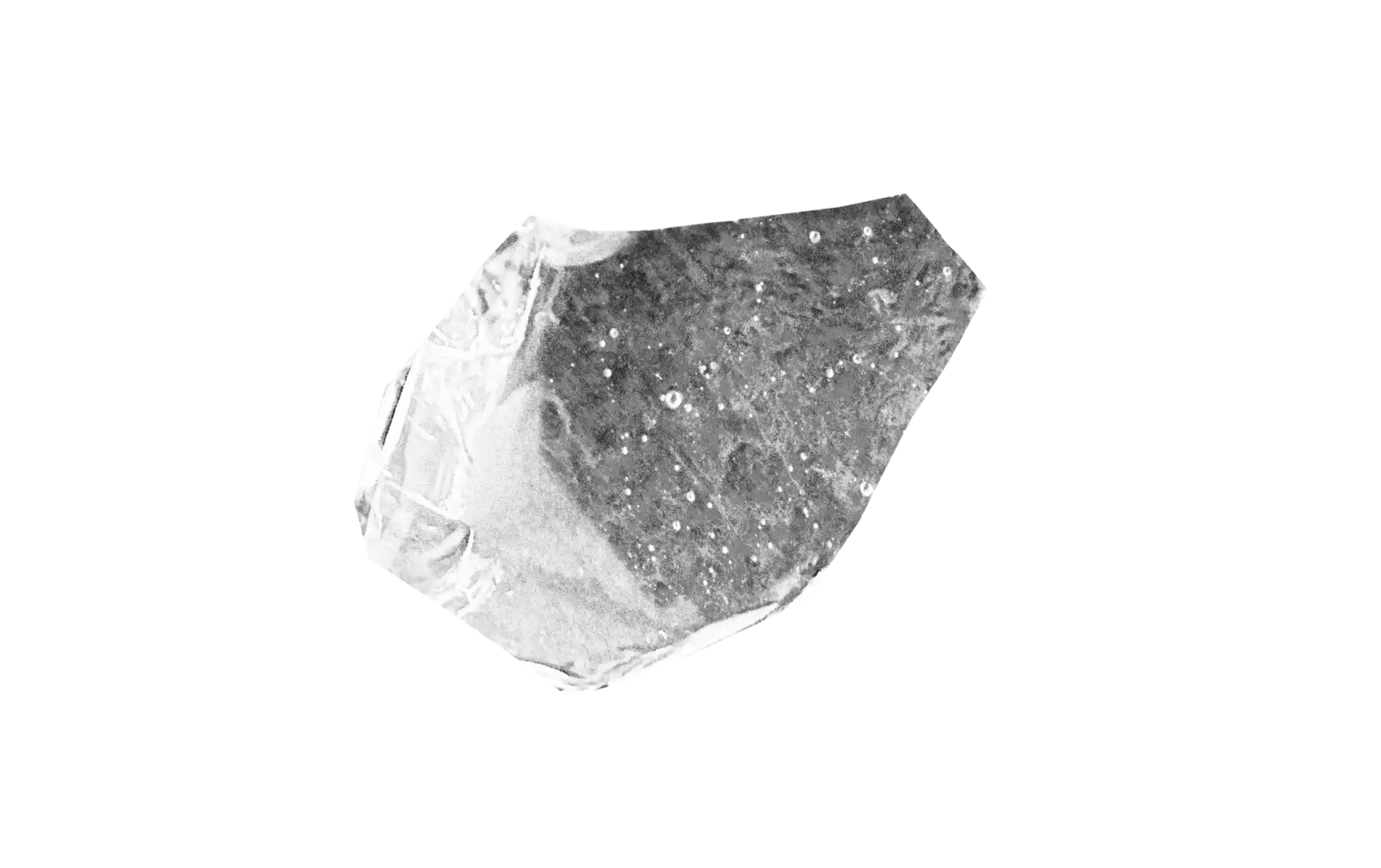

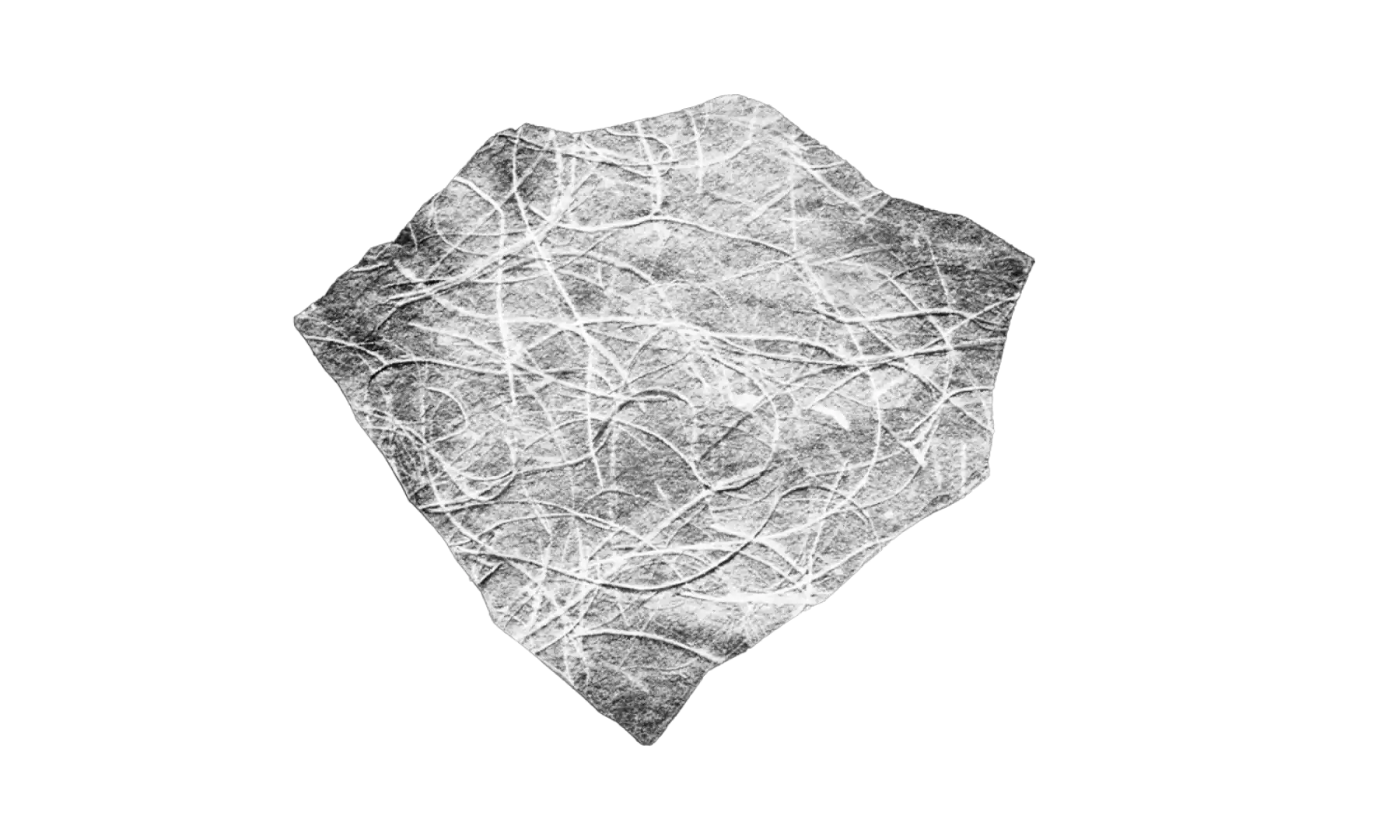
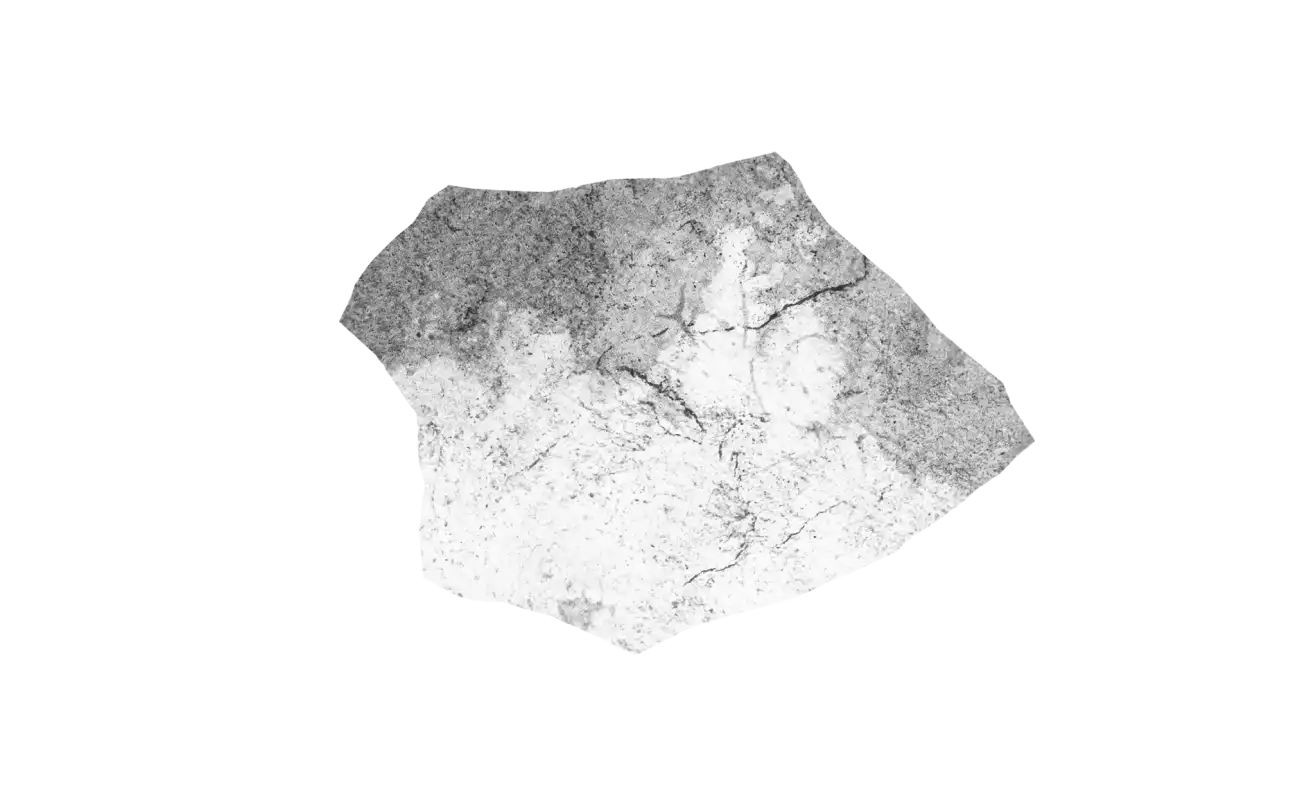
Traditional "Entsuki Kinpaku" & Modern "Tachikiri Kinpaku"
I have heard that there are two methods to create gold leaf.
Gold leaf can be broadly categorized into two types: "Entsuki Kinpaku" and "Tachikiri Kinpaku." Additionally, the differences in manufacturing methods also affect the final product.
Entsuki Kinpaku is created through a traditional method that takes six months, and in 2020, it was registered as an Intangible Cultural Heritage by UNESCO.
In this process, a special Japanese paper is infused with rice straw ash, egg whites, and persimmon tannin, then a machine is used to beat the gold leaf for six months. The resulting paper is tougher than regular Japanese paper and is referred to as "Haku-uchi Gami."
Using this Haku-uchi Gami allows artisans to stretch gold down to an extreme thinness of one ten-thousandth of a millimeter.
Haku-uchi Gami is used multiple times, making it a vital tool for the craftsmen. Therefore, it was said among old leaf artisans, "If a fire breaks out, grab the Haku-uchi Gami and flee." According to my grandfather, artisans used to inscribe the names of women from the entertainment district on the Haku-uchi Gami, which they would then gift as oil-absorbing paper after use—a lovely story.
Once the gold leaf is extended to the specified thinness, it is trimmed using bamboo tools. Finally, it is placed on slightly larger Japanese paper called Hakuaishi, completing the process. The visible edge of the Japanese paper around the gold leaf gives rise to the name Entsuki Kinpaku.
The Entsuki Kinpaku created in this way is very flexible and, when applied to a surface, gently envelops it.

On the other hand, Tachikiri Kinpaku is a relatively new method that emerged in the 1960s. It is suitable for mass production and can produce gold leaf in about two weeks.
Tachikiri Kinpaku utilizes carbon papers for crafting. The gold is stretched until it reaches the state of gold leaf and is layered alternately with Hakuaishi. You might imagine it as a sort of mille-feuille of gold leaf and Hakuaishi.
Then, it is cut all at once. In contrast to En Tsuke Kinpaku, the carbon paper used in Tachikiri Kinpaku is for single use only. Since it is extended in one go, it tends to produce radial lines on the surface when applied.
While there may not be noticeable differences depending on the intended use, for artisans who have handled gold leaf for many years, there can be significant differences in flexibility depending on where it is applied.

Reflecting on the History of Gold Leaf & Reassessing Its Value
Could you share with us about the recent conditions of the gold leaf industry and your thoughts on its value?
In recent years, the demand for gold leaf has declined.
The once-large religious market has weakened due to a shift away from religion, and there has also been a move toward seeking cheaper alternatives. As a result, even for decorative purposes, gold paint has started to be used. While gold leaf is a traditional craft, it faces challenges in market competition due to being a conventional craft material.
In such a situation, I believe it is essential to reassess the value of gold leaf to continue the business.
Looking back at history, gold leaf has not merely been a material; it has been used with special significance.
For example, in the time before lighting, gold leaf reflected light and illuminated spaces. Its characteristic of not losing luster has made it a symbol of paradise, used in statues and temples. Gold leaf possesses a spiritual charm that influences the hearts of people, which I believe is its essential value.

The vision we promote, "Creating a future where 'the leaf exists there,'" encapsulates these feelings in words.
We do not want to force the use of gold leaf nor treat it as merely something to admire. Just as people of the past recognized and utilized unique values in gold leaf, we want to communicate the value of gold leaf that emerges in the modern era. Our aim is to create a future where gold leaf is cherished by people.
What, then, is the value of gold leaf that arises in the modern context?
We discuss this question daily with our employees and stakeholders. Many ideas come forth, but the common thread is that gold leaf enriches the hearts of people.
What exactly that entails is beyond measure.
Nevertheless, for me, gold leaf is something that my grandfather and father cherished and nurtured. That’s why I want to dedicate my efforts to gold leaf.
Since the moment I decided to become the president, gold leaf has represented something worthy of affection to me. It might sound a bit grandiose, but I believe my life is now strongly intertwined with the continuation of gold leaf.

Expanding the Possibilities of "Haku" Foil: The Challenge of "Haku Works"
Finally, could you tell us about the future?
Moving forward, it is essential to broaden the possibilities of gold leaf.
The potential of "Haku" foil or leaf is truly limitless.
Being a thin and delicate material, it can even capture the nuances of complex-shaped vessels. To expand the possibilities of Haku, we are currently undertaking a new venture called Haku Works.
In short, this is a business focused on custom gold leaf processing.
We aim to combine our unique Haku processing techniques with the creative ideas of our clients. Our goal is to discover the value of Haku in modern times. This venture began with such aspirations.
Additionally, we are considering international expansion to broaden our market.
Looking back at the history of the industry, innovation has often occurred alongside an increase in demand. From that learning, I believe we need to extend the demand for Haku beyond our borders.
However, it is crucial to collaborate with partners who can resonate with the culture and history of gold leaf, rather than simply exhibiting at trade shows.
For example, markets that value history, like Europe, are very appealing. In the future, I want to seek out markets that understand the value of gold leaf, not just in Japan, and also focus on new developments and communication of Haku.
We aspire to be a company that pursues the charm of Haku, not just a seller of gold leaf, and we will continue to advance our development and business expansion.


Japanese Craft Glossary
The History of Arimatsu Shibori: Tracing 400 Years of Turning Points From 1608 Settlement to Global Fashion

Seeking the Artisans
The Timeless Technique and Evolving Tradition of "Tsugaru Nuri Genbei": Growing More Beautiful with Every Layer
![[No. 5 (Final Episode)] To Nurture, Challenge, & Surpass—The Endless Pursuit of Living National Treasure Mamoru Nakagawa](https://images.microcms-assets.io/assets/1775a3633c8b428d9f011c6a758a8a5c/8c41b139fbe746079fe79321be873ff9/001_5.png?w=430&fm=webp&dpr=2)
A Century of Craft, A Master's Voice
[No. 5 (Final Episode)] To Nurture, Challenge, & Surpass—The Endless Pursuit of Living National Treasure Mamoru Nakagawa
![[No. 4] Traveling the World & Discovering Beauty in Everyday Life—The Source of Ideas for Living National Treasure Mamoru Nakagawa](https://images.microcms-assets.io/assets/1775a3633c8b428d9f011c6a758a8a5c/ac32b0de8db14ba789b1f6bc1d7a029c/001_6.png?w=430&fm=webp&dpr=2)
A Century of Craft, A Master's Voice
[No. 4] Traveling the World & Discovering Beauty in Everyday Life—The Source of Ideas for Living National Treasure Mamoru Nakagawa
![[No. 3] Learning from Repeated Failures—The Skills & Design Polished by Living National Treasure Mamoru Nakagawa](https://images.microcms-assets.io/assets/1775a3633c8b428d9f011c6a758a8a5c/441408311b934b34b0480ab703b08565/001_2.png?w=430&fm=webp&dpr=2)
A Century of Craft, A Master's Voice
[No. 3] Learning from Repeated Failures—The Skills & Design Polished by Living National Treasure Mamoru Nakagawa
![[No. 2] Life Is Like a Marathon—What "Living National Treasure" Mamoru Nakagawa Learned from Balancing Work & Craft](https://images.microcms-assets.io/assets/1775a3633c8b428d9f011c6a758a8a5c/a452dbc38c074ad49129522ecea5759d/001_4.png?w=430&fm=webp&dpr=2)
A Century of Craft, A Master's Voice
[No. 2] Life Is Like a Marathon—What "Living National Treasure" Mamoru Nakagawa Learned from Balancing Work & Craft
![[No. 1] From Electronics Manufacturer Employee to the Pinnacle of Traditional Crafts—Mamoru Nakagawa, Leading Kaga Zogan Expert & Living National Treasure, Shares His Life Story](https://images.microcms-assets.io/assets/1775a3633c8b428d9f011c6a758a8a5c/bf8dd7ccd2684a0f9de2dce55de5d8cb/001_3.png?w=430&fm=webp&dpr=2)
A Century of Craft, A Master's Voice