


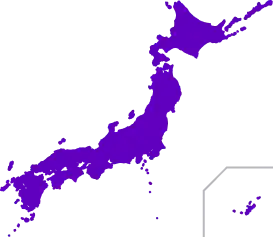
Ehime
Sake
Produced through a process of polishing rice, steaming it, and fermenting with koji and water. The main materials are rice, water, and koji, and flavor is determined through fermentation control. It is consumed as a beverage and serves as a medium to experience local culture and climate.

With over 130 years of history, Minakuchi Shuzo has been brewing sake in the heart of Dogo Onsen, one of Japan's most famous tourist destinations. Hot springs and sake, tourism and craft, tradition and innovation. The brewery's uniqueness lies in its ability to seamlessly weave these seemingly separate elements into a single, cohesive philosophy.
Viewing sake as 'a medium for experiencing local culture,' Minakuchi Shuzo's craft transcends the realm of taste, giving form to the very relationship between the land and its people.
A Shared Timeline: Dogo Onsen and the Sake Brewery
Minakuchi Shuzo was founded in 1895, the year after the Dogo Onsen Main Building was rebuilt into its current form. This temporal proximity is more than mere coincidence.
The Dogo area has always been a place centered around its hot springs, built on the premise that 'people gather, enjoy themselves, and then return home.' The brewery was naturally integrated into this flow.
At the time, plans were underway in Dogo to transform the hot springs from a simple therapeutic retreat into a 'place for cultural experiences.' Minakuchi Shuzo has always valued keeping in step with this philosophy.
Sake isn't something that stands alone; it gains meaning only when connected with the time spent traveling and the memories of a place. This idea is encapsulated in the phrase 'Dogo Monogatari' (The Tale of Dogo).
Having a brewery in the heart of a tourist spot means that the artisans work in a constantly open environment. They don't brew in a closed-off workshop, but in a daily space where people come and go. This sense of tension and public presence has shaped the very attitude of their sake-making.

The Philosophy Etched into the Name 'Nikitatsu'
Minakuchi Shuzo's flagship brand, 'Nikitatsu,' originates from a place name in the Man'yoshu, an ancient anthology of Japanese poetry. The characters are written to mean 'a port of much beloved joy,' embodying the wish for this land to be a place filled with love and happiness.
While it's originally read as 'Nigitatsu,' Minakuchi Shuzo intentionally uses the un-voiced 'Nikitatsu' pronunciation.
The pun is that since it's *nihonshu* (sake), it should be *nigoranai* (unclouded/un-voiced). Beyond this clever play on words, it expresses a clear stance on sake brewing. The meaning embedded in the name, the sound of the word, the choice of characters—all are the result of a careful interpretation of the relationship between the land and its sake.
A brand name is not merely a symbol; it's a vessel for anchoring a philosophy.
Since its founding, Minakuchi Shuzo's starting point has been to be 'sake enjoyed in Dogo.' Instead of prioritizing national distribution or mass production, their design process begins with a fundamental question: How will this sake be drunk and remembered right here in this place?

Sake Brewing: Between Data and Intuition
Sake making is a series of chemical reactions that demand meticulous numerical control. Temperature, humidity, moisture content, time—everything is recorded as an indicator to enhance reproducibility.
However, what Minakuchi Shuzo emphasizes is the realm that cannot be captured by data alone.
Making the *koji* (malted rice) takes about 50 hours, and the *toji* (master brewer) checks its condition every two hours. Despite this round-the-clock dedication, the result is never exactly the same twice.
The condition of the rice, changes in climate, and even the physical and mental state of the person preparing the mash—all of these factors influence the sake's character. While pursuing reproducibility, they don't aim for complete uniformity. The essence of sake making lies in the constant search for the optimal solution for that specific year, that specific moment.
There's a saying that compares sake making to 'caring for a baby.'
If you intervene too much, it becomes fragile; if you neglect it, it won't grow. You keep it clean, sense any changes, and step in only when necessary. This sense of distance is a skill that can only be acquired through long experience.

Protecting its Legacy, While Daring to Innovate
Minakuchi Shuzo is a brewery that has not only upheld the traditions of sake but has also never been afraid of change. In the 1990s, as the sake market began to shrink, they took a bold leap into the local beer business.
This move wasn't just about diversifying their business. It stemmed from a question deeply rooted in everyday life: "What's the perfect drink to enjoy after a relaxing soak in a hot spring?"
The answer was "Dogo Beer (Botchan Beer)." Long before "craft beer" became a household term, they intentionally marketed it as *ji-biru* (local beer), positioning it as the ideal post-bath refreshment.
For their flagship sake, Nikitatsu, which boasts a design cherished for years, the brewery embarked on a rebranding journey. They meticulously considered what elements to preserve and what to modernize, culminating in a relaunch on February 4, complete with a press event.
The question wasn't *if* they should change, but *how*. This series of deliberate choices perfectly illustrates the brewery's philosophy.

Envisioning the Brewery as a Cultural Hub
Minakuchi Shuzo’s vision for the future extends far beyond simply exporting its sake.
Their clear mission today is to create a cycle of people centered around sake, encapsulated by their motto: "From Dogo to the world, and from the world back to Dogo."
They invite enthusiasts from around the globe to Dogo, offering them hands-on experiences in koji and sake production. By linking their sake with local culture and crafts, they're not just selling a product; they're communicating its value in a rich, multi-faceted way.
This holistic approach extends to their rice cultivation, where they've launched a 30-year partnership with young farmers. Instead of seeing the region as a collection of separate points, they view it as an interconnected whole, aiming to rebuild the brewery as a central hub where people and skills converge.
Sake breweries were once the heart of their communities—a gathering place for people and information. Minakuchi Shuzo is determined to revive that vital role for the modern age.

At Minakuchi Shuzo, sake brewing isn't about merely preserving tradition. It's a dynamic process of continuously refining their techniques, evolving in harmony with the land itself.
Navigating the delicate balance between hard data and a brewer's intuition, they constantly seek the best possible outcome for each moment. In the heart of Dogo, their sake continues to quietly mark the passage of time, one new brew at a time.

Japanese Craft Glossary
The History of Arimatsu Shibori: Tracing 400 Years of Turning Points From 1608 Settlement to Global Fashion

Seeking the Artisans
The Timeless Technique and Evolving Tradition of "Tsugaru Nuri Genbei": Growing More Beautiful with Every Layer

Seeking the Artisans
Ishimizu Sculpture Workshop: 200 Years of Carving the Pride of Saijo Danjiri

Seeking the Artisans
Two Years and Thousands of Layers in a Single Gem: Doi Pearl on the Art of Pearl Farming

Seeking the Artisans
The New Rhythm of Tobe Ware: Washo-Gama's Étude-Patterned Vessels

Seeking the Artisans
From Roof Tiles to Sauna Stones: The Challenge of Koizumi Seigawara to Connect "Kikuma-Gawara" Tiling to the Next Generation

Seeking the Artisans