

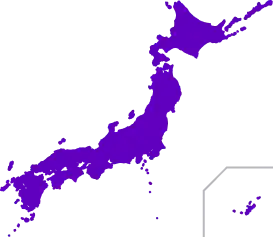
Ehime
Asato Ikeda
Asato Ikeda, Representative of Ryusen Kiln. He participated in a JICA program in Egypt teaching ceramics, and after returning to Japan, he resumed his work at Ryusen Kiln while holding exhibitions both domestically and internationally.
Tobe ware
Formed clay bodies are painted with cobalt-based pigments and fired at high temperatures. It uses white porcelain clay and durable materials, resulting in sturdy tableware. It is mainly used for everyday dining utensils as well as decorative vessels.
Tobe-yaki, a ceramic tradition passed down in Tobe Town, Iyo District, Ehime Prefecture, boasts a history of about 250 years. It was designated a traditional craft of national importance in 1976 and an intangible cultural asset by Ehime Prefecture in 2005.
Injecting a breath of fresh air into this historic traditional craft is Asato Ikeda, the representative of Ryusen Kiln, a Tobe-yaki pottery studio. Ryusen Kiln was founded in 1977 by his father, Fujio, a traditional craftsman who became independent from Ryubu Kiln, established by his grandfather, Kuniyoshi. While preserving the three-generation kiln, Ikeda creates original works that set themselves apart from traditional Tobe-yaki.
We visited Tobe Town to discuss with Ikeda the journey to his current style, the challenges facing Tobe-yaki, and his future plans.
Drawing Inspiration from His Father's Works, Creating Innovative Tobe-yaki Ceramics
When did you decide to pursue a career as an artisan?
It was around the time I graduated from high school. Growing up in an environment close to the kiln, I remember that choosing the path of an artisan came naturally to me.
From 2006 to 2008, you were dispatched to Egypt by JICA, where you taught pottery to local children.
I got to know someone working at JICA who informed me that they were looking for a ceramic instructor in Alexandria, Egypt.
In Egypt, I conducted pottery classes for children at a local facility for individuals with disabilities. Although the facility seemed keen on turning this into jobs for the children, they seemed to enjoy it more as clay play than actual pottery.
While Tobe-yaki is known for its thick design, your works give off a different impression.
I think sharp shapes suit my technique, so my works often have a thinner design.
Though they may seem "hard to hold" or "difficult to use" at first glance, those who use them often find the fit unexpectedly pleasant, and the lip feel is good. The gap is intriguing.

When did your current style emerge?
I think it was around 13-14 years ago. My father originally made beautiful, twisted works, and I began by imitating those, gradually adding my own touch, leading to my current style.
Frankly, I don't mind much whether my pieces are classified as Tobe-yaki. Tobe-yaki is an excellent culture with many wonderful pieces made by my predecessors. Precisely because of that, I feel I don't need to do the same as everyone else.
Where do you draw inspiration for your creations?
Rather than drawing inspiration from anything specific, my sense is shaped by everything I see and hear, whether it's nature or books.
I particularly love the Nakatsu Gorge and the source of the Shimanto River in Kochi Prefecture. Though not directly, I think these influences are connected to my work.
I'd be delighted if customers could enjoy the shapes, colors, and patterns I find fascinating.
What is your ideal image of a work?
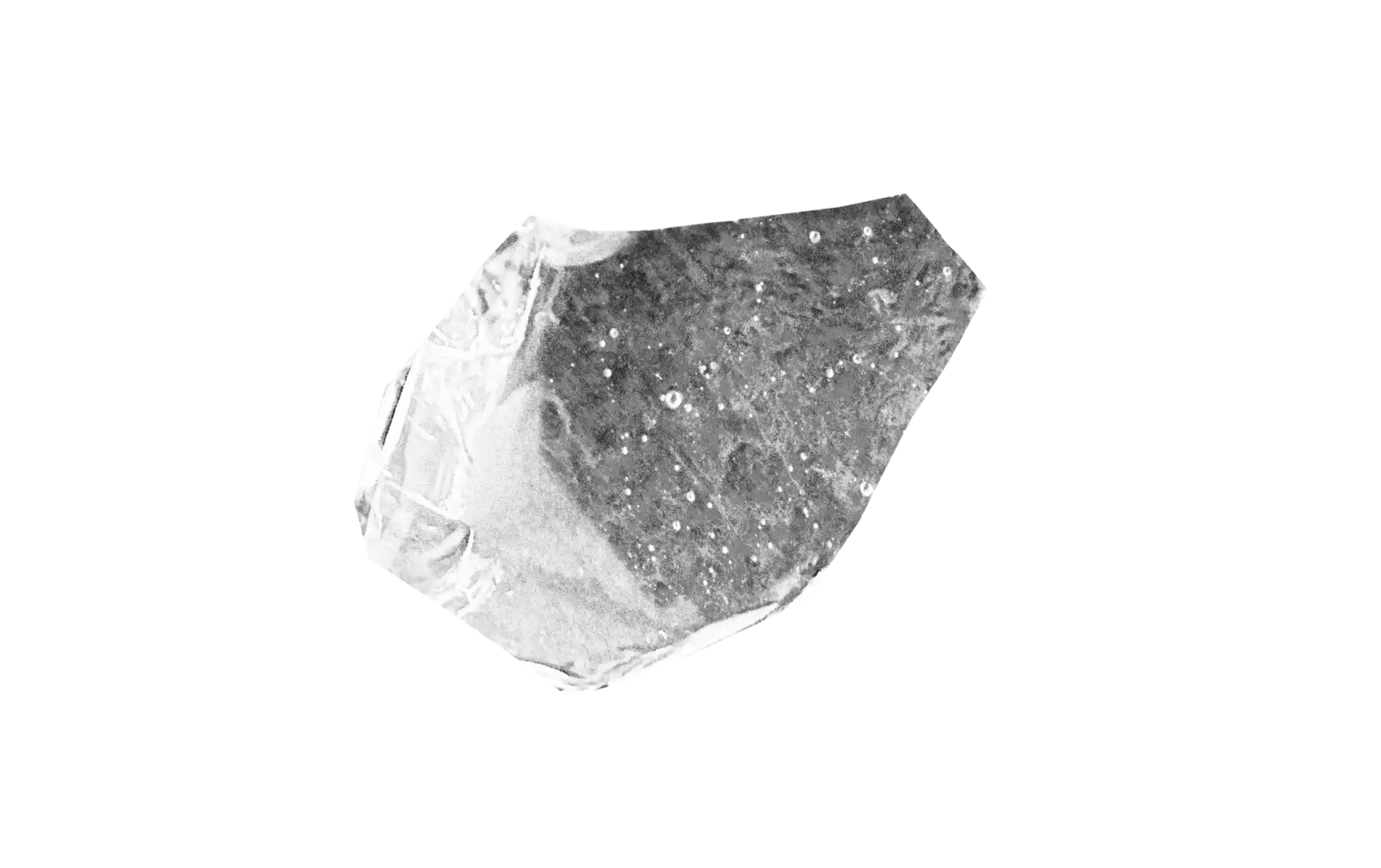
I envision something like stones that lie scattered in the mountains. Like stones with unique shapes, I want to create things that are closer to natural objects. In my mind, there's a belief that items born from nature are the coolest.

One of the Charms is the Unexpected Outcome
How do you achieve different colors and textures for each piece?
It varies with the way glazes are applied and how pieces are fired. Especially when using an anagama kiln, the result often gives a texture that's closer to natural elements with a slightly blurred effect.
Using copper in glazes can lead to mysterious colors, like green or red hues, depending on how they are fired, and sometimes even a mix of them. It's thrilling not to know the outcome until the kiln is opened after firing.
Factors like the concentration of the glaze or where the piece is placed in the kiln can greatly affect the final result. Pieces placed towards the front of the anagama kiln may get covered in pine wood ash, which melts and becomes part of the piece's expression. Because of this, I often place pieces with a thinner glaze towards the front.
It's interesting, even when things don't go as planned. Regardless of the outcome, I believe it's important to learn from the experience.
It sounds like you are experimenting with different methods.
Yes, indeed. For example, with glazes, I've been collaborating with the Ehime Prefecture Testing Center (Ehime Industrial Technology Research Institute) to create new glazes. I also blend glazes that my father made to suit my tastes.
Once a year, we fire up the anagama kiln during the relatively dry autumn and winter periods, changing the placement and types of glazes we use, trying out various experiments.

How is an Anagama kiln fired?
First, hulls are laid down, earthenware is arranged on top, a shelf board is placed, and more hulls are spread before arranging more earthenware—this is the step-by-step process of loading the kiln.
Once everything is loaded, the firing mouth is closed, and a fire is set. If the temperature is raised suddenly, the pieces may break, so initially, wood is stoked once every 2-3 hours, starting with a small bonfire-like flame.
This state is maintained for about a day and a half, gradually increasing the pace, and eventually from around 10 PM to 5 AM, wood is added at a frequency of every 5-6 minutes.
The fire is kept burning for about six days. While the preparations are demanding, both the firing process and the waiting period for the finished pieces are enjoyable.

Cultivating Young Artisans Throughout the Town
Can you briefly explain the history and characteristics of Tobe-yaki?
The reason why ceramics developed in this region is likely due to the availability of high-quality clay, similar to other production areas.
Tobe-yaki is porcelain using pottery stone as a raw material, known for being sturdier than earthenware. It's also said to be less prone to breaking due to its thick construction. The designs have a simple feel based on a blue palette, making them suitable for everyday use.
Furthermore, compared to other porcelains, it has stronger earthenware elements, resulting in a grayish finish. For instance, Arita-yaki uses whiter clay.
Another characteristic of Tobe-yaki is that, unlike larger production areas, many kilns still produce entirely by hand.
Approximately how many artisans of Tobe-yaki are there currently?
The exact number isn't known, but there are about 100 kilns. While the number has remained steady over the years, I've heard there's an increasing number of younger artisans.

Is there a regional effort to welcome and educate young artisans?
Tobe Town offers a two-year training program called "Tobe-yaki Pottery School (砥部焼陶芸塾)." There's also a culture of warmly welcoming people from other regions.
The town-wide initiative to foster young artisans is commendable. On the other hand, are there any challenges Tobe-yaki is facing that you could share?
One concern is whether the mining of pottery stone as a raw material will continue in the future. This is a challenge that the entire region needs to consider.
However, I've heard acquaintances are considering selling the clay not only to Tobe-yaki businesses but also overseas. In Taiwan, for example, potters purchase clay from Kyushu.
Whether or not the labor is met with adequate income is a significant factor in sustainability. Increasing sales channels seems like a good idea to address this issue.

Tobe-yaki is "What Entertains Me"
Please share your thoughts on the potential and future prospects of Tobe-yaki.
In Shikoku, the only ceramics are Tobe-yaki and Otani-yaki from Tokushima, so there's little competition with other production areas, making it a great environment to approach our work at our own pace.
Going forward, I want to enhance our approach overseas. We have been sending our works to galleries in the U.S. and the U.K. to sell locally, but since launching our own e-commerce site around two years ago, we aim to increase sales through it.
Overseas customers value not just usability but also enjoy looking at the vessels, so I think my works are well-matched in that sense.

What does Tobe-yaki mean to you, Ikeda?
It entertains me. Of course, there are difficult and tedious aspects, but there are many small joys, such as interactions with customers, achieving satisfaction with completed works, and pieces finishing in colors more stylish than imagined.
You mentioned earlier about the thrill of not knowing how the finished product will turn out, right?
In terms of technique, there's an element of chance from the middle stage, so I don't really feel like I'm "making it myself." For practical purposes, I sell them using my name, but I perceive it with a "Made on Earth" kind of feeling.

For more articles related to traditional crafts in Ehime Prefecture, click here


Japanese Craft Glossary
The History of Arimatsu Shibori: Tracing 400 Years of Turning Points From 1608 Settlement to Global Fashion

Seeking the Artisans
The Timeless Technique and Evolving Tradition of "Tsugaru Nuri Genbei": Growing More Beautiful with Every Layer

Seeking the Artisans
Brewing in Harmony with Dogo: Minakuchi Shuzo

Seeking the Artisans
Ishimizu Sculpture Workshop: 200 Years of Carving the Pride of Saijo Danjiri

Seeking the Artisans
Two Years and Thousands of Layers in a Single Gem: Doi Pearl on the Art of Pearl Farming

Seeking the Artisans
The New Rhythm of Tobe Ware: Washo-Gama's Étude-Patterned Vessels

Seeking the Artisans