
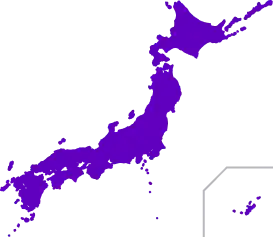
Ehime
Saijo Danjiri Carving
The process involves deciding themes and compositions through discussions with local stakeholders, then carving detailed designs into wood based on drawings and refining the details. The primary material is wood such as Japanese cypress, and the carvings are used to decorate danjiri floats, expressing local history and religious beliefs during festivals.

Saijo City, Ehime Prefecture. Every October, the entire city buzzes with excitement for its autumn festival, where "danjiri" floats take center stage. The carvings that adorn these magnificent structures are far more than mere decoration. They are the city's memory, etched into wood—a tangible representation of the region's history, faith, and pride.
With roots tracing back to the Bunkyu era (1861-1864), the Ishimizu Sculpture Workshop has been dedicated to its craft for nearly 200 years. We visited to explore the work of these master carvers who uphold the unique world of Saijo danjiri sculpture and to catch a glimpse of the future they are carving out for themselves.
200 Years of the Ishimizu Sculpture Workshop: A Legacy Forged Alongside the Festivals
The history of the Ishimizu Sculpture Workshop traces back to the Bunkyu era at the end of the Edo period. Although the family has long made its living from carving in Saijo, their work has not always been exclusively dedicated to danjiri.
In different eras, their primary focus shifted to carvings for shrines and temples or architectural ornamentation, with danjiri sculpture being a secondary concern. The type of work in demand evolved with the scale of the festivals and the local economy.
Against this backdrop, danjiri culture saw a resurgence during Ishimizu's father's generation. As the momentum to commission new floats grew, the Ishimizu Sculpture Workshop began to fully dedicate itself to danjiri carving.
Creating a single danjiri is a lengthy process, taking from one and a half to two years. It involves discussing themes with district representatives, deciding on the composition, and refining every detail. The dialogue that unfolds during this collaboration is what elevates the quality of the final sculpture.
Through this cumulative effort, the workshop has now crafted carvings for over 30 danjiri.

The Unique World of Saijo Danjiri Sculpture
When people hear the word "danjiri," many think of the famous floats from Kishiwada in Osaka. However, Saijo's danjiri are vastly different in both their structure and the philosophy behind them.
In Saijo, the festival's main spectacle is the act of hoisting the danjiri onto participants' shoulders and lifting them high overhead. Because of this, the overall lightness of the float, including its carvings, is a non-negotiable requirement.
Today, Saijo is the only city that continues to hold its festival in this style.
The themes of the carvings also reflect the region's unique perspective on history. During the Edo period, carvers chose relatively tranquil motifs like the twelve zodiac signs or flowers and birds. From the Meiji era onward, warrior scenes (musha-e) from tales like "太閤記," "太平記," and the Genpei War became the dominant theme.
In this way, the sculptures serve as a mirror, reflecting the values of both the era and the community.

The Heart of the Technique: Breathing Life and Depth into 2cm of Wood
The most defining characteristic of Saijo danjiri sculpture is the thinness of the wood panels. The primary material is hinoki cypress, particularly from the Shikoku region's Kochi Prefecture, which is prized for being both lightweight and strong. Though the panels are only about two centimeters thick, the finished sculptures possess an astonishingly rich sense of depth.
This illusion of depth is created by building a hollow, box-like structure and stretching fabric across the back. The key is to masterfully balance how much wood to carve away and how much to leave intact.
"A sculpture must already be fully realized in three dimensions at the initial sketching stage," Ishimizu explains.
Once the blade touches the wood with a vague composition, there's no going back for corrections.
"The act of carving wood is simultaneously an act of eliminating possibilities."
That is the essence of sculpture, says Ishimizu. It is precisely why so much time is dedicated to preparation before the carving even begins.

A Carver's Life and His Philosophy on the Craft
Shinji Ishimizu has dedicated over 45 years of his life to carving. He recalls his younger days when he was constantly buried in work, sometimes tackling two danjiri commissions simultaneously within a single year.
He says it took 10 to 15 years of dedicated practice before he felt the techniques had truly become second nature, allowing him to carve as a form of personal expression. Even now, he seldom looks at a finished piece and thinks, "This is perfect."
"Each and every float carries the weight of its community's memories, so it's impossible for me to single out one special work."
The reason is clear. Every danjiri is imbued with the memory of interactions with the local people, the anticipation during its creation, and the vibrant scenes of the festival itself.
Sculpture has always been, and always will be, born from the connection between people.

Beyond the Danjiri: Inherited Skills and New Expressions
These days, fewer new danjiri are being built in Saijo compared to the past. The decline in population and shifts in the local community structure are an undeniable reality.
Meanwhile, the work at Ishimizu Sculpture Workshop is expanding in new directions. They now create sculptures for individual clients, decorative figurines with motifs like dogs and dragons, and transom carvings for private homes.
Furthermore, with the next generation at the helm, new opportunities are emerging for people to connect with their craft, such as selling smaller carvings online.
The techniques, honed over years for the festival, are not lost even as their applications evolve. The ability to assess the wood, design a composition, and bring a three-dimensional form to life is being securely passed down to the next generation.

Danjiri floats evolve with the times. However, the skills, aesthetic values, and the power to connect people that have been carved into them will never fade away.
The craftsmanship of Ishimizu Sculpture Workshop, nurtured by the Saijo Festival, will continue to thrive in new forms. The stories carved into the wood are passed down to the next generation, ready to carve out a new chapter in time.

Japanese Craft Glossary
The History of Arimatsu Shibori: Tracing 400 Years of Turning Points From 1608 Settlement to Global Fashion

Seeking the Artisans
The Timeless Technique and Evolving Tradition of "Tsugaru Nuri Genbei": Growing More Beautiful with Every Layer

Seeking the Artisans
Brewing in Harmony with Dogo: Minakuchi Shuzo

Seeking the Artisans
Two Years and Thousands of Layers in a Single Gem: Doi Pearl on the Art of Pearl Farming

Seeking the Artisans
The New Rhythm of Tobe Ware: Washo-Gama's Étude-Patterned Vessels

Seeking the Artisans
From Roof Tiles to Sauna Stones: The Challenge of Koizumi Seigawara to Connect "Kikuma-Gawara" Tiling to the Next Generation

Seeking the Artisans