
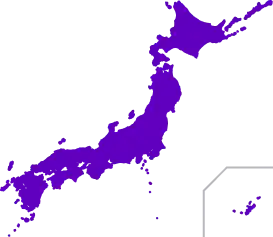
Wakayama
Fukutaro Azuma
A traditional paulownia chest craftsman at Kagu no Azuma Co., Ltd. He combines traditional craftsmanship with innovative techniques, including specialized lacquer finishes, mother-of-pearl inlay, and cutting-edge technology, while also collaborating with companies on new product development.
Kishu Tansu
Kishu Tansu is produced through processes including shaping the wood base, repeated polishing, and applying multiple layers of lacquer or coatings. It uses lightweight and humidity-resistant paulownia wood and is used as furniture for storing clothing such as kimono.
Mastering Paulownia with 1/100-Millimeter Precision
In Kinokawa City, Wakayama Prefecture—a region famed for its Kishu paulownia chests (tansu)—is Kagu no Azuma. Founded in 1891 as a lumber business, the company has dedicated over 130 years to crafting paulownia furniture. They manage every step of the process in-house, from selecting the finest wood to milling, construction, and final finishing.
Paulownia wood is exceptionally light, moisture-resistant, and slow to burn—qualities that have made it a prized material for tansu chests, designed to protect precious clothing and heirlooms for centuries. From a single paulownia tree, one chest is born. This craft demands a world of 1/100-millimeter precision. The artisan’s day begins with the sharp, rhythmic sound of a blade being honed.
The first step is the ink marking. Like drawing up a blueprint, lines are carefully drawn onto the wood. Each line embodies the artisan's years of experience and intuition. Paulownia is a living material that breathes with the ambient humidity, and the artisans must 'read' its condition each day to proceed with their work.
The wood is cut with a saw, joints are perfected with a chisel, and the surface is smoothed with a hand plane, revealing the beautiful skin of the paulownia. Traditional joinery methods, such as fully-housed dovetail and housed dado joints, form the chest's framework through the strength of interlocking wood, forgoing the need for adhesives. Wooden pegs provide further support, creating a structure so robust it won't warp even after a century.
The finishing touch is the charred paulownia technique. The surface is carefully charred with flames, the soot is brushed away, and then layers of persimmon tannin and polishing powder are applied and buffed to a fine sheen. As the years go by, the paulownia's unique character deepens, becoming a wooden memory that grows alongside the family.

Seeking the Artisans
Three Sisters, Three Different Dreams: What Three Sisters at a Yoshino Tea Farm Put Into "Chanokichi"

A Century of Craft, A Master's Voice
Part 5 (Final): Class 1, Bamboo Group: A Life That Seems Futile, Yet Is Not — Living National Treasure Shosei Fujitsuka

Seeking the Artisans
Connecting Tradition and the Future: Fifth-Generation Fukutaro Azuma Forges a New Path for Paulownia Craft

Seeking the Artisans
Beyond the Norms of Circular Knitting: Kanemasa Meriyasu's Ultra-High-Density Technology

Seeking the Artisans