

The Sekioka Mokuhanga Kobo workshop continues a lineage of woodblock printers that stretches back to the Edo period.
Fourth-generation printer Nobuto Ogawa had a unique path, working at a thrift store before joining the family trade.
Today, he’s focused on more than just preserving techniques. He's on a mission to reconnect the broken “cycle” of his craft—linking materials, farmers, and wholesalers. We sat down with the young printer to hear about the future he envisions.
Stepping Away to See the True Uniqueness of the Family Business
Were you involved in the family business from a young age?
I’m the seventh-generation printer in my family line, which dates back to the Edo period. The Sekioka workshop itself was founded by my great-grandfather. My grandfather, Isao Sekioka, was the second-generation head, my master Hidekatsu Kawashima is the third, and I'm the fourth.
My grandfather doted on me, so from a very young age, I was always playing in the workshop, watching Kawashima—who would later become my master—at work. I have a fond memory of making a woodblock print for a summer school project and really enjoying it.
But after that, I drifted away from woodblock printing and stopped helping with the family business. From middle school through university, I was completely absorbed in baseball.
You were quite the athlete. What prompted you to consider becoming an artisan?
Stepping away and looking at it from an outside perspective made me appreciate the appeal of a printer's work all over again.
During my job hunt, I vaguely wondered if I should take over the family business, but I also thought, 'Being an artisan seems really tough.' So, partly to get some real-world experience, I decided to take a job at a thrift store.
While making house calls to buy furniture and appliances, I'd talk to customers, and so many of them would praise my family's trade, saying things like, “That's such a wonderful profession!” I started to realize that it might be a really compelling career path. I enjoyed my office job, but as an only child, and with my master getting on in years, I knew the Sekioka legacy would end with him if I didn't step up. I wanted to ensure that the craft of woodblock printing survived, so at 24, I decided to join the family business.
I hear that after quitting your job and before starting your apprenticeship, you went backpacking abroad.
I had a three-month break, so I used it to travel to various places like Europe, the United States, and Morocco. I wanted the experience to inform my training, so I made sure to visit places like the British Museum in London and MoMA in New York. I saw ukiyo-e prints on display there, drawing a lot of attention. Seeing that solidified my resolve. I knew this was the work I was meant to do.

The More You Print, the More It Comes Back to You: An Apprenticeship Fueled by a Sense of Mission
Could you tell us about your time as an apprentice?
I decided to study under Kawashima, my grandfather's apprentice who had taken over the Sekioka Studio. My master was a true veteran with over 60 years of experience, having started in this trade at 15. He'd been working at the Sekioka Woodblock Print Studio since before my mother was born. We aren't related by blood, but he was basically family, you know?
So, it felt a little strange when we officially became master and apprentice. It was kind of awkward, like asking a close relative to be your teacher. But as I trained, my respect for him just grew and grew.
How did your master teach you?
I think it's the same for any craft, but the only way to learn is by printing relentlessly. In the old days, apprentices would have started with cleaning, but my master was already nearly 70 when I started, so he had me tackle hands-on work from the get-go, knowing I had to learn fast.
You learn by making endless mistakes and just plowing through the work. In the beginning, printing 200 or 300 sheets a day was considered a small amount. As I got the hang of it, I could manage 400 to 500.
That sounds incredibly tough.
Oh, it was definitely tough. For the first two years or so, I worked a part-time job at a bento shop from 6 to 9 in the morning before my training, so it was physically pretty grueling.
But the great thing about being a craftsman is that everything, for better or worse, comes right back to you. The more you practice and hone your skills, the better you get, and in turn, you can bring joy to your customers. It's a lot like being a professional athlete in that sense, isn't it?
That's why, even when things got hard, I never thought about quitting. Plus, being born into a family of printers gave me a sense of mission. I had this "I'm going to master this, no matter what" attitude, so it never felt like a hardship. After five years of training, once I'd gotten a handle on the techniques, I decided to set out on my own.

Tools Don't Lie: Why We Stick with Inconvenient, Natural Materials
What are the core values of the Sekioka Woodblock Print Studio?
We cherish the tradition of using natural materials as much as possible, carrying on the legacy of tools and materials from the Edo period.
I believe that crafts are born from the Japanese value of living in harmony with nature and showing gratitude to the yaoyorozu no kami (the myriad gods). In an era of mass-produced goods, that's the only thing that truly sets traditional crafts apart. If we can't get our hands on the original natural materials, we believe the best approach is to find the closest possible alternatives to continue our work.
I see.
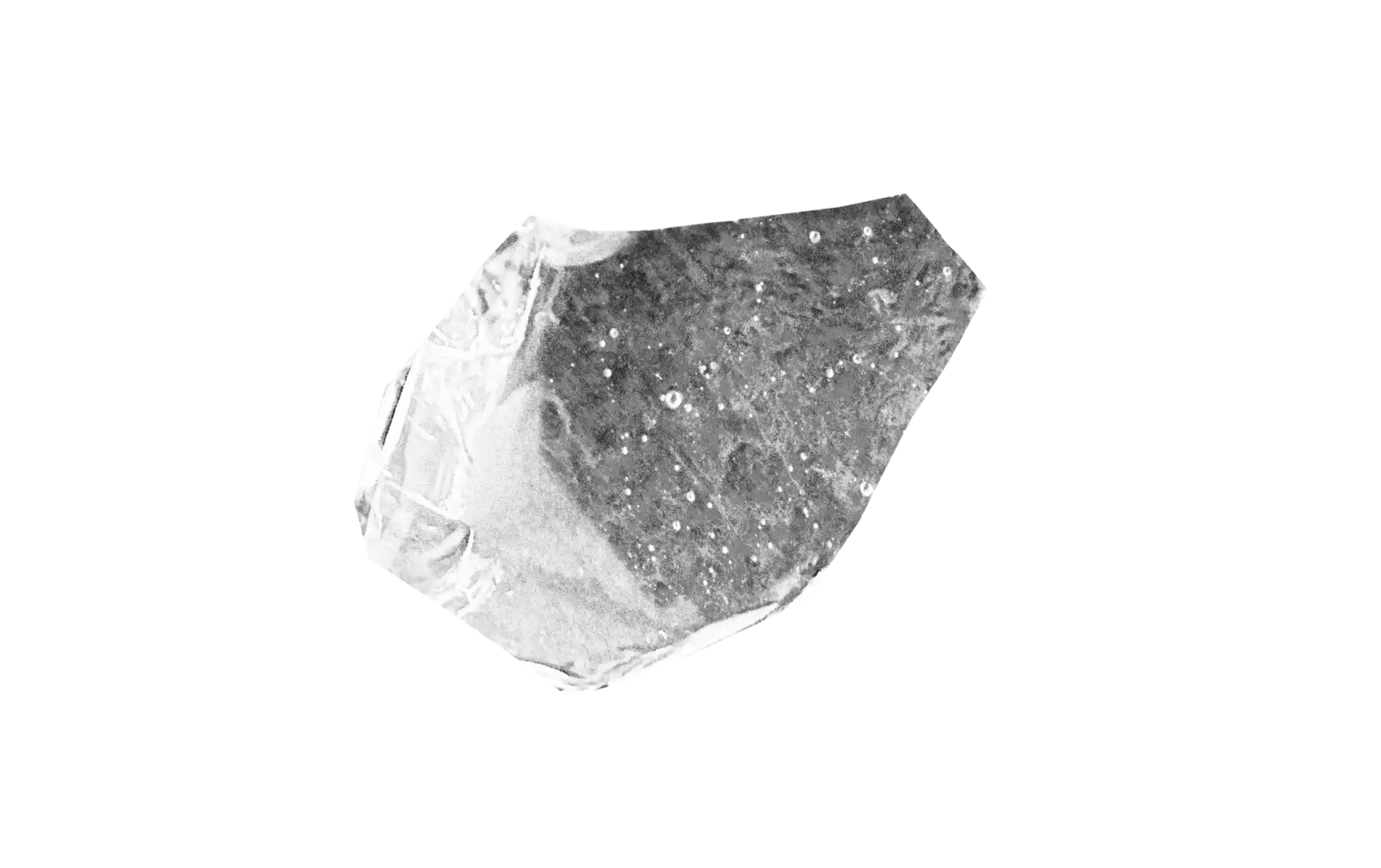
For instance, the hon-baren (traditional printing pad) used for printing ukiyo-e is made by layering washi paper and lacquer over a core of twisted bamboo sheaths. This makes them expensive, difficult to obtain, and they require significant force to use. Nowadays, you can find modern 'bearing baren' that are easier to use and require less effort. But we don't use them.
My master often used to say, "The day I can no longer print with a hon-baren is the day I retire." After all, the artisans of old used nothing but the hon-baren, right? Hearing him say that just gave me chills. It was so cool.
But I imagine it's getting harder to source those traditional, natural materials.
It really is. Take washi paper. In the Edo period, printers used handmade paper made from 100% kōzo (paper mulberry), but it's incredibly difficult to find now. Ukiyo-e has deep ties to Echizen and Iyo washi, but there's a two-to-three-year wait for traditional Echizen washi. If that's the case, we can't work. So, we've started taking matters into our own hands by seeking out new washi artisans and even helping out the farmers who grow the kōzo.

Restoring the Cycle of Craftsmanship to Share a Life in Harmony with Nature
What drives you to get involved in projects that extend beyond the typical role of an artisan, like sourcing raw materials?
Traditional crafts are built on a system that connects various artisans and their specialized roles. Woodblock printing, for instance, involves a division of labor among the publisher (hanmoto), the artist (eshi), the carver (horishi), and the printer (surishi). But even for something as basic as washi paper, you need a wholesaler, an artisan who makes the paper, and a farmer who grows the raw materials. Only then can you print a woodblock print.
What's more, wholesalers thrived because there was demand not just from woodblock printing but from other crafts as well. When one part of this ecosystem disappears, it has a ripple effect. I feel that today, the very system supporting traditional crafts is falling apart. That's why we have to take on the work of supporting the entire system, or else the craft itself won't survive.
With that in mind, I began to realize I needed to step beyond the role of an artisan and take on a publisher-like role. I believe that unless I get involved in everything from planning new ukiyo-e with artists to sourcing the raw materials, I won't be able to ensure this craft is passed down to future generations.
Could you tell us about any projects you have in the pipeline?
I recently bought a property in Naka, Tokushima Prefecture, that used to be a sake brewery. Together with an Australian woman who runs an antique bookstore specializing in Edo-period ukiyo-e, I've launched a project to create a space for growing kozo (paper mulberry) and the mountain cherry trees used for printing blocks.
Naka is home to a textile called tafu, which is woven from kozo fibers, so the culture of kozo is deeply rooted there, and some people are already making washi paper. They also plant mountain cherry trees, which made me think, "Wow, this place is like a holy land for printmaking!" We'll start by renovating the old traditional house to produce materials for our prints. My hope is that it will eventually become a hub that can supply materials for other crafts as well.
It sounds like it will also become a place that showcases the richness of living in harmony with nature through traditional crafts.
My experience working at a second-hand shop had a big impact on me. We live in an age of mass production and mass consumption where so many things get thrown away. I used to buy things for the shop feeling it was such a waste, thinking, "This is still perfectly usable, but they're getting rid of it." I'm not trying to reject capitalism entirely, but I feel some aspects have gone too far.
I also want to tackle the problem where money doesn't always flow back to the creators, like farmers and artisans. By highlighting the richness of making things in harmony with nature, I'm aiming for initiatives that bring happiness to these craftspeople and farmers.
I love the spirit of ukiyo-e. The term originally came from the Buddhist concept of the "sorrowful world" (憂き世), reflecting the hardships of life. But as the culture of the Edo period matured, the term was reimagined as the "floating world" (浮世), embodying the idea that if life is fleeting, we might as well live it with pleasure.
Our current era can also feel uncertain and suffocating at times. But that's precisely why I want to continue this work—transforming the gifts of nature into art and having fun doing it with my colleagues.
.jpeg?w=430&fm=webp&dpr=2)
He is mending the broken cycle of craftsmanship, re-printing our modern world into a "Floating World" once more. The young printer's vision seeks to revive the vibrant, cheerful spirit of the Edo-period artisans for today.
Header Caption:
"THE 戸゜任朱邏東京圖ゑ ザ・ロビー 午後のひととき(ザ・ペニンシュラ東京図絵)"
Publisher: The Peninsula Tokyo
Supervision: UKIYO-E PROJECT
Now on display on the B1 floor of The Peninsula Tokyo.
Text by Shino Arata

