
Kyoto

Shogo Watari
Shogo Watari Bentwood artist. He creates sculptural works using Yoshino hinoki and bentwood, presenting them in Japan and abroad.
Woodcraft
Wood is shaped and refined using tools such as planes and chisels, emphasizing natural grain patterns. Various types of natural wood are used to create furniture and craft objects for everyday use.

Shogo Watari explores the beauty woven from Yoshino hinoki and curved wood, straight and curved lines, and the synergy of the human hand and nature, using the innovative method of curved wood (Mageki) artistry. This time, we visited his Kyoto atelier to hear his story.
A Circuitous Journey that Paved the Way for Craftsmanship
What inspired you to pursue woodworking?
My family has been in the lumber business for generations, and as a child, rather than playing video games, I would play in the lumber warehouse in the mountains or in nature. My current atelier used to be my grandfather’s workshop.
As a student, I was interested in fashion and would remake clothes, bags, and handcraft leather wallets. I also became fond of mountain climbing in college and often traveled abroad.
After graduating, I spent about five years working in the apparel industry, but I always longed to work close to nature and in a craft-related job.
When I was 27, I visited a mountain-lodge-style restaurant at the foot of a mountain while hiking, and saw the owner’s handmade furniture and small items. In that instant, the dots of my childhood experiences and admiration for making things connected, and I decided then and there to become a furniture artisan in order to create with wood.
From 2014, for two years at Shinrin Takumi Juku, you learned traditional joinery techniques (Sashimono) that combine wood without nails. Can you tell us about the experience and what you learned?
I chose Shinrin Takumi Juku intuitively, thinking it would help me develop hands-on skills. We created products to be sold while learning, but even from the first day, I was polishing small items until my hands ached—it was training every day.
Under the philosophy of "A tree nurtured for 100 years deserves to be used for 100 years," I learned the basics of woodworking. Even now, I create my works with the resolve that they should retain their form for a century.

From 2016, you spent three years at the Joseph Walsh Studio in Ireland. What did you learn there, and were there influences beyond technique?
Joseph Walsh is one of Ireland’s leading artists. During a course at Shinrin Takumi Juku, I was struck by the unique, curvaceous beauty of his forms and wanted to develop that skill as a craftsman.
At the time, two graduates from the juku were working at his studio. By coincidence, one of them was returning to Japan around the time I graduated, so I took their place and worked in the small port town of Kinsale, Ireland.
The hallmark of Joseph’s technique is, unlike traditional bent wood, to create layered wooden parts that can be bent into unrestrained, free-flowing curves without using molds for shaping. Through exposure to his aesthetic, I started to face my inner self—not just focusing on "how to make something" technically, but also considering "what to make" from an artistic perspective.
Living in Ireland made me more conscious of Japanese culture, and I began to want to create from a uniquely Japanese sense of beauty and sensibility. At the same time, I began collecting photo books centered on nature and documented things that left a strong impression on me every day.
Originally, I’ve been drawn to grand nature through mountaineering, climbing, and fishing, but in photo books, I also find fascination in both large-scale landscapes and the fine structures of nature—like the shapes of petals or leaves, or the intricate texture of tree bark.

After returning to Japan, what led you to work at Nakagawa Woodworking from 2020, and how did that experience influence your creative work?
Joseph used to invite craft and manufacturing experts from all over the world to hold seminars, and one of the guests was Shuji Nakagawa, the head of Nakagawa Woodworking Hira.
I was deeply impressed by the cypress materials Nakagawa brought with him, especially his piece "Yorishiro," which he made from knotted wood that is usually not used. Traditionally, wooden tubs are made from rift-sawn timber that splits straight, but Nakagawa saw beauty in scrap wood that would normally be thrown away, infusing his work with a distinctly Japanese aesthetic that brings out the inherent appeal of the material itself.
His approach to woodworking—finding value in imperfection and using the unique qualities of the material—was fundamentally different from Joseph’s, who places importance on adding color or making adjustments to achieve an ideal image or form, even if it means altering the curve.
Although I intended to become independent after returning to Japan, I decided to spend about two and a half years making wooden tubs at Nakagawa Woodworking to learn from Nakagawa’s keen insight into materials and his approach to craftsmanship. During that time, I became more and more fascinated by the natural beauty of raw cypress wood.
I came to believe that the essence of Japanese and craft-based manufacturing is the mastery and respect for material—using exquisite technique to highlight the natural quality of the wood. This spirit deeply influences my current work.

The Art of Bending Wood: Imprinting Bodily Movement
What innovations or unique features define your creative process?
The graceful curves created by traditional materials—especially Yoshino cypress—and a unique wood-bending technique are what set my work apart.
Cypress has long been considered sacred in Japan, often used in shrines, temples, and other symbols of Japanese culture. Among them, Yoshino cypress is grown in carefully managed artificial forests. By densely planting, repeated thinning, restricting sunlight, and pruning branches over many years, wood with a straight, fine grain and no knots is obtained, which is its hallmark.
Thinly sliced sheets of Yoshino cypress are laminated and, without using molds, are bent by hand, maximizing the wood’s flexibility and the strength of its fibers. The presence of knots or grain breaks can cause odd curves or cracks, so Yoshino cypress is indispensable for this bending technique.
Throughout woodworking history, humans have shaped wood by means of tools. However, I have sought new potential in wood sculpture by perfecting a bending method that directly and intuitively channels my own bodily movements into the wood, without relying on tools as a mediator.

Can you describe your process and what you are particular about when creating your work?
My creative process can be simply described as bending by hand, shaving by hand, and assembling the parts. Of these, the bending stage is particularly time-consuming.
While I sometimes create rough sketches, I don’t draw precise design plans. To explore how I can bring my vision to life, I first make a one-third scale maquette, then create a full-sized version, fine-tuning the balance as I go.
The bent pieces thus become the framework of the artwork. I use grinders and hand planes to refine them to the ideal lines, then combine traditional joinery techniques with hardware like bolts to ensure structural strength during assembly.
I believe the gentle color and texture of raw wood are the most beautiful, so I finish my work with a coating that won’t damage those natural qualities.
Instead of locking into a fixed final form, I rely on an image from a single angle to guide a conversation with the wood, bending parts according to where my mind and body take me. Years of accumulated experience and memory are expressed physically and serve as my compass during creation.

The Well of Expression: Sense of Wonder
Where do your ideas come from?
In terms of form, sometimes I draw inspiration from the laws of nature, or make intuitive decisions by moving my hands. Often, a curve that emerges during production sparks the idea for my next piece.
The "Blossom Ring" series is inspired by the structural principle of whorled phyllotaxis in plants. Meanwhile, the "Breaking of the Reflection" series takes its name from the physics and biology term for "symmetry breaking" and explores the beauty found in slightly disrupted symmetry as its main theme.
For example, while a human face or a butterfly’s wing may seem symmetrical at first glance, small distortions and individual differences reveal themselves. My work is about transforming the comfort and beauty found in such natural “irregularities” and “asymmetry” into artistic expression.
This sense of harmony within irregularity is unique to the hand-bending wood technique that directly translates bodily movement. It makes it possible to encapsulate the fleeting, unrepeatable beauty of a single moment in my pieces.
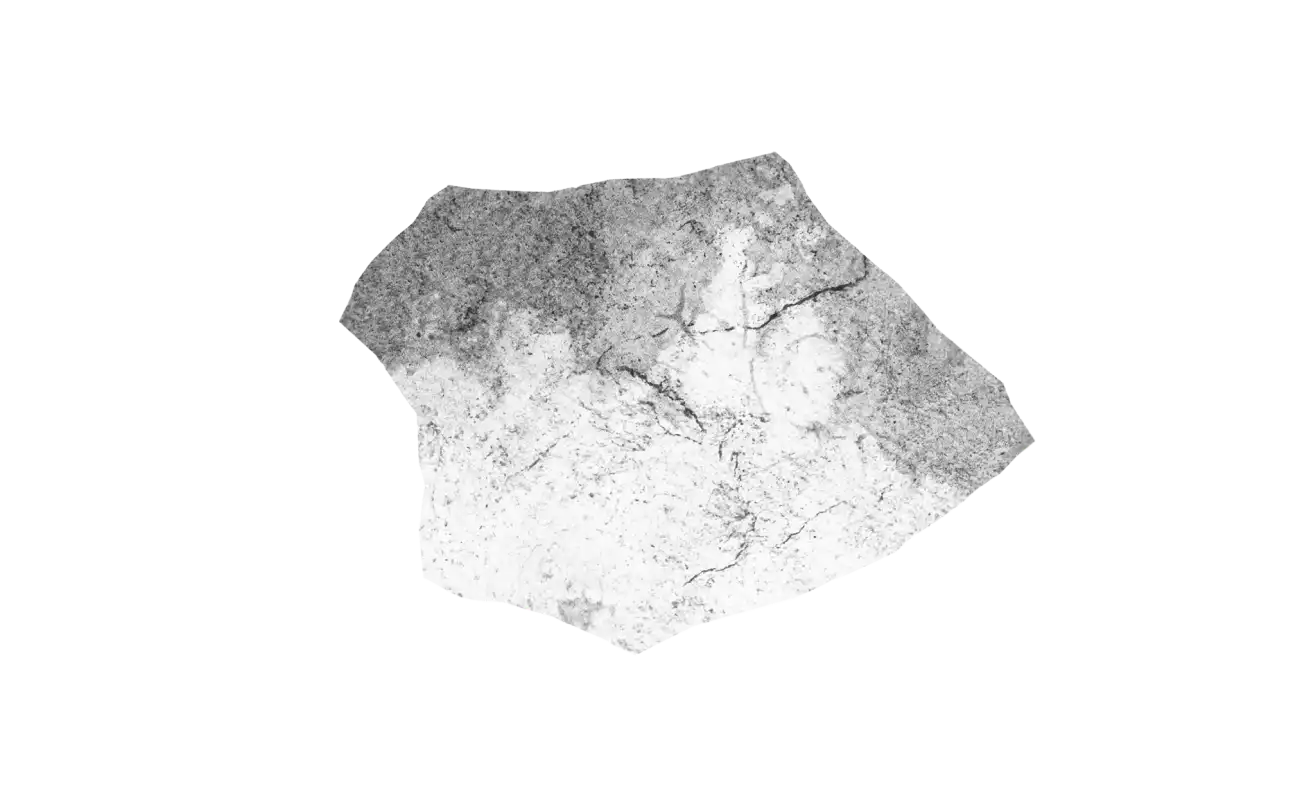

I also love the texture of stones and often collect them along rivers and seashores. Stones symbolize the earth itself, and the sight of trees standing on the ground feels like pure nature to me.
The "Jinen" series, which uses natural stones for the base, is a collection where, without any fixed concepts or images, I pick up wood and allow my body to bend it freely, capturing the resulting curves as they appear.
Jinen is a word rooted in Buddhist philosophy, meaning "as it is," and represents the traditional Japanese outlook that people exist as part of nature itself.
If you have any future goals or dreams, please share them with us.
Although it’s hard for me to picture the distant future, my desire to keep creating beautiful works using Yoshino Hinoki and bent wood craftsmanship remains unchanged.
Right now, through raising my child, I have been rediscovering the world through a child’s perspective, and cherishing that pure response of the heart when confronting the natural world. Through my works, I hope to resonate with that feeling, and help others reconnect with the deep ties they have to wood and nature within themselves.
Sculptures that are instantly recognizable as wood, yet display mysterious forms not found in the natural world—that is what I truly hope will communicate the timeless wonder and allure of nature through my works.

Text by Riko

Japanese Craft Glossary
The History of Arimatsu Shibori: Tracing 400 Years of Turning Points From 1608 Settlement to Global Fashion

Seeking the Artisans
The Timeless Technique and Evolving Tradition of "Tsugaru Nuri Genbei": Growing More Beautiful with Every Layer

Seeking the Artisans
Breaking From Tradition: How 400-Year-Old Asahiyaki Is Crafting a Future in Scandinavia with Tableware That Grows with Its User

Seeking the Artisans
Kyoto's Bamba Dyeing Factory Envisions "The Next 100 Years of Traditional Industry"

Seeking the Artisans
A Hymn to Nature Woven into Eternal Wisteria: The Natural Song of Yushisha

The Future Map of Crafts
Sculpting Everyday Beauty Through Dimensional Embroidery: The Eclectic Charm of Momoka Ienaga

Seeking the Artisans