
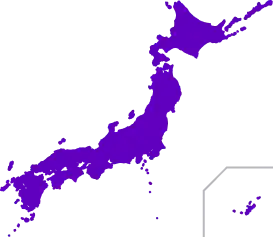
Fukui
Toru Uchida
Toru Uchida, President of Shitsurindo Co., Ltd. He works on the production of Echizen lacquerware and develops lacquerware suited to modern lifestyles.
Echizen lacquerware
Echizen lacquerware is produced around Sabae City in Fukui Prefecture and has a history of approximately 1,500 years, making it one of Japan’s oldest lacquerware-producing regions. It is made through a specialized production process consisting of wood-base making, foundation work, lacquer coating, and decoration, with advanced skills required especially for the foundation and coating stages. Known for its elegant luster and durability, it is used for household bowls and tableware as well as professional-use lacquerware for inns and restaurants.
In the Fukui Prefecture, particularly around Sabae City, the lacquerware produced is known as "Echizen lacquerware." It is characterized by its elegant luster and splendor, with origins tracing back approximately 1,500 years. The manufacturing process requires advanced skills at each stage, often passed down as a family business.
Shitsurindo Co., Ltd. is one of the workshops that has been involved in producing Echizen lacquerware as a traditional lacquer workshop for generations. With a history spanning over 200 years, it continues to connect the tradition of Echizen lacquerware.
This time, we talked to Toru Uchida about the founding of the company, its reasons for creating modern lacquerware, and the manufacturing process of Echizen lacquerware.
Pride in Craftsmanship
Could you tell us about the founding of your company?
Our company was established in 1793. The Uchida family, the founders of Shitsurindo, has traditionally been engaged in the collection of lacquer raw materials, known as "漆掻き", and the fourth generation head began the lacquer painting business. I, being the eighth generation, now carry on the time-honored techniques of lacquer painting.
In addition to manufacturing lacquerware for general households, we also produce professional lacquerware used in inns and restaurants.
Moreover, we also repair bowls, such as those for kintsugi, and have been responsible for restoring the lacquerware called "Oryoki (応量器)" used by monks at the Soto Zen sect's head temple, Eiheiji.
Since we are creating utensils that will be used by someone, I carefully engage in craftsmanship, imagining a warm dining table filled with delightful conversations, adorned with delicious hot dishes.
It seems that your lacquerware for general households is designed with modern colors and functionality in mind.
We started making colorful lacquerware because we want it to be embraced by younger generations. Traditionally, lacquerware is often passed down through generations, but in Japan, as nuclear families become more common and the number of single-person households rises, it has become increasingly challenging to reach younger users. The question is, "How can we get young people to pick it up?"
Therefore, our company began creating lacquerware that incorporates colorful lacquers, allowing people to envision various dishes beautifully presented. Now, younger individuals are starting to take interest, and we've received great feedback from those who regularly use lacquerware, saying, "This is the kind of lacquerware I wanted to try!"

Dishwasher-compatible lacquerware is being developed.
Lacquerware is said to have a heat resistance temperature of 75-80 degrees, making it unsuitable for dishwashers. However, receiving many requests from customers wishing for dishwasher-safe options prompted us to pursue the development of such lacquerware. In collaboration between Fukui Prefecture and Fukui University, we began researching the heat resistance and durability of lacquer coatings.
There were no established standards for determining whether lacquerware could be cleaned in a dishwasher, so we conducted over 1,000 cleaning tests on our own. It's crucial that nothing leaches from the lacquer coating when placed in a dishwasher. Therefore, the lacquer we use is designed to withstand temperatures up to 120 degrees. It has about 1.5 times the strength and double the hardness of standard lacquer, making it resistant to dents when in contact with pottery or glassware.
Lacquer can harden due to temperature and humidity fluctuations, so some lacquer suppliers adjust the components to make it easier for artisans to apply. However, adjusted lacquers tend to weaken over time.
In contrast, the lacquer we use is entirely unadjusted. By maintaining a consistent temperature and humidity during application, we ensure quality, which we consider our unique technology.
Did Uchida consider continuing the family business from a young age?
I originally did not intend to take over the family business; I was studying to become a school teacher at a university outside the prefecture. My interest in the family trade began when I returned home for a teaching practicum and witnessed my parents at work, which sparked my curiosity. Although I thought I had seen the lacquerware manufacturing process since childhood, I rediscovered the specific flow of work at that moment.
People around me frequently said, "Being a school teacher is a noble profession," so I thought it would be a great job. However, when I reconsidered it from the standpoint of work autonomy and flexibility, I realized that I could shape the company positively or negatively based on my efforts. This led me to decide, "I will give it a try" and take on the family business.
Previously, I thought that being an artisan wasn't a particularly great profession, but now I take pride in possessing skills to create. After 25 years in this industry, I've seen a steady decline in artisans. I never imagined that "being able to create something would become something special," but given the flow of society, I am renewed in my joy of being involved in manufacturing.

What Artisans Are Required to Have Is More than Just “Quality”
Can you tell us why lacquerware manufacturing flourished in Echizen?
I believe it is related to the climate and cultural connections. Temperature and humidity are extremely important for hardening lacquer. Fukui Prefecture has abundant rainfall, and the humidity helps lacquer to set, making it a suitable environment for lacquerware manufacturing. Culturally, I think lacquerware took root through connections with institutions like the Jodo Shinshu and the Asakura clan during the Warring States period.
One of the key characteristics of Echizen lacquerware is the advanced division of labor and the fact that 80% of the domestic share of commercial lacquerware comes from here. The need to deliver in large quantities led to increased division of labor after the war.
As the division of labor progressed, more workshops engaged in lacquerware manufacturing emerged, and there are now about 200 workshops. While there are several lacquerware producing regions in Japan, I believe Fukui is the oldest.
Can you explain the manufacturing process of Echizen lacquerware?
The process is mainly divided into four stages: wood base creation, priming, coating, and decoration. The quality of lacquerware is determined during the priming stage because if the base is not sturdy, it can lead to discoloration or deformation. Many changes in quality originate from the base, making the priming process especially crucial.
During the coating process, it's essential to prevent dust and debris from settling. If dust adheres to the coating, it cannot be released into the market, so we pay meticulous attention during this phase.
Do you have any techniques to prevent dust and debris from entering?
Lacquer is generally purchased in units of about 1 bucket (approximately 4 kilograms). When purchased, components from tree bark and soil are removed, but during use, dust from the air and fragments of hardened lacquer can mix in. Therefore, we filter it every morning without fail.
Additionally, the brushes used for coating, if left as they are, harden; thus, after use, we add oil to prevent hardening. However, if oil residue remains before the next use, it can repel the lacquer, so we meticulously remove any residual oil before using the brushes again. This also requires careful execution.

I have heard that some artisans create and use tools that suit them.
There are tools that seem to use plastic, but such tools are hardly used in Echizen lacquerware production. For example, the brushes we use are made from human hair.
Lacquer has a high viscosity, so it is applied by pushing and spreading it out. Therefore, the brush needs a certain level of stiffness and hardness. I have tried various materials for brushes like those for paint, calligraphy brushes, bristles from pigs, tails, and horse manes, but none of them worked. I believe there is currently nothing better than human hair.
While Japanese hair is of very high quality, with the regular use of shampoo and conditioner, it has become unsuitable for brushes. However, technology has advanced, and it seems that brushes can now also be made with Japanese hair. I am curious about what would happen if I made a brush using my own hair, and I am currently having a custom brush made.
How long does an artisan need to experience before being considered “accomplished”?
Even someone with 10 years of experience might only be about 60-70% skilled. When entering a company as an artisan, there is inevitably a demand to produce a certain quantity, so the ability to paint is less important than being able to produce a volume.
For instance, while a fine arts student might be able to paint one piece beautifully in a day, I don't think they could manage to paint 100 pieces in a day. Artisans need to think creatively about how to paint as many pieces as possible. I believe it takes a long time—around 20 years—to reach a fully accomplished level.

To Expand the Charm of Lacquerware, Embrace New Fusions
What do you think are the challenges facing the industry?
The cost of raw materials is increasing year by year, and it's hard to pass those price increases onto consumers. Therefore, I believe how to tackle this internally is a significant challenge.
Since the post-war period, division of labor has advanced, and during the period of rapid economic growth, the number of artisans increased significantly, which should have created a time when “whatever you made would sell.” Now, as those artisans from that era become veterans, the aging issue is becoming prominent. In reality, it's not that there are fewer artisans, but rather that the population is aging more noticeably.
While there hasn't been a major impact yet, I think that within the next decade, issues of succession will become apparent. Additionally, there may be processes that cannot be performed due to a lack of artisans, so we need to think about how to respond to these changes now.
Are there any works you would like to create in the future?
Our company often manufactures business lacquerware, and we have made many proposals for utensils that are easy for restaurants to use. On the other hand, for products aimed at general customers, we have increasingly focused on creating “good things as we envision them.” Moving forward, I would like to establish a system that allows customers to place orders with free ideas. One of the initiatives toward this end was setting up a new “kiji-ba (woodworking place)” to turn the wood for bowls and employing artisans who can shape the wood, the "kiji-shi (woodworker)." This allows for more freedom in designing not just the lacquer finish but also the shape of the bowls.
Echizen lacquerware has a history of 1,500 years, but modern technology changes rapidly. I believe that if we can inherit traditional techniques while combining lacquer with new materials or merging lacquer with science, the charm of lacquer can be further expanded. To preserve lacquer for the future, I want to continue this challenge at all costs.
Initially, I thought it was enough for me to learn the technique and be able to paint, but now I want young staff to acquire these skills as well. I see lacquer as a tool that connects with younger people. In working together, I communicate with younger colleagues, and I feel that lacquer is the thread that connects us.

Text by Rika Okuyama

Japanese Craft Glossary
The History of Arimatsu Shibori: Tracing 400 Years of Turning Points From 1608 Settlement to Global Fashion

Seeking the Artisans
The Timeless Technique and Evolving Tradition of "Tsugaru Nuri Genbei": Growing More Beautiful with Every Layer

Seeking the Artisans
Fukui Yougasa's Quest for "The World's Most Considerate Umbrella"

Seeking the Artisans
Globally Acclaimed Echizen Uchihamono Blades—Ryusen Hamono Opens a New Frontier

Seeking the Artisans
The Sole Successor Preserving 300 Years of Tradition: The Timeless Brilliance of "Wakasa Agate Craft" at Sosuke Kobo

Seeking the Artisans
Protecting the Dinner Table with 100% Natural Lacquer Wakasa-Nuri Chopsticks—Hyozaemon's Commitment to Authenticity

Seeking the Artisans