


Fukui

Soichiro Uenishi
Soichiro Uenishi, Sousuke Kobo. He produces Wakasa agate crafts.
Wakasa Agate Craft
Wakasa agate craft is a precious stonework produced in the area around Obama City, Fukui Prefecture. Rooted in bead-making techniques that took hold here during the Nara period, its defining feature is a unique technique called \"yaki-ire\" (tempering) perfected in the Edo period. When raw stones are heated over charcoal in ash, their iron content oxidizes, drawing out a deep, flame-like crimson. It is a color no other stone can replicate — uniquely Wakasa.
Wakasa agate craft (Wakasa menou zaiku) is a traditional craft made by processing agate rough stones in the Obama City area of Fukui Prefecture. Its distinct feature is a "deep reddish-brown, semi-translucent luster." Lucky carvings like chickens and carp have long been cherished as gifts.
But now, there is only one artisan who has inherited about 300 years of craftsmanship. That is Soichiro Uenishi of Sosuke Kobo. What was the inspiration that drew him to Wakasa agate craft, and how has he supported it to this day? We spoke with Uenishi about his journey and the current state of Wakasa agate craft.
Turning Point: Entering the World of "Agate Craft" After Returning Home
Wakasa agate craft originated when a native of Obama City, Fukui Prefecture, brought home the skills they developed while working at an eyeglass shop in Osaka. At the time, eyeglasses were made by processing crystal lenses, and techniques such as crystal cutting and sand-polishing were brought back.
Initially, the craft started with producing beads using so-called "agate" minerals and gradually evolved into carved items. In 1976 (Showa 51), it was designated as a National Traditional Craft by the government.
While there were once many artisans, now only Uenishi remains.
"As the craftspeople grew older, there were only two of us left by the time I became an apprentice. Mastering the techniques is so difficult that it takes years to become proficient. That's why it has been extremely challenging to nurture successors.
"Some people approached my mentor hoping to become apprentices, but unfortunately, due to reasons like not being able to pay a salary during training, they had to be turned away."
Despite this, Uenishi himself originally worked at a printing company in Osaka. His involvement in Wakasa agate craft was triggered by his decision to move back to his hometown.

"After my father passed away, I decided to return to Obama City and was looking for a job. I found out about a newly opened traditional craft experience facility and started working there; it was my first exposure to traditional crafts.
"At the time, although I wasn't a craftsman, I had to explain the production process to customers. While working, I started to think, 'Wouldn't it be more persuasive to hear from someone who actually does the work?' That’s when I began to challenge myself in craftsmanship."
After learning techniques from his mentor, he established "Sosuke Kobo" in 2013. The turning point in his journey as a craftsman came when a relative, who used to be involved in agate craft, got in touch and asked, "Would you like to come and take some stones from the warehouse?"
"Raw stones can't be sourced from Obama City. The stones used until the early Showa period were from Hokkaido, but even those have become scarce over time, so now the main source is Brazil.
"However, the color of the stones varies by origin, and only stones from Hokkaido can express that gentle reddish tinge. The stones I received from my relatives were those rare Hokkaido stones, which allowed me to broaden the range and repertoire of my works."
Among those stones were also works made by craftsmen from a previous era, which served as models for creating new pieces. Receiving the raw stones made Uenishi feel, "Perhaps I am now carrying the hopes of my forerunners, and it's my role to pass down the tradition of Wakasa agate craft."
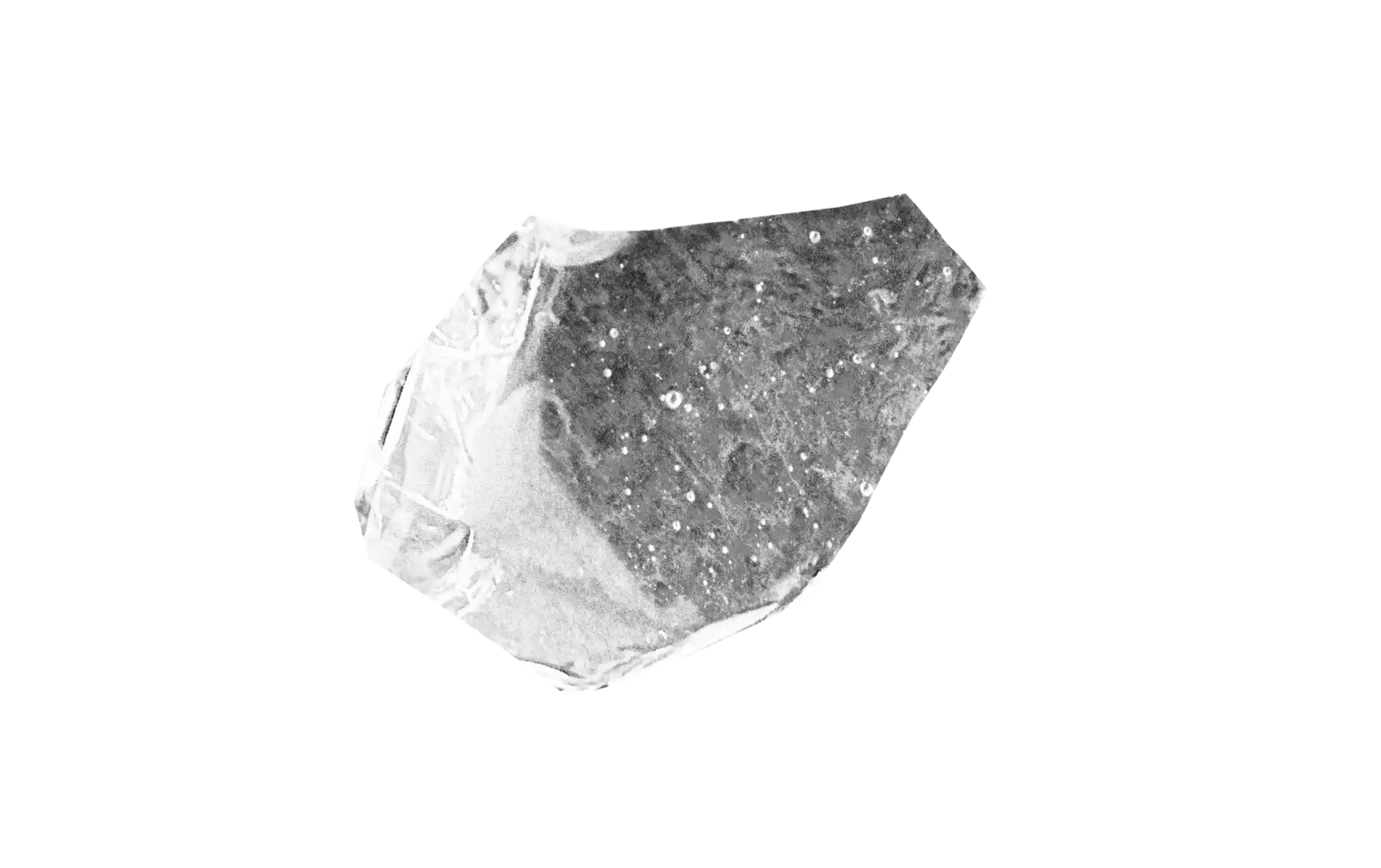

Bringing Out the Patterns of Natural Stones
The deep brownish red and semi-transparent colors characteristic of Wakasa agate craft are created through a carbon firing process called "Yaki-ire."
After the firing is finished, the stone is roughly shaped to make carving easier, and then a technique called "Kakikomi," which uses an iron wedge, is applied for further shaping.
"Kakikomi alone can't handle the detailed carving, so after that we move on to 'Kezuri' (shaving). This especially difficult step truly showcases the artisan's skills.
"With agate, you can't simply attach new material like you would with clay. Thin parts are prone to chipping or breaking during the process, and the stone can crack if you polish it too forcefully. It's not unusual to accidentally break the piece just before it's finished, resulting in failure."
When learning the trade, one actually begins with the final process—polishing. This is so the apprentice can get a feel for the form and distinct characteristics of their master's pieces with their own hands while polishing.
"We do draw a rough design during production, but you won't find instructions like 'shave off this many millimeters.' Each stone's natural pattern determines exactly how much should be shaved down.
"Corrections are also made during the process that aren't in the original design. Even if you want to make another identical piece, it's impossible without the exact same stone. I like to say, 'The earth itself is the designer of these stones.'"
Looking at works created by artisans in the past, you can see that every piece truly makes the most of the stone's natural pattern. This is perhaps the greatest charm of Wakasa agate craft.

Aiming to Revitalize the Region through Collaboration
In spring 2023, Uenishi participated in "F-TRAD," a project launched in anticipation of the Hokuriku Shinkansen Fukui-Tsuruga opening. It seeks to update traditional crafts for modern lifestyles.
Later, inspired to develop products himself, he joined "F-TRAD" and began working with designers based outside Fukui. He established the brand "MENOU," resulting in the launch of Kakikomi Earrings.
"Works that require intricate craft are difficult to mass-produce, so I created earrings and piercings using offcuts from the kakikomi process. Through the project, I had a logo created and received help defining medium- and long-term goals, which was extremely helpful."
Items requiring detailed workmanship naturally take longer to complete and tend to be costlier—potentially a hurdle for users. By creating casual pieces suited to modern tastes, he continues striving to make Wakasa agate craft more accessible to a wider audience.

Asked about his future goals, Uenishi shared, "I hope to take on the challenge of dyeing raw stones someday as well."
"The more I create, the more ambitious I become—the sense of accomplishment is endless. If I can also master coloring techniques, I think I'll discover a whole new dimension of excitement."
Across Japan there are many agate craft regions, but tracing their roots leads back to Obama City.
"It's not widely known, but Obama City is actually the birthplace of precious stone craft. I'd be delighted if more people learned that from here the history of many gemstone craft traditions began."
Each work of Wakasa agate craft holds countless stories within. The tradition protected by Sosuke Kobo is a Japanese treasure that deserves to be passed down across generations.

Text by Rika Okuyama

Japanese Craft Glossary
The History of Arimatsu Shibori: Tracing 400 Years of Turning Points From 1608 Settlement to Global Fashion

Seeking the Artisans
The Timeless Technique and Evolving Tradition of "Tsugaru Nuri Genbei": Growing More Beautiful with Every Layer

Seeking the Artisans
Fukui Yougasa's Quest for "The World's Most Considerate Umbrella"

Seeking the Artisans
Globally Acclaimed Echizen Uchihamono Blades—Ryusen Hamono Opens a New Frontier

Seeking the Artisans
Protecting the Dinner Table with 100% Natural Lacquer Wakasa-Nuri Chopsticks—Hyozaemon's Commitment to Authenticity

Seeking the Artisans
Chasing the Evolution of Echizen Lacquerware: The Innovation of Tradition & Modern Technology by Shitsurindo

Seeking the Artisans