

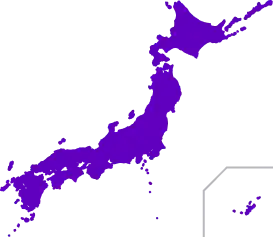
Aomori
Akifumi Kimura
The 5th generation head of Tsugaru Nuri "Genbei." After graduating from high school, he moved to Tokyo and worked in the textile industry for about 10 years before taking over the family business. While preserving traditional techniques as a Tsugaru lacquerware craftsman, he is also active as a Neputa artist. Today, alongside his daughter Eriku—the 6th generation—he takes on the challenge of creating pieces that incorporate new colors and designs.
Tsugaru-nuri
Tsugaru-nuri is produced through a “togidashi kawari-nuri” technique, involving about 48 steps over more than two months, where layers of lacquer are repeatedly applied and polished. Natural lacquer is combined with materials such as raden (mother-of-pearl), charcoal powder, and seeds to create intricate layered patterns. It is used for tableware like bowls and chopsticks, and recently also for art panels and signage.

Tsugaru lacquerware (Tsugaru Nuri) is a traditional craft representing the Tsugaru region of Aomori Prefecture.
Applying, drying, and polishing layers of lacquer over and over again—this painstaking craftsmanship has been passed down for over 300 years. At the same time, its forms of expression continue to evolve gradually with the times.
Preserving timeless techniques while embracing fresh sensibilities. We visited Tsugaru Nuri Genbei to learn about their approach to craftsmanship that connects tradition to the future.

Lacquer Techniques Honed in the Land of Tsugaru
Characterized by its unique, glossy finish and intricate patterns, Tsugaru lacquerware traces its history back to the Edo period.
Handed down primarily in Hirosaki City, Aomori Prefecture, Tsugaru lacquerware is a traditional craft that developed in the castle town of the Tsugaru Domain. At the time, the Hirosaki Domain fostered techniques for applying lacquer to armor and harness gear. During the reign of the fourth feudal lord, Nobumasa Tsugaru, master artisans were invited from across the country, leading to major developments in lacquer art.
Among them, it was the lacquer master Genbei Ikeda who introduced the foundational techniques leading to modern Tsugaru lacquerware.
Genbei, a master painter from the Obama Domain in Wakasa Province (present-day Fukui Prefecture), was invited to Tsugaru and brought with him the techniques of Wakasa lacquerware. Fusing with local Tsugaru craftsmanship, this established the origin of today's Tsugaru lacquerware.
The primary material used is Hiba (Aomori cypress), which is also the official tree of Aomori Prefecture. It is a timber long used in many historic structures, including Hirosaki Castle.
By applying, drying, and polishing countless layers of lacquer onto this wooden base, colorful and mesmerizing patterns emerge. The process involves over 50 steps, resulting in durable, long-lasting lacquerware that remains deeply rooted in the daily lives of people in Tsugaru today.

The Beauty of Tsugaru Lacquerware Born from "Foolish Meticulousness"
The charm of Tsugaru lacquerware lies in the accumulation of dizzying amounts of time and effort.
"People have called it 'Tsugaru's foolish painting' since ancient times. It gets that name because we apply the lacquer with such foolish meticulousness,"
says Akifumi Kimura, the 5th generation owner of "Tsugaru Nuri Genbei," with a smile.
After graduating from high school, he moved to Tokyo and worked in the textile industry for about 10 years before taking over the family business. Having grown up watching his father and grandfather work, he had the process memorized. Yet, once he actually embarked on the artisan's path, he realized its profound depth anew.
"No matter how many years you do it, creating something to your complete satisfaction according to your vision is remarkably difficult. In the final step called 'togidashi' (polishing out), the way the pattern appears changes completely based on how much pressure you apply. It takes a long time before you feel you've truly mastered it."
A single piece is completed only after going through over 50 painstaking steps—a process so thorough it earned the moniker "foolish painting." It takes more than two months to complete a single item.
"Because so many layers are applied, Tsugaru lacquerware is extraordinarily durable and long-lasting. Chopsticks or bowls can easily last for over 10 years, even with daily use."

A New Expression Born from Neputa
In fact, Kimura is also a Neputa painter.
The "Neputa Festival," which colors the summer in Aomori, holds a special place in the hearts of the people of Tsugaru. Every August, heroic Neputa floats line the streets of the castle town, accompanied by the resounding sounds of flutes and drums. Parading slowly through the night streets, these floats are a classic summer tradition symbolizing Tsugaru's short summer season. Kimura grew up watching this spectacle from an early age and has long been captivated by its vibrant colors and powerful designs.
Inspired by these floats, he created his original technique, "Neputa Nuri." By applying multiple layers of colored lacquer, covering them with black lacquer, and polishing it down, he captures the brilliant colors of Neputa through Tsugaru lacquering.
Behind his drive to explore new expressions is his desire to make younger generations feel closer to Tsugaru lacquerware.
In the past, Tsugaru lacquerware was often perceived as "outdated" or "something for older people." Kimura himself struggled for a long time over whether it was right to alter the tradition passed down by his ancestors.
What gave him a push and marked a major turning point was meeting Ourin, a television personality from Aomori Prefecture.

Connecting Tradition with Flexible Sensibilities
Ourin, whose grandfather was a Tsugaru lacquer craftsman, chose Tsugaru lacquerware as the topic for her university graduation thesis. Their connection began when she visited Kimura to interview him for her research.
"Ourin asked me, 'Could you make Tsugaru lacquer earrings for me?' I had never made them before, but I decided to give it a try. When she started wearing them on television, orders flooded in from people wanting the exact same pair."
This turning point inspired Kimura to start creating new items like accessories. However, he admits he lacked confidence when it came to fashion and design.
That was when he turned to his daughter, Irishu, for help.
"My mindset is naturally a bit old-fashioned, so I thought a woman's sensibility would work better here, and I started consulting my daughter."
Irishu, who previously worked in fashion, had shown little interest in Tsugaru lacquerware until then. But through making accessories, ideas of "I want to try making this, too!" began pouring out of her.
Today, as the sixth-generation successor, she continues her apprenticeship while raising her children. While honoring traditional techniques, she brings a flexible perspective—incorporating colorful palettes and fresh designs that expand the possibilities of Tsugaru lacquerware.

Inherited Skills, Fresh New Colors
With Irishu joining the craft, Genbei's Tsugaru lacquerware has gained vibrant colors and designs never seen before.
One area Kimura pays special attention to is color.
"Preferred color tones change with the times. In addition to traditional colors, we've started incorporating fresh shades like pink and blue. I try to produce colors that make people pleasantly surprised, thinking, 'I didn't know Tsugaru lacquerware could look like this!'"


In recent years, requests for novel products—such as flutes used in the Neputa Festival and smartphone cases—have been on the rise.
Kimura says with a gentle smile, "I want to keep taking on new challenges while embracing the sensibilities of the younger generation."
Tsugaru lacquerware has been passed down for over 300 years. What remains unchanged is a dedication to craftsmanship so painstaking it is jokingly called "foolishly meticulous." While preserving these skills and layering on fresh sensibilities, Kimura continues to carry Tsugaru lacquerware into the next era.

Japanese Craft Glossary
The History of Arimatsu Shibori: Tracing 400 Years of Turning Points From 1608 Settlement to Global Fashion

A Century of Craft, A Master's Voice
Part 3: Wanting to Be an Expresser—The "Birth Pangs" of Creation | Living National Treasure Shosei Fujitsuka
![Born From the Sea, Forged Into Glass Reflecting the Seasons: The Story of 'Tsugaru Vidro' [Part 1]](https://images.microcms-assets.io/assets/1775a3633c8b428d9f011c6a758a8a5c/8700173831e74601b74047dff1e7c093/180723_074_99e6ea9d-148d-47f0-bca9-f5f3ace7fc7b.webp?w=430&fm=webp&dpr=2)
Seeking the Artisans
Born From the Sea, Forged Into Glass Reflecting the Seasons: The Story of 'Tsugaru Vidro' [Part 1]
![The Craftsmanship and No-Compromise Philosophy Behind "Tsugaru Vidro" [Part 2]](https://images.microcms-assets.io/assets/1775a3633c8b428d9f011c6a758a8a5c/665919c6f8ea441599edb993bb4d33aa/DSC_2760.JPG?w=430&fm=webp&dpr=2)
Seeking the Artisans
The Craftsmanship and No-Compromise Philosophy Behind "Tsugaru Vidro" [Part 2]

Seeking the Artisans