
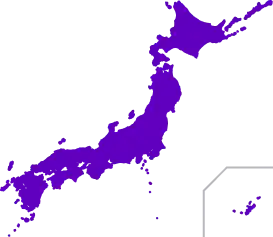
Aichi
Takehiro Nakamura
President and Representative Director of Yamakatsu Dyeing Factory. He leads the company’s management and promotes business diversification and expansion into new fields centered on dyeing techniques.
Nagoya Kuromontsuki dyeing
Nagoya Kuromontsuki dyeing is a technique that creates deep black by combining a resist method using stencil patterns and metal mesh to block dye penetration, along with a two-step process of red underdyeing and black dyeing. The primary materials are silk and cotton fabrics, used for kimono, formal wear, and more recently, Western-style garments.

"The black is *so* black." It's the most fitting way to describe Nagoya Kuromontsuki-zome (black crest dyeing). The craft dates back to 1611, when samurai of the Owari domain began producing flags and banners. During the Tenpo era (mid-19th century), they developed the unique 紋型紙板締め技法 technique. Later, in the Meiji era, the wooden boards were replaced with wire mesh, evolving into the 紋当金網付け技法 technique that continues to this day. We paid a visit to Yamakatsu Someko, a family business founded in 1919 that has mastered this art.
Nagoya's Unique Technique for Making Black Even Blacker
West of Nagoya Castle lies a town that has long been a hub for artisans. Yamakatsu Someko is one of the companies that shapes this town's unique atmosphere. President Takehiro Nakamura greeted us with a warm smile. As we stepped into the dyeing factory at the back of the property, a wave of humidity, thick with steam from the dyeing vats, enveloped us.
"For kimonos, we dye them at 90 degrees Celsius for about an hour. For Western-style clothes, it's about two and a half hours at 60 to 70 degrees. Every five minutes, we manually move the fabric up and down," he explains.
The 紋当金網付け技法 is a resist-dyeing technique where a crest-shaped paper stencil (mon-katagami) is placed on the fabric, which is then sandwiched and stitched between wire mesh. When submerged in the dye, the paper stencil expands, pressing harder against the fabric and blocking the dye from seeping into the crest area. An artist then hand-paints the family crest onto the resulting white shape to complete the piece.
The distinctive black of Nagoya Kuromontsuki-zome is achieved using a technique called 紅下染め (beni-shitazome, or crimson under-dyeing). A crimson dye, equivalent to about 5% of the fabric's weight, is dissolved in hot water to create an undercoat. This is because black dye alone cannot produce a sufficiently deep, rich color. After the 紅下染め, the fabric is dyed with a black that is more concentrated than usual. Finally, to set the color and make it fade-resistant, the fabric is soaked in water overnight.
"Someone from the fashion industry told us, 'Your black is *so* black.' We hadn't really realized ourselves that what we were doing was so special."
"The black is so black." These words became the catalyst for Yamakatsu Someko to venture into fields beyond their traditional work.

We Wanted to Be a Manufacturer, Not Just a Processor
Today, Yamakatsu Someko is run by President Takehiro Nakamura, while his younger brother, Yusuke, carries the torch as the fourth-generation master dyer. Takehiro steers the business, while Yusuke and his team of artisans captain the craft—a perfect partnership. But Takehiro's journey wasn't a straight line back to the family business. Fresh out of college, he joined a staffing agency. He returned to help out for a while, but ultimately left again.
"It felt like there wasn't a place for me in the company back then," Takehiro recalls. "I was almost 30, my dad was still going strong, and I couldn't really pursue my own ideas. So, I threw in the towel. I was young and impetuous. An old contact at a staffing agency invited me back, and I took a management role there."
But in 2012, fate drew Takehiro back home when his father passed away from cancer at the age of 62. With the traditional craft industry already facing a downturn, keeping the business afloat was a monumental challenge. His brother Yusuke, who had returned to the family business after training as an artisan elsewhere, asked him to come back and help run the company together.
"I had to think hard about how Yamakatsu Someko was going to survive. Until then, we were just a processing business—a dye house. We'd take white kimono fabric from retailers, dye it, and get paid a processing fee. I decided we needed to transform from being a processor into a manufacturer with our own original products."
It was a bold move into a new arena, and it came with its own set of worries. If Yamakatsu Someko, known as a dye house, started selling its own Japanese garments, they'd be stepping on the toes of their longtime customers—the kimono shops.
"We were hesitant, of course. That's why we launched a separate brand called '中村商店' (Nakamura Shoten) to handle items like T-shirts and other apparel. We also kicked off a re-dyeing service to bring new life to faded clothes. This was all happening right before 'SDGs' became a buzzword and the push for sustainable development really took off."
Through a process of trial and error, demand steadily grew.

We Have to Do It, No Matter What
The apparel industry was uncharted territory for Yamakatsu Senko. But Takahiro connected the dots with his natural sales talent and the relationships he cultivated.
The first major project they landed after launching was with a top domestic apparel company. Three years later, they were blessed with the opportunity to collaborate with a world-renowned Japanese brand. They also handled costumes for a major Japanese corporation's TV commercial. Looking ahead, they are slated to contribute to a global brand's collection. While these projects weren't for their own brand, they won the contracts by showcasing their products and confidently stating, "This is what we can do." In each case, no one else could perform the same kind of intricate black dyeing or specialized dyeing techniques.
"Imagine someone who wasn't in the fashion industry suddenly doing fashion. A person who was in the staffing business until a few years ago is now talking to fashion directors. These are people who have been in the world of clothing for 20, 30 years. Everything was a challenge, and every day was a learning experience."
When I visited for this story in February, "TGC in Aichi-Nagoya 2026," hosted by the Tokyo Girls Collection Executive Committee, was taking place. Nakamura Shoten's clothing was also featured on the runway.
Traditionally, a dyer works behind the scenes. But at TGC, it's a dazzling world where their own original products walk the runway, captivating a massive audience. When I asked him about the satisfaction he gets from his work, his answer was surprising.
"People often ask me, 'Do you enjoy your work?' but honestly, it's a struggle. My single-minded focus is on getting people to know about our traditional industry. It’s purely a sense of mission to keep the company alive. So, even when my motivation dips, I have to push through. I have to provide for my employees. When profits go up, it brings a sense of relief that we've built another pillar for the business. People say I'm a bit detached, though."
In the office adjacent to the dye factory, Takahiro offered a wry smile while showing me their portfolio.

A Desire to Revitalize the Entire Traditional Craft Industry
Having diversified from a singular focus on dyeing, Takahiro is already thinking, "It’s about time to move on to the next phase." The reason is twofold: the company is now on relatively stable footing, and he wants to expand his efforts beyond Nagoya Kuro Montsuki Zome to support the broader world of traditional crafts.
Currently, the average age of a traditional craftsperson in Japan is around 70. In ten years, the workforce supporting these crafts is projected to plummet. He expresses deep concern for this future.
"We dyers are in a decent position because we can still produce a final product. And since my grandfather incorporated the business, work continues even while I’m here talking to you. But for sole proprietors, if they stop to talk, their work grinds to a halt. The vast majority of traditional craftspeople run their own small businesses. With the demands of daily work, it's hard for them to try new things or promote their craft. In the case of Nagoya Kuro Montsuki Zome, the artisans who paint the family crests face even more acute anxieties about their future. So, for my next step, I want to figure out how to help them."
When I asked what specific measures he had in mind, he laughed openly and admitted, "I haven't found the answer yet."
"We're in the process of trying various things. We are also creating an archive of our experiments so that others can easily follow our path. If the answer were already known, you could just go straight there—that would be the fastest way. It would make it easier for everyone to take on new challenges. My life's work is to create that foundation for them."

In the back, a boiler hums to life, and in the dye baths, faded fabrics are imbued with new vitality. Garments steeped in history are cloaked in a captivating black, ready to begin their next chapter.
Text by Hidenobu Shuzui

Japanese Craft Glossary
The History of Arimatsu Shibori: Tracing 400 Years of Turning Points From 1608 Settlement to Global Fashion

Seeking the Artisans
The Timeless Technique and Evolving Tradition of "Tsugaru Nuri Genbei": Growing More Beautiful with Every Layer

Seeking the Artisans
Kusitome Shoten: The Craftsman's Magic in Every Tooth of a Traditional Boxwood Comb

Seeking the Artisans
An Artisan Couple's Custom-Made Hina Dolls at Kato Doll: The East-West Blend of Nagoya Sekku Kazari

Seeking the Artisans
The Vivid Red and Unkin Patterns of Inuyama Ware: The Ozeki Sakujuro Pottery Continues the Legacy of Oniwa-Yaki

Seeking the Artisans
The Profound World of Tokoname Kyusu: The Unique Teaware Crafted by Artisan Yohei Konishi

Seeking the Artisans