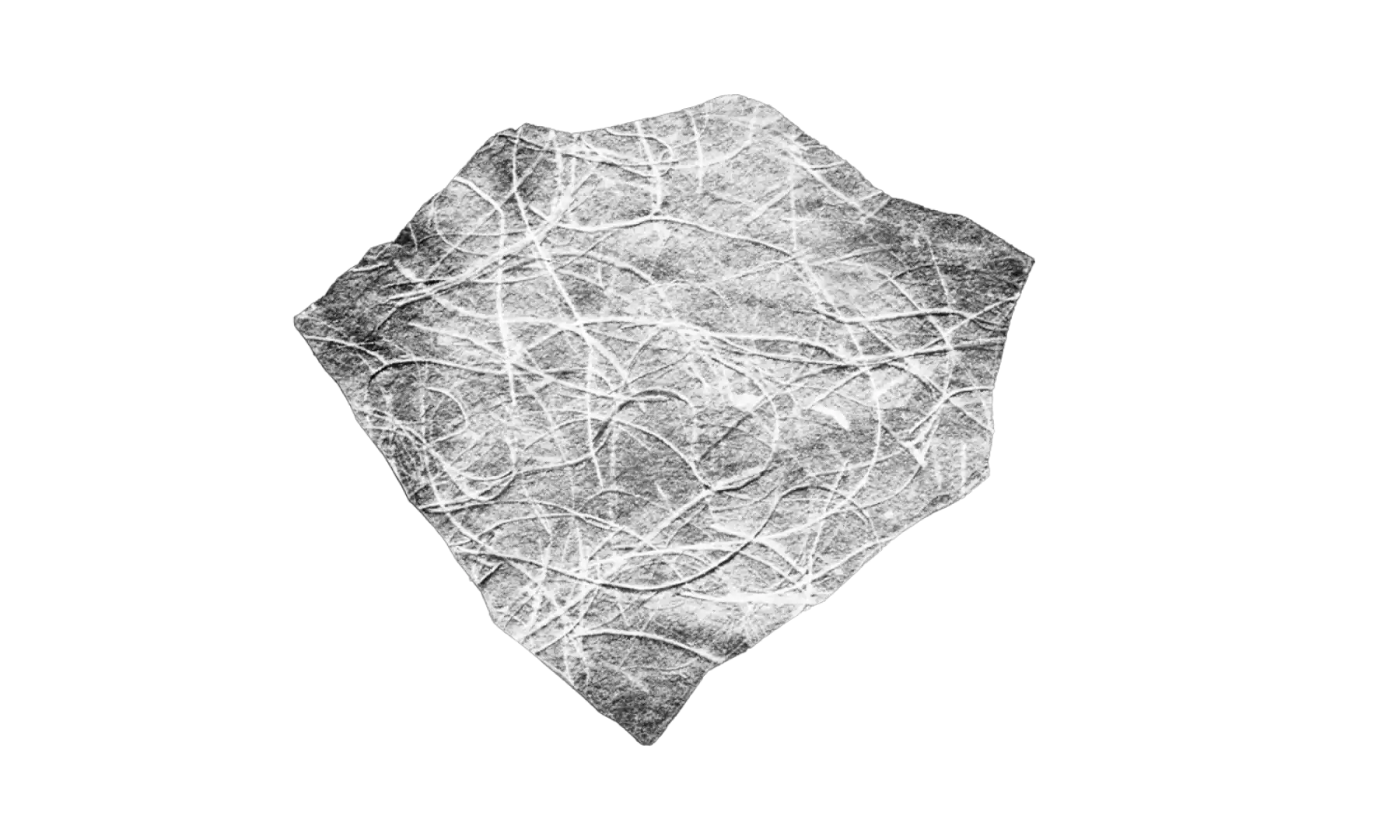


I still vividly recall my astonishment upon visiting a workshop near Yuki City in Ibaraki Prefecture and touching mawata (silk floss made by boiling and stretching out cocoons) for the first time. The gentle warmth that spread from my fingertips, as if trapping my body heat, was an experience that reawakened my senses—something utterly unattainable from today's efficiency-driven materials. After an incredible 2,000 years, Yuki-tsumugi remains a cherished part of our lives. What has allowed it to endure into the modern era? Join us as we, the editors, delve into the essence of this textile, often called 'the fabric that grows with you.'

The Enduring History of Yuki-tsumugi: A Legacy from Before the Nara Period
Yuki-tsumugi is celebrated as one of Japan's oldest silk textiles, its history stretching back even before the Nara period (710–794). Legend tells of its origins with settlers in Hitachi Province during the reign of Emperor Sujin. Remarkably, the Shosoin Imperial Repository still houses samples of 'Hitachi-tsumugi' from that time. This is a testament to how the original rustic texture, created by thick, hand-spun yarn, has been preserved for over 1,300 years.
During the Kamakura period (1185–1333), the ruling Yuki clan actively promoted the textile industry, establishing the fabric as a prized possession among the samurai class. The name 'Yuki-tsumugi' gained nationwide recognition in the Muromachi period (1336–1573). By the Edo period (1603–1868), under the influence of sumptuary laws forbidding overt luxury, it became an emblem of iki (understated chic) for townspeople who appreciated discreet extravagance. It was prized for looking like simple cotton at first glance while actually being the finest quality silk.
Even as many textile regions embraced mechanization from the Meiji period (1868–1912) onward, Yuki-tsumugi steadfastly upheld its tradition of manual craftsmanship. In 1956, its 'intangible techniques,' rather than the finished product, were designated as a National Important Intangible Cultural Property of Japan. Its global status was further cemented in 2010 when it was inscribed on UNESCO's Representative List of the Intangible Cultural Heritage of Humanity.

Geographical Blessings: How the 'Silk River' Shaped the Production Area
Yuki-tsumugi production is concentrated in a 20-kilometer stretch along the Kinu River, from Yuki City in Ibaraki Prefecture to Oyama City in Tochigi Prefecture. Fittingly, the river was once known as the 'Kinugawa' (Silk River) due to the flourishing sericulture (silkworm farming) and weaving industries in its basin.
It's fascinating to see how the region's natural environment has been instrumental in supporting the production of this high-quality textile. Specifically, several key factors contributed to the development of its techniques:
• Soil: The soil in the Kinu River basin was ideal for cultivating the mulberry trees that feed silkworms.
• Climate: The cold, dry seasonal wind known as 'Tsukuba-oroshi,' which blows in winter, played a crucial role in drying the mawata and managing humidity during weaving.
• Division of Labor: A sophisticated system of division of labor, with over 40 steps handled by specialized artisans, is deeply rooted in the community.
A place in Oyama City is still named 'Kinu' (Silk), a reminder of how the entire community supports the preservation and promotion of Yuki-tsumugi. The craft, which originated as an off-season side job for farmers, has evolved into a refined art form practiced by dedicated artisans, ensuring its legacy is passed down from one generation to the next.

Mawata and Untwisted Yarn: The Secret to Ultimate Functionality
What makes Yuki-tsumugi truly unique are the special properties of its raw materials: mawata (silk floss) and the munenshi (untwisted yarn) spun from it. Unlike conventional raw silk, where fibers are reeled from cocoons and twisted together, Yuki-tsumugi is made by using the mawata itself—entire cocoons that are boiled, softened, and stretched out.
The mawata floss contains countless tiny air pockets that act as a natural insulator, giving the fabric outstanding warmth. The official technique, designated as an Important Intangible Cultural Property, uses this untwisted yarn, which allows the soft, airy quality of the mawata to be woven directly into the fabric. While untwisted yarn is inherently weaker and more prone to breaking, artisans overcome this challenge through a combination of starching the yarn during the hand-spinning process and applying masterfully subtle tension on a traditional jibata (back-strap loom).
The resulting fabric has a texture that 'grows softer and molds to the wearer's body,' offering a sensory value that goes far beyond mere technical specifications. It is said that when worn, you can feel a gentle, comforting warmth gradually envelop your body.

Three Supreme Techniques Designated as an Important Intangible Cultural Property
The Yuki-tsumugi creation process involves more than 40 intricate steps. However, three specific "intangible techniques" are so crucial they've been designated as a national Important Intangible Cultural Property.
Thread Spinning (Hand-Spinning)
This process involves hooking fluffy silk floss (*mawata*) onto a tool called a *tsukushi* and drawing out the thread using only the sensation of the fingertips. The artisan uses saliva to bind the fibers together, creating a single, untwisted thread. Since saliva is a protein, it binds fibers more effectively than water, a testament to the time-honored logic of this technique. Spinning enough thread for a single *tan* (a roll of fabric for one kimono) is an incredibly demanding task, taking a seasoned artisan two to three months, or sometimes even longer.
Kasuri Tying (Hand-Tying)
This is a resist-dyeing process. Following a master blueprint, sections of the yarn that are meant to remain undyed are tightly bound with cotton thread to protect them from the dye.
・Precision Calculation: Incredibly detailed calculations are necessary to perfectly align the patterns of the warp (*tateito*) and weft (*yokoito*) threads.
・The Art of Hand-Tying: To create exquisite patterns like the *kikko* (tortoise shell), the tying technique has been perfected to achieve millimeter-level accuracy.
・Timeline: For particularly complex designs, this step alone can take more than six months to complete.
Jibata Weaving
This technique uses a *jibata* (also called an *izaribata*), Japan's most ancient form of loom. The weaver sits on the floor and straps the end of the warp threads to their lower back, using their entire body to adjust the yarn's tension as they weave. This transforms the human body into the "ultimate sensor," applying the perfect amount of tension. This unique method allows the delicate, untwisted thread to be woven without breaking, resulting in a fabric with an exceptionally soft texture.

A Fabric That Gets Better with Age: The Design Philosophy of Yuki-tsumugi
There's a famous saying about Yuki-tsumugi: "It takes three generations of wear to reveal its true beauty." When brand new, the fabric is stiff with starch. But with each wear and every cycle of *araihari* (a traditional cleaning process where the kimono is disassembled, washed, and re-sewn), the fine surface fuzz of the yarn gradually falls away. What emerges is a fabric with a pearl-like luster and a softness that rivals cashmere.
In its design, an incredible level of precision is concealed within a refined, understated aesthetic known as *shibumi*.
・*Kikko-gasuri* (Tortoise Shell Pattern): This traditional motif consists of countless tiny hexagonal shapes arranged on the fabric. The patterns are graded by density—80-*kikko*, 100-*kikko*, and even 160-*kikko*—with higher numbers representing the absolute pinnacle of technical mastery.
・Color Palette: The palette revolves around traditional, nature-derived colors such as indigo, gray, and mulberry dye. The aesthetic of Yuki-tsumugi is particularly supported by a spectrum of grays. These hues, seemingly simple but full of subtle expression, are reminiscent of the "Shi-ju-hachi-cha Hyaku-nezumi" (48 browns and 100 grays) trend popular during the Edo period.
This philosophy of "enjoying the evolution of an object over time" offers a creative and compelling alternative to today's disposable culture. It's a powerful argument for a sustainable lifestyle built on cherishing and using items with affection for years to come.


A Modern Redefinition of Tradition and a Vision for the Future
Today, Yuki-tsumugi is breaking free from the confines of traditional Japanese attire (*waso*) to find new ways of blending into modern life. While still drawing from classic menswear designs like "stripes and plaids," artisans are actively developing Western-style accessories such as shawls and scarves. The feel of a shawl woven on a *jibata* loom has garnered international acclaim, creating more opportunities for people to experience this authentic, handcrafted art form.
However, the region of production faces significant challenges. The "thread problem" is especially severe, marked by a shortage of artisans skilled in hand-spinning and a sharp decline in production. In response, innovative efforts are underway to merge technology with tradition. These include using high-speed cameras to document the "tacit knowledge" of master craftspeople, weaving QR codes into the fabric to make the production history visible, and even developing a "washable tsumugi."

Yuki-tsumugi: A Trustworthy Guide to a Richer Future
What I found especially fascinating during my research is that Yuki-tsumugi is created in a domain that can't be captured in a manual, a process described as "controlling non-uniform material with indeterminate tension." This is nothing less than the culmination of human physical sensibilities, a feat that AI and machines cannot replicate. In a society that prioritizes efficiency above all else, the simple act of taking the time to wear a fabric imbued with an artisan’s soul—this very act helps us rediscover a richness we have forgotten.
This "miracle fabric," Yuki-tsumugi, is no mere relic of the past; it is poised to become a definitive map for enriching our future lifestyles. Passing its true value on to the next generation is surely tantamount to carrying Japan's very identity into the future.
Image credit: Okujun Co., Ltd.

