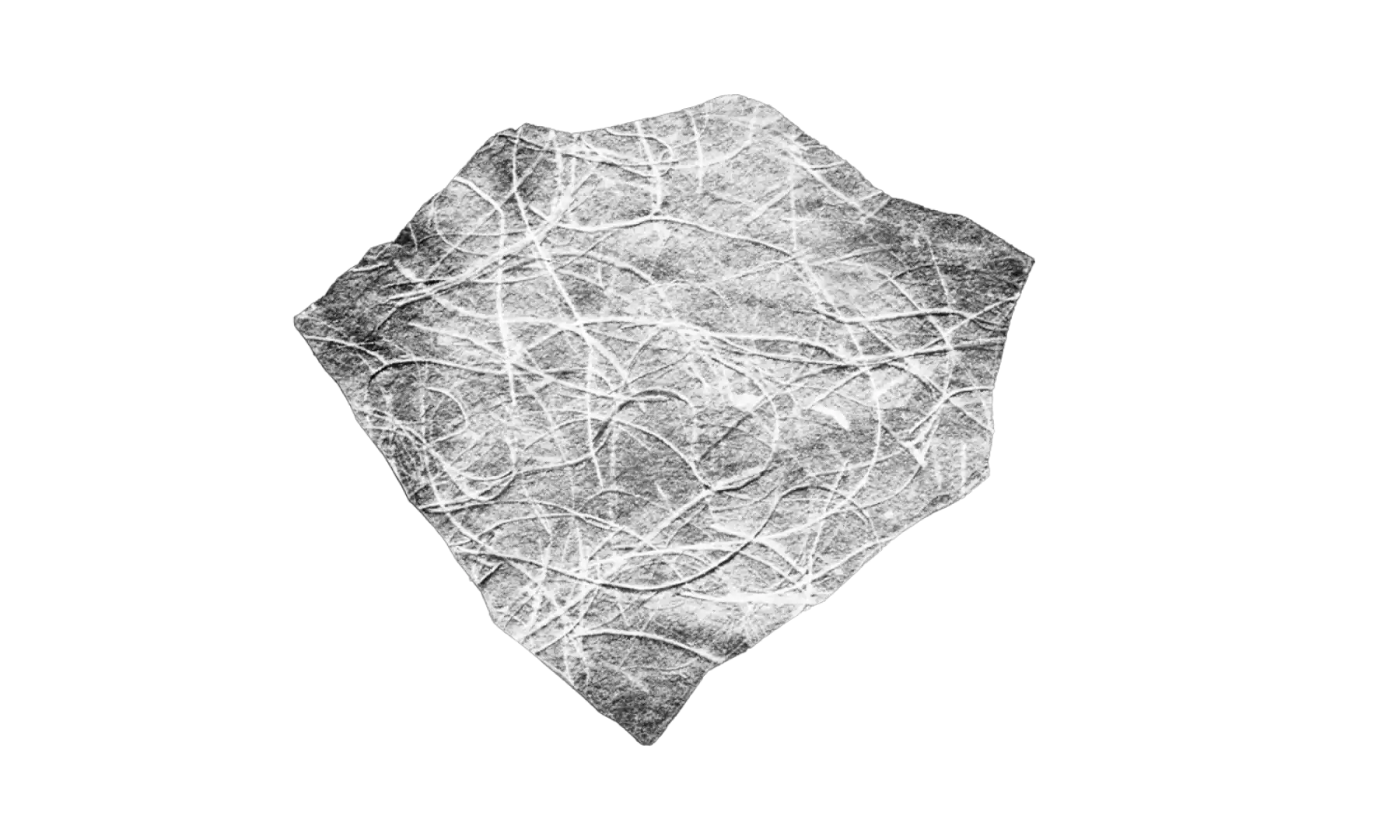


In a corner of the workshop, I once peered through a magnifying glass at a bolt of 160-kikkō fabric (a design featuring 160 tiny hexagons across the width of the bolt) and was left speechless by its intricacy. The fabric's surface was so understated it appeared plain at first glance, yet it concealed an incredible number of 'dots' etched by the artisans' fingertips. In that moment, I felt I had glimpsed the profound depths of a uniquely Japanese aesthetic.
Why have the Japanese poured so much soul into such inconspicuous details, finding opulence in understatement?
In this installment, we'll unravel the meanings behind the traditional patterns and colors that are fundamental to Yuki Tsumugi's design.

The Philosophy of 'Iki' and 'Shibumi,' Honed by Sumptuary Laws
The aesthetic of 'iki,' born from the social backdrop of the Edo period, is indispensable when discussing the design of Yuki Tsumugi. During that era, the shogunate government repeatedly issued sumptuary laws (shashi, meaning excessive luxury), which strictly prohibited commoners from wearing ostentatious silk fabrics.
In this climate of restraint, people discovered a paradoxical form of luxury: "what appears to be simple cotton is, in fact, the finest silk." The preference for matte textures with subdued sheen and patterns so fine they looked plain from a distance evolved beyond a mere tactic to evade the authorities. It was elevated into a 'sophisticated game' that showcased one’s hidden intellect and refined aesthetic sense.
This 'shibumi' (refined austerity) is the very essence of Yuki Tsumugi's design. It represents the pinnacle of material quality and technical skill that emerges once all flashy ornamentation is stripped away. It can be seen as a uniquely Japanese and sophisticated design philosophy—a forerunner to the modern concept of 'quiet luxury.'

Kikkō Pattern: A Geometric Collection Representing a Wish for 'Longevity'
The 'kikkō' (tortoiseshell) pattern, based on the hexagonal unit, is synonymous with Yuki Tsumugi. This design mimics the shell of a tortoise, a symbol of long life, and has long been treasured as an auspicious (kisshō, or lucky) motif to wish the wearer good health and longevity.
The most striking feature of kikkō-gasuri in Yuki Tsumugi is its density, which is akin to a 'pixel count'.
・Evolution of density: What began with around 30 hexagons across a single bolt of fabric evolved with technical advancements to 80, 100, 160, and even 200 kikkō, making the pattern progressively finer.
・Expression of diagonals and curves: While textiles are inherently built on a grid of horizontal weft (yokoito) and vertical warp (tateito) threads, the kikkō unit made it possible to render diagonal lines and curves on the fabric.
・The paradox of detail: The finer the pattern, the more it resembles a plain, solid color from a distance. This act of "taking immense trouble to deliberately make something less conspicuous" perfectly captures the ultimate aesthetic of the Japanese people of that era.
Each tiny hexagon is created by an artisan who binds the threads with cotton yarn for resist-dyeing (bōsen, a method to prevent dye from coloring certain parts). The way these minuscule 'dots' are meticulously woven together as planned to form a pattern can only be described as analog pixel art.

Stripes and Checks: Embracing Foreign Culture and Fostering a Unique Evolution
Before the kikkō-gasuri (tortoiseshell pattern) became mainstream, the primary designs for Yuki Tsumugi were 'stripes' (shima) and 'checks' (kōshi). During the Edo period, striped patterns from southern countries like India were seen as remarkably fresh and 'stylish' designs by the people of that era.
The stripe and check designs in Yuki Tsumugi exhibit the following features:
・A Legacy in Men's Attire: The Yuki region was originally a production hub for men's kimonos, and many understated striped patterns based on navy and black were crafted.
・Highlighting the Warp Threads: Yuki Tsumugi has a unique structure unseen in other textiles, with 'thick warp threads and thin weft threads.' Because of this, even in striped patterns, the vertical lines stand out, giving the fabric itself a very durable and powerful character.
・The Ajiro (Wickerwork) Motif: As a type of check, the ajiro pattern, which replicates the look of woven wicker, is also created. This is a sophisticated design method that creates visual intricacy not just through color combinations but through the structure of the weave itself.

Wearing Japan's Primordial Landscape: The Function and Feeling Woven into Color
The colors of Yuki Tsumugi are centered around traditional hues drawn from the rich natural environment surrounding the production area. Each color is imbued with meaning and function that transcend simple ornamentation.
Indigo (Ai): The Blue of Purity and Practicality
Long beloved as the color for commoners' kimonos, indigo symbolizes integrity and purity. At the same time, indigo was believed to have insect-repellent properties, incorporating a practical piece of wisdom for protecting treasured kimonos.
Gray (Nezumi): The Sophisticated Expression of a Hundred Shades of Gray
During the Edo period, gray was so cherished for its incredible variety that it was described as 'Shijuhatcha Hyakunezumi' (48 shades of brown, 100 shades of gray). What might seem like simple 'gray' at first glance reveals subtle expressions—taking on a bluish tint or a warm feel depending on the light and the color of adjacent threads. This modest form of self-expression embodies the Japanese virtue of 'okuyukashisa' (demure elegance).
Mulberry (Kuwa): A Color Symbolizing Regional Pride
Dyeing with mulberry leaves and wood, essential for sericulture, is a color that symbolizes Yuki's identity. Born from the fusion of the local landscape and life, this color is akin to wearing the region's history itself.

Redefining Design Today and the 'Pinnacle of Plain Fabric'
In contemporary Yuki Tsumugi design, what's gaining the most attention are 'solid colors' (muji), 'heathered effects' (moku) created by mixing multiple colors at the yarn stage, and the creation of subtle gradations.
Yuki Tsumugi, which once vied for the most intricate patterns, is now returning to designs that unleash the inherent power of the material itself.
・The Interplay of Multiple Colors: By finely arranging threads of different colors, they visually blend to create a 'tone with depth' that cannot be expressed with a single color.
・The Play of Light: The untwisted silk floss yarn (mawata) scatters light, toning down the characteristic glare of silk to produce a soft, refined sheen.


The Design of Yuki Tsumugi: A History of 'Subtraction'
What was especially fascinating to discover in our research was that the history of Yuki Tsumugi's design has always been one of 'subtraction.' It shies away from flashy patterns, restricts the color palette, and painstakingly works to achieve an understated look. Behind this seemingly stoic approach lay a trust in the wearer's aesthetic sense and a secret delight known only to its owner.
For Yuki Tsumugi, design is not mere 'decoration,' but rather a 'mechanism' for maximizing the material's potential and allowing the wearer's character to speak quietly for itself.
Learning the deep meaning behind the patterns and colors was, for our editorial team, a journey of rediscovering the 'beauty of restraint' so treasured by the Japanese people. Hidden within a fabric that appears plain at first glance are tens of thousands of 'bindings' (kukuri)—this design, filled with such quiet passion, is perhaps the most luxurious response to a modern society that prizes efficiency above all else.

