
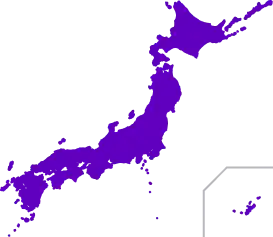
Ehime
Ryotaro Omori
Seventh-generation craftsman at Omori Japanese Candle Shop. He continues to make traditional Japanese candles, preserving the time-honored namagake technique through his daily craftsmanship.
Warosoku (Japanese candles)
Warosoku (Japanese candles) are made by inserting a wick into a bamboo stick and repeatedly hand-coating it with melted wax using the “Ikakake” method. The material is plant-based wax derived from haze tree berries. They are used for lighting and ceremonial or spiritual purposes in daily life.
From Nature's Bounty and Human Hands: The Making of a Single Flame
Uchiko, a town in Ehime Prefecture, once thrived from the Edo to the Meiji era on the production of moku-ro, or wood wax. Even today, its streets are lined with historic white-walled buildings that echo its prosperous past. Tucked away in this nationally designated preservation district is "Omori Warosoku-ya," the last traditional Japanese candle shop of its kind in the entire Shikoku region.
The candlemaking journey starts with crafting the wick, or toshin. This is done by wrapping Japanese washi paper and the pith of the soft rush plant around a bamboo skewer, then securing it with silk floss. This core is then repeatedly coated with layers of moku-ro, a plant-based wax extracted from the berries of the Japanese wax tree.
At the heart of this craft is a traditional technique known as kigake. Artisans scoop up the moku-ro wax, melted to a precise 40–45°C, with their bare hands. They then meticulously apply it by rolling the wick back and forth in their palms. The wax has a low melting point, making temperature control absolutely critical to the candle's final quality. This direct, hands-on approach allows the craftsperson to feel the wax's temperature and adapt the process to the specific humidity and conditions of the day.
This rhythmic cycle of applying wax and letting it dry is repeated countless times, slowly building the candle's thickness. As a finishing touch, the artisan polishes the surface with the friction of their palms, creating a natural sheen while intentionally leaving vertical lines that give the candle a beautiful, wood-like texture. The final steps involve using a heated tool to shape the top and expose the wick, and trimming each candle to a uniform length. With that, the warosoku is complete.

Seeking the Artisans
Three Sisters, Three Different Dreams: What Three Sisters at a Yoshino Tea Farm Put Into "Chanokichi"

A Century of Craft, A Master's Voice
Part 5 (Final): Class 1, Bamboo Group: A Life That Seems Futile, Yet Is Not — Living National Treasure Shosei Fujitsuka

Seeking the Artisans
Lighting Up Time Beyond the Flame at Omori Warosoku-Ya: The 7th-Generation Master Preserves the 'Kigake' Technique

Seeking the Artisans
Brewing in Harmony with Dogo: Minakuchi Shuzo

Seeking the Artisans
Ishimizu Sculpture Workshop: 200 Years of Carving the Pride of Saijo Danjiri

Seeking the Artisans
Two Years and Thousands of Layers in a Single Gem: Doi Pearl on the Art of Pearl Farming

Seeking the Artisans